
Science
Climate Report Warns: Urgent Action Needed to Avert Crisis

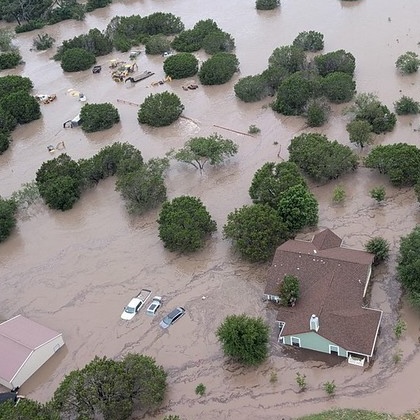
A new report reveals that 2024 has become the hottest year recorded, marking a significant concern for global climate stability. The report, produced by an international coalition led by scientists at Oregon State University, outlines that this extreme temperature is likely the highest experienced in at least 125,000 years. Co-lead author William Ripple warns that without effective intervention strategies, humanity could face escalating risks that threaten peace, governance, and public health.
The findings from the sixth annual report, titled “The 2025 State of the Climate Report: A Planet on the Brink,” highlight that 22 out of 34 critical climate indicators have reached alarming levels. Despite this dire outlook, Ripple emphasizes that it is still possible to mitigate damage, even if the global temperature goals established by the 2015 Paris Agreement are not fully met.
Call for Immediate Action
As greenhouse gas concentrations, ocean acidity, and ice mass continue to trend negatively, the authors assert that immediate action is essential. Ripple noted that “what’s urgently needed are effective climate mitigation and adaptation strategies,” which should include integrating climate resilience into national defense and foreign policy frameworks. The report stresses the importance of grassroots movements advocating for a socially just transition away from fossil fuels.
The document, published in the journal BioScience, draws on global data from the Intergovernmental Panel on Climate Change, proposing several high-impact strategies aimed at curbing emissions. These include:
– **Energy Transition**: The report suggests that renewable energy sources, such as solar and wind, could potentially supply up to 70% of global electricity by 2050. A rapid reduction in fossil fuel use could make a substantial contribution to climate mitigation.
– **Ecosystem Protection**: Safeguarding and restoring ecosystems like forests and wetlands could eliminate or prevent around 10 gigatonnes of carbon dioxide emissions annually by 2050, equating to roughly 25% of current emissions.
– **Food System Improvements**: The report highlights that reducing food waste, which accounts for approximately 8-10% of global greenhouse gas emissions, alongside a shift to more plant-based diets, can significantly lower emissions while enhancing food security and health.
Challenges and Urgency
The report’s co-lead author, Christopher Wolf, stated, “The human enterprise is in a state of ecological overshoot,” indicating that the Earth’s resources are being depleted faster than they can regenerate. He pointed to record highs in population, livestock numbers, and meat consumption, with an additional 1.3 million people and 500,000 livestock added weekly.
Among the report’s critical observations, fossil fuel consumption reached an all-time high in 2024, while solar and wind energy consumption, although increasing, remained significantly lower at 31 times less than fossil fuel use. Warming trends are accelerating, fueled by decreased aerosol cooling and other climate feedback mechanisms.
The report also cites a surge in deadly weather-related disasters, with significant events including flooding in Texas, which resulted in at least 135 fatalities, and wildfires in Los Angeles causing damages exceeding $250 billion. As of August 2025, the European Union experienced its most extensive wildfire season on record, with over 1 million hectares burned.
The weakening of the Atlantic Meridional Ocean Overturning Circulation raises alarms for potential major climate disruptions. The authors stress that every fraction of a degree of avoided warming is crucial for both human and ecological well-being. The report asserts that delaying action will incur higher costs and more severe impacts, while prompt, coordinated measures can provide immediate benefits globally.
Ripple concluded, “Climate mitigation strategies are available, cost-effective, and urgently needed. If we act boldly and quickly, we can still limit warming, but the window is closing.” He noted that the economic costs of inaction are likely to far exceed the expenses associated with implementing climate solutions.
The report features contributions from several other experts, including Jillian Gregg of TERA, Michael Mann from the University of Pennsylvania, and researchers from institutions such as the Potsdam Institute for Climate Impact Research and the University of Cambridge. Their work underscores the necessity of immediate and transformative action across multiple sectors to avert a climate crisis.

Japan’s PM Takaichi Confirms Continued Fiscal Management Strategy

Bitcoin Plummets Below $88K Amid Tether Concerns and Warnings

Designers Unveil 5 Urgent Tricks to Transform Outdoor Eyesores

Shark Teeth Research Reveals Urgent Need to Protect Species

Church Members Unite in Resilience After Thanksgiving Fire

Community Unites to Attempt World Record for Largest Cookie Exchange

Mayor Lurie Appoints Alan Wong to District 4 Seat Amid Controversy

Mayor Appoints Alan Wong as New Supervisor for District 4

UK Report Reveals AI’s Role in Evaluating University Research Quality

University of Hawaiʻi Joins $25.6M AI Initiative to Monitor Disasters

Toledo City League Announces Hall of Fame Inductees for 2024

DOJ Seizes $15 Billion in Bitcoin from Major Crypto Fraud Network

Sharp Launches Five New Aquos QLED 4K Ultra HD Smart TVs

Celtics Coach Joe Mazzulla Dominates Local Media in Scrimmage

Mutual Advisors LLC Increases Stake in SPDR Portfolio ETF

Community Unites for 7th Annual Walk to Raise Mental Health Awareness

Western Executives Confront Harsh Realities of China’s Manufacturing Edge

INK Entertainment Launches Exclusive Sofia Pop-Up at Virgin Hotels
-
Science4 weeks ago
University of Hawaiʻi Joins $25.6M AI Initiative to Monitor Disasters
-
 Lifestyle2 months ago
Toledo City League Announces Hall of Fame Inductees for 2024
-
 Business2 months ago
DOJ Seizes $15 Billion in Bitcoin from Major Crypto Fraud Network
-
 Top Stories2 months ago
Sharp Launches Five New Aquos QLED 4K Ultra HD Smart TVs
-
 Sports2 months ago
Celtics Coach Joe Mazzulla Dominates Local Media in Scrimmage
-
 Politics2 months ago
Mutual Advisors LLC Increases Stake in SPDR Portfolio ETF
-
 Health2 months ago
Community Unites for 7th Annual Walk to Raise Mental Health Awareness
-
 Science2 months ago
Western Executives Confront Harsh Realities of China’s Manufacturing Edge
-
 World2 months ago
INK Entertainment Launches Exclusive Sofia Pop-Up at Virgin Hotels
-

 Politics2 months ago
Major Networks Reject Pentagon’s New Reporting Guidelines
-

 Science1 month ago
Astronomers Discover Twin Cosmic Rings Dwarfing Galaxies
-

 Top Stories1 month ago
Randi Mahomes Launches Game Day Clothing Line with Chiefs