
Science
Groundbreaking Mung Bean Genome Unlocks Evolutionary Insights

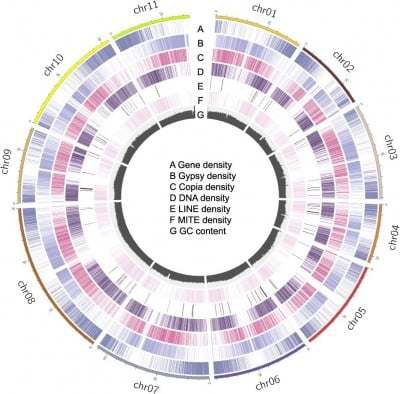
A team of researchers has unveiled the first **telomere-to-telomere (T2T)** genome of the mung bean (**Vigna radiata**), marking a significant advancement in understanding the crop’s evolution and breeding potential. This groundbreaking work highlights the impact of structural variations on the domestication and adaptation of mung beans, which are vital for global food security.
Utilizing a combination of **PacBio HiFi**, **Oxford Nanopore**, and **Hi-C** sequencing technologies, the researchers identified crucial genetic changes related to plant architecture, stress response, and metabolic pathways. These insights provide a comprehensive understanding of how mung beans have evolved and adapted over time.
Key Findings on Genetic Changes
The study revealed that transposable element amplification has significantly influenced nearby gene expression. Notably, genes associated with **fatty acid synthesis**, **suberin formation**, and **phenylpropanoid metabolism** have undergone strong selection throughout the plant’s history. Understanding these genetic shifts is essential for developing improved mung bean varieties that can withstand environmental pressures and yield higher outputs.
This genome serves as a foundational resource for researchers and breeders alike. By guiding molecular breeding efforts, it aims to enhance the resilience and productivity of mung beans, which are increasingly important amid growing global challenges in agriculture.
Implications for Future Breeding Programs
The comprehensive nature of the genome allows for targeted breeding strategies that could lead to varieties better suited for different climates and growing conditions. As the demand for sustainable agricultural practices rises, such advances in genomic research are critical. The insights gained from this study can help ensure that mung beans remain a staple crop that contributes to food security and nutritional needs worldwide.
The research team’s groundbreaking efforts not only shed light on the evolutionary history of mung beans but also pave the way for future innovations in crop breeding. As agricultural challenges continue to evolve, the application of such advanced genetic understanding will be essential in fostering resilient food systems globally.

Japan’s PM Takaichi Confirms Continued Fiscal Management Strategy

Bitcoin Plummets Below $88K Amid Tether Concerns and Warnings

Designers Unveil 5 Urgent Tricks to Transform Outdoor Eyesores

Shark Teeth Research Reveals Urgent Need to Protect Species

Church Members Unite in Resilience After Thanksgiving Fire

Community Unites to Attempt World Record for Largest Cookie Exchange

Mayor Lurie Appoints Alan Wong to District 4 Seat Amid Controversy

Mayor Appoints Alan Wong as New Supervisor for District 4

UK Report Reveals AI’s Role in Evaluating University Research Quality

University of Hawaiʻi Joins $25.6M AI Initiative to Monitor Disasters

Toledo City League Announces Hall of Fame Inductees for 2024

DOJ Seizes $15 Billion in Bitcoin from Major Crypto Fraud Network

Sharp Launches Five New Aquos QLED 4K Ultra HD Smart TVs

Celtics Coach Joe Mazzulla Dominates Local Media in Scrimmage

Community Unites for 7th Annual Walk to Raise Mental Health Awareness

Mutual Advisors LLC Increases Stake in SPDR Portfolio ETF

Western Executives Confront Harsh Realities of China’s Manufacturing Edge

INK Entertainment Launches Exclusive Sofia Pop-Up at Virgin Hotels
-
Science4 weeks ago
University of Hawaiʻi Joins $25.6M AI Initiative to Monitor Disasters
-
 Lifestyle2 months ago
Toledo City League Announces Hall of Fame Inductees for 2024
-
 Business2 months ago
DOJ Seizes $15 Billion in Bitcoin from Major Crypto Fraud Network
-
 Top Stories2 months ago
Sharp Launches Five New Aquos QLED 4K Ultra HD Smart TVs
-
 Sports2 months ago
Celtics Coach Joe Mazzulla Dominates Local Media in Scrimmage
-
 Health2 months ago
Community Unites for 7th Annual Walk to Raise Mental Health Awareness
-
 Politics2 months ago
Mutual Advisors LLC Increases Stake in SPDR Portfolio ETF
-
 Science2 months ago
Western Executives Confront Harsh Realities of China’s Manufacturing Edge
-
 World2 months ago
INK Entertainment Launches Exclusive Sofia Pop-Up at Virgin Hotels
-

 Politics2 months ago
Major Networks Reject Pentagon’s New Reporting Guidelines
-

 Science1 month ago
Astronomers Discover Twin Cosmic Rings Dwarfing Galaxies
-

 Top Stories1 month ago
Randi Mahomes Launches Game Day Clothing Line with Chiefs