
Science
International Team Measures Charge Carrier Interactions in Superconductors

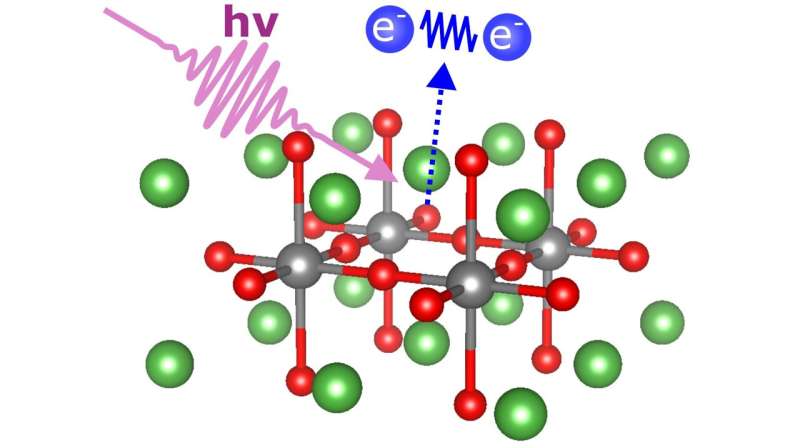
A recent study conducted by an international research team at BESSY II has advanced the understanding of high-temperature superconductivity by measuring the energy of charge carrier pairs in undoped La2CuO4. The findings indicate that the interaction energies within the superconducting copper oxide layers are significantly lower than those in the insulating lanthanum oxide layers. This research, published on November 7, 2025, in the journal Nature Communications, could have implications for future studies on superconductors and other functional materials.
High-temperature superconductors have fascinated scientists for nearly four decades due to their ability to conduct electricity without resistance at temperatures above absolute zero, and occasionally at temperatures approaching room temperature. Despite their practical applications, the mechanisms underlying this phenomenon remain elusive. The established understanding highlights that specific interactions between charge carriers facilitate their movement through the crystal lattice under particular conditions.
Led by Professor Alexander Föhlisch, the research team embarked on an experiment to assess the interactions between charge carriers in the different oxide layers of La2CuO4. The samples, supplied by the University of Rome, consist of alternating copper oxide and lanthanum oxide layers. Doping this compound with foreign atoms can induce superconductivity at temperatures below 40 Kelvin, while the insulating lanthanum oxide layers do not contribute to this property.
In this study, the team focused on undoped La2CuO4 at room temperature. “We aimed to understand the strength of the interactions between charge carriers in the two oxide layers and how they differ,” noted Dr. Danilo Kühn, the study’s first author. The measurements utilized sophisticated time-of-flight spectrometers configured to detect electron pairs through Auger photoelectron coincidence spectroscopy. The team employed unique X-ray pulses, known as PPRE pulses, to strike the sample at intervals of several hundred nanoseconds, allowing for precise observation of rapid interaction processes.
The results indicated that the interaction energies were markedly lower in the copper oxide layer, a key component in high-temperature superconductivity, compared to the insulating lanthanum oxide layers. “These findings enhance our comprehension of the mechanisms involved in high-temperature superconductivity,” stated Professor Föhlisch. He further emphasized that this measurement technique could yield valuable insights into other functional materials as well.
This research not only sheds light on the complexities of superconductivity but also paves the way for future exploration of materials that could revolutionize technologies reliant on lossless electrical conduction. The implications of these findings could extend beyond superconductors, encouraging further investigation into the properties of various functional materials.
For more information, refer to the original study by Danilo Kühn et al., titled “Direct observation of the on-site oxygen 2p two-hole Coulomb energy in La2CuO4,” published in Nature Communications.

Knicks Dominate Raptors 116-94 at Home, Extend Winning Streak

Hallmark’s ‘Christmas at the Catnip Café’ Premieres Tonight!

Millville Woman Arrested for Threatening U-Haul Worker with Baton

Japan’s PM Takaichi Confirms Continued Fiscal Management Strategy

Bitcoin Plummets Below $88K Amid Tether Concerns and Warnings

Designers Unveil 5 Urgent Tricks to Transform Outdoor Eyesores

Shark Teeth Research Reveals Urgent Need to Protect Species

Church Members Unite in Resilience After Thanksgiving Fire

Community Unites to Attempt World Record for Largest Cookie Exchange

University of Hawaiʻi Joins $25.6M AI Initiative to Monitor Disasters

Toledo City League Announces Hall of Fame Inductees for 2024

DOJ Seizes $15 Billion in Bitcoin from Major Crypto Fraud Network

Sharp Launches Five New Aquos QLED 4K Ultra HD Smart TVs

Celtics Coach Joe Mazzulla Dominates Local Media in Scrimmage

Mutual Advisors LLC Increases Stake in SPDR Portfolio ETF

Community Unites for 7th Annual Walk to Raise Mental Health Awareness

Western Executives Confront Harsh Realities of China’s Manufacturing Edge

INK Entertainment Launches Exclusive Sofia Pop-Up at Virgin Hotels
-
Science4 weeks ago
University of Hawaiʻi Joins $25.6M AI Initiative to Monitor Disasters
-
 Lifestyle2 months ago
Toledo City League Announces Hall of Fame Inductees for 2024
-
 Business2 months ago
DOJ Seizes $15 Billion in Bitcoin from Major Crypto Fraud Network
-
 Top Stories2 months ago
Sharp Launches Five New Aquos QLED 4K Ultra HD Smart TVs
-
 Sports2 months ago
Celtics Coach Joe Mazzulla Dominates Local Media in Scrimmage
-
 Politics2 months ago
Mutual Advisors LLC Increases Stake in SPDR Portfolio ETF
-
 Health2 months ago
Community Unites for 7th Annual Walk to Raise Mental Health Awareness
-
 Science2 months ago
Western Executives Confront Harsh Realities of China’s Manufacturing Edge
-
 World2 months ago
INK Entertainment Launches Exclusive Sofia Pop-Up at Virgin Hotels
-

 Politics2 months ago
Major Networks Reject Pentagon’s New Reporting Guidelines
-

 Science1 month ago
Astronomers Discover Twin Cosmic Rings Dwarfing Galaxies
-

 Top Stories1 month ago
Randi Mahomes Launches Game Day Clothing Line with Chiefs