
Science
James Watson, Pioneer of DNA Discovery, Passes Away at 97

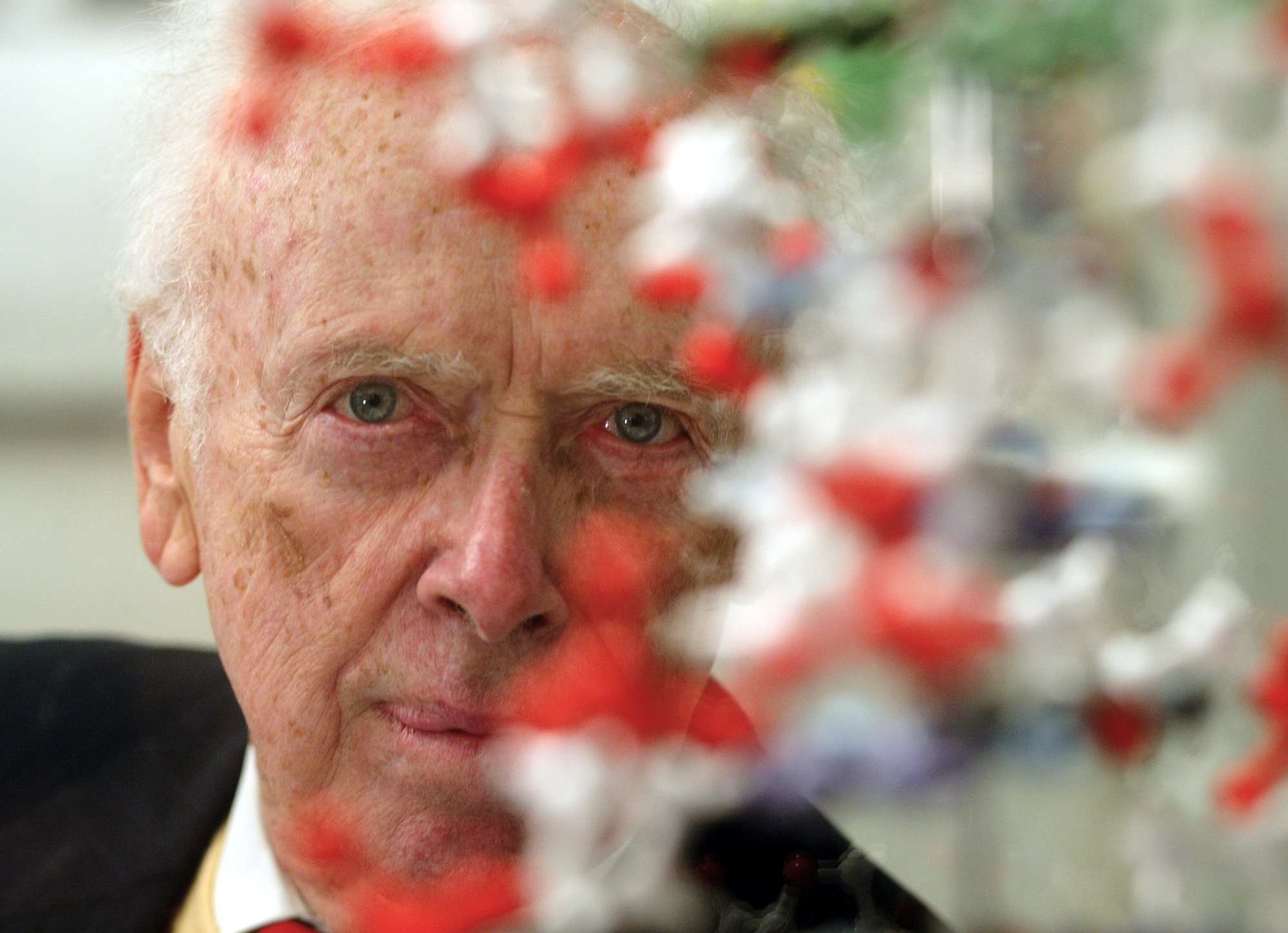
James D. Watson, renowned for his pivotal role in the discovery of the double helix structure of DNA, has died at the age of 97. His passing occurred after a brief illness, as confirmed by his son and the Cold Spring Harbor Laboratory, where Watson spent nearly 40 years of his career. Born on April 6, 1928, in Chicago, Watson’s groundbreaking work in 1953 revolutionized fields ranging from medicine to forensics, setting the stage for many advancements in genetic research.
Legacy of a Scientific Pioneer
Watson, alongside colleagues Francis Crick and Maurice Wilkins, was awarded the 1962 Nobel Prize for their discovery that DNA consists of two coiling strands, forming a structure that resembles a twisted ladder. This revelation fundamentally changed the understanding of heredity, leading to significant developments in genetic engineering, disease treatment, and ancestry tracing.
The impact of the double helix extended beyond scientific circles; it became an iconic symbol of modern science, making appearances in art and culture. Watson himself acknowledged the monumental nature of their discovery, stating, “There was no way we could have foreseen the explosive impact of the double helix on science and society.”
Despite his scientific triumphs, Watson’s later years were marred by controversy due to his remarks on race and intelligence. In 2007, he faced significant backlash after suggesting that intelligence levels might differ among races. Following an international uproar, he was suspended from his position as chancellor at Cold Spring Harbor Laboratory, where he had held leadership roles since 1968.
Career Highlights and Controversies
Watson’s academic journey began early; he obtained his Ph.D. at just 23 years old. His partnership with Crick blossomed at Cambridge University, where their combined intellect led to the groundbreaking structure of DNA. Their work was further informed by the X-ray diffraction studies conducted by Rosalind Franklin, although Watson later faced criticism for not adequately recognizing her contributions.
After the DNA discovery, Watson continued to influence the scientific community through teaching and policy-making. He played a significant role in the Human Genome Project and was present at the White House in 2000 when the mapping of the human genome was announced. His efforts in this project underscored his commitment to advancing genetic research, particularly in understanding complex diseases.
However, his career was not without its controversies. Watson’s blunt comments often drew criticism; in a 2000 speech, he suggested a link between skin color and sexual drive, a statement that reignited debates about racial stereotypes. His views on genetics and ethics continued to provoke discussions, especially regarding the implications of potential genetic predispositions to behavioral traits.
Watson’s legacy is complex, characterized by significant scientific achievements intertwined with a series of contentious statements. Dr. Francis Collins, former director of the National Institutes of Health, expressed the difficulty of reconciling Watson’s scientific brilliance with his provocative statements, stating, “His outbursts, particularly when they reflected on race, were both profoundly misguided and deeply hurtful.”
In his later years, Watson continued to receive recognition for his early contributions to science. In 2014, he auctioned his Nobel medal for $4.7 million, a record for any Nobel medal, although it was later returned to him. Watson maintained that his identity was intrinsically linked to his discovery, famously stating, “I don’t need a building named after me. I have the double helix.”
As the scientific community reflects on Watson’s life, the duality of his legacy serves as a reminder of the ongoing ethical discussions surrounding genetics. His contributions to science have had a profound and lasting impact, while his controversial remarks highlight the need for sensitivity and responsibility in scientific discourse.

Knicks Dominate Raptors 116-94 at Home, Extend Winning Streak

Hallmark’s ‘Christmas at the Catnip Café’ Premieres Tonight!

Millville Woman Arrested for Threatening U-Haul Worker with Baton

Japan’s PM Takaichi Confirms Continued Fiscal Management Strategy

Bitcoin Plummets Below $88K Amid Tether Concerns and Warnings

Designers Unveil 5 Urgent Tricks to Transform Outdoor Eyesores

Shark Teeth Research Reveals Urgent Need to Protect Species

Church Members Unite in Resilience After Thanksgiving Fire

Community Unites to Attempt World Record for Largest Cookie Exchange

University of Hawaiʻi Joins $25.6M AI Initiative to Monitor Disasters

Toledo City League Announces Hall of Fame Inductees for 2024

DOJ Seizes $15 Billion in Bitcoin from Major Crypto Fraud Network

Sharp Launches Five New Aquos QLED 4K Ultra HD Smart TVs

Celtics Coach Joe Mazzulla Dominates Local Media in Scrimmage

Mutual Advisors LLC Increases Stake in SPDR Portfolio ETF

Community Unites for 7th Annual Walk to Raise Mental Health Awareness

Western Executives Confront Harsh Realities of China’s Manufacturing Edge

INK Entertainment Launches Exclusive Sofia Pop-Up at Virgin Hotels
-
Science4 weeks ago
University of Hawaiʻi Joins $25.6M AI Initiative to Monitor Disasters
-
 Lifestyle2 months ago
Toledo City League Announces Hall of Fame Inductees for 2024
-
 Business2 months ago
DOJ Seizes $15 Billion in Bitcoin from Major Crypto Fraud Network
-
 Top Stories2 months ago
Sharp Launches Five New Aquos QLED 4K Ultra HD Smart TVs
-
 Sports2 months ago
Celtics Coach Joe Mazzulla Dominates Local Media in Scrimmage
-
 Politics2 months ago
Mutual Advisors LLC Increases Stake in SPDR Portfolio ETF
-
 Health2 months ago
Community Unites for 7th Annual Walk to Raise Mental Health Awareness
-
 Science2 months ago
Western Executives Confront Harsh Realities of China’s Manufacturing Edge
-
 World2 months ago
INK Entertainment Launches Exclusive Sofia Pop-Up at Virgin Hotels
-

 Politics2 months ago
Major Networks Reject Pentagon’s New Reporting Guidelines
-

 Science1 month ago
Astronomers Discover Twin Cosmic Rings Dwarfing Galaxies
-

 Top Stories1 month ago
Randi Mahomes Launches Game Day Clothing Line with Chiefs