
Science
Michigan Cherry Farmers Harness Kestrels for Food Safety Boost

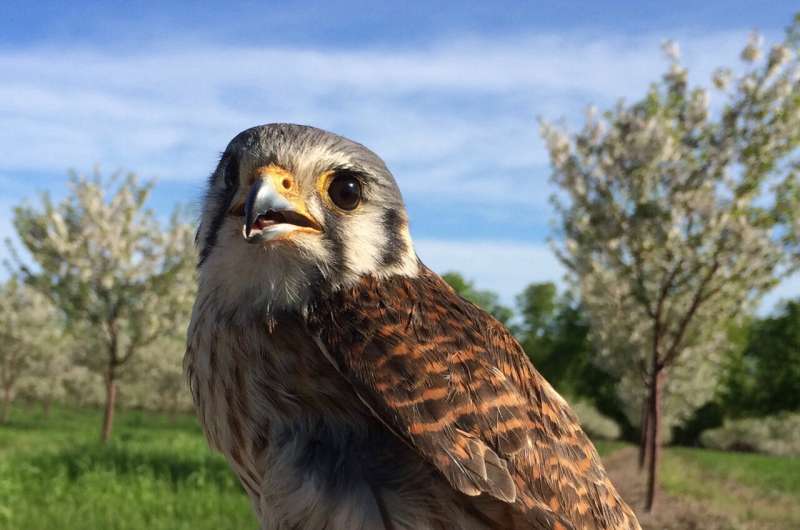
Cherry farmers in northern Michigan are finding a new ally in their quest for safer produce: the American kestrel, a small falcon known for its hunting prowess. Recent research from Michigan State University, published on November 27, 2025, in the Journal of Applied Ecology, highlights the role these birds play in deterring other avian pests and reducing food safety risks associated with crop contamination.
The cherry harvest may have concluded months ago, but growers are already looking ahead to the spring, when kestrels return to the region. These birds of prey, the smallest falcons in the United States, are not only adept at scaring off smaller birds that consume cherries, but they also contribute to maintaining the safety of the crops by minimizing droppings that could carry pathogens.
Research led by Olivia Smith, an assistant professor of horticulture at Michigan State University, revealed that kestrels significantly impact the populations of fruit-eating birds, reducing the likelihood of cherry damage. Traditionally, farmers have employed various control measures—such as nets, noisemakers, and scarecrows—often with limited success and high costs. According to Smith, despite these efforts, sweet cherry growers in Michigan, Washington, California, and Oregon experience losses of between 5% to 30% of their crops annually due to bird damage.
Kestrels offer a low-cost and low-maintenance alternative. The study tracked kestrels in eight cherry orchards, observing their impact on the number of other birds visiting the trees. The presence of nesting kestrels led to a more than tenfold decrease in fruit damage from birds such as robins and grackles.
Food Safety Implications for Cherry Crops
Beyond crop protection, kestrels also help mitigate contamination risks. The researchers found a threefold reduction in bird droppings on cherry trees in proximity to kestrel nests. Senior author Catherine Lindell, an associate professor emerita of Integrative Biology at Michigan State University, noted that while kestrels do produce droppings, their presence significantly outscales the risk posed by other birds.
DNA analysis conducted during the study revealed that approximately 10% of droppings collected contained Campylobacter, a bacterium that is a common cause of foodborne illness. Symptoms associated with this pathogen include diarrhea, fever, and stomach cramps. Despite this finding, researchers emphasized that no outbreaks of Campylobacter have been linked directly to cherries, and only one incident in history has been traced back to birds.
Smith highlighted the potential for kestrels to enhance food safety across various crops, particularly those associated with foodborne illness outbreaks, such as leafy greens. “They’re really good at keeping the amount of poop down,” she explained, noting that fewer droppings mean reduced opportunities for disease transmission.
While kestrels are not a panacea for all bird-related challenges, they present a viable strategy for growers seeking effective bird management solutions. Lindell acknowledged that the effectiveness of kestrels can vary by region, but the overall benefits they provide make them a valuable addition to farmers’ approaches.
As cherry growers prepare for the next season, the findings from Michigan State University underscore the importance of integrating natural predators into agricultural practices. This innovative strategy not only aims to protect crops but also prioritizes food safety, offering farmers a promising avenue for sustainable farming.
For more information, see the study titled “Falcons Reduce Pre-Harvest Food Safety Risks and Crop Damage From Wild Birds” in the Journal of Applied Ecology.

Shark Teeth Research Reveals Urgent Need to Protect Species

Church Members Unite in Resilience After Thanksgiving Fire

Community Unites to Attempt World Record for Largest Cookie Exchange

Mayor Lurie Appoints Alan Wong to District 4 Seat Amid Controversy

Mayor Appoints Alan Wong as New Supervisor for District 4

UK Report Reveals AI’s Role in Evaluating University Research Quality

Gabriela Jaquez Shines as No. 3 UCLA Dominates No. 14 Tennessee

Trump Promises to Release MRI Results Despite Uncertainty on Scan

Japan’s Q3 Capital Expenditure Slows Despite Surge in Profits

University of Hawaiʻi Joins $25.6M AI Initiative to Monitor Disasters

Toledo City League Announces Hall of Fame Inductees for 2024

DOJ Seizes $15 Billion in Bitcoin from Major Crypto Fraud Network

Sharp Launches Five New Aquos QLED 4K Ultra HD Smart TVs

Celtics Coach Joe Mazzulla Dominates Local Media in Scrimmage

Community Unites for 7th Annual Walk to Raise Mental Health Awareness

Mutual Advisors LLC Increases Stake in SPDR Portfolio ETF

Western Executives Confront Harsh Realities of China’s Manufacturing Edge

INK Entertainment Launches Exclusive Sofia Pop-Up at Virgin Hotels
-
Science4 weeks ago
University of Hawaiʻi Joins $25.6M AI Initiative to Monitor Disasters
-
 Lifestyle2 months ago
Toledo City League Announces Hall of Fame Inductees for 2024
-
 Business2 months ago
DOJ Seizes $15 Billion in Bitcoin from Major Crypto Fraud Network
-
 Top Stories2 months ago
Sharp Launches Five New Aquos QLED 4K Ultra HD Smart TVs
-
 Sports2 months ago
Celtics Coach Joe Mazzulla Dominates Local Media in Scrimmage
-
 Health2 months ago
Community Unites for 7th Annual Walk to Raise Mental Health Awareness
-
 Politics2 months ago
Mutual Advisors LLC Increases Stake in SPDR Portfolio ETF
-
 Science2 months ago
Western Executives Confront Harsh Realities of China’s Manufacturing Edge
-
 World2 months ago
INK Entertainment Launches Exclusive Sofia Pop-Up at Virgin Hotels
-

 Politics2 months ago
Major Networks Reject Pentagon’s New Reporting Guidelines
-

 Science1 month ago
Astronomers Discover Twin Cosmic Rings Dwarfing Galaxies
-

 Top Stories1 month ago
Randi Mahomes Launches Game Day Clothing Line with Chiefs