
Science
New Tool SPRTA Revolutionizes Phylogenetic Analysis for Pandemics

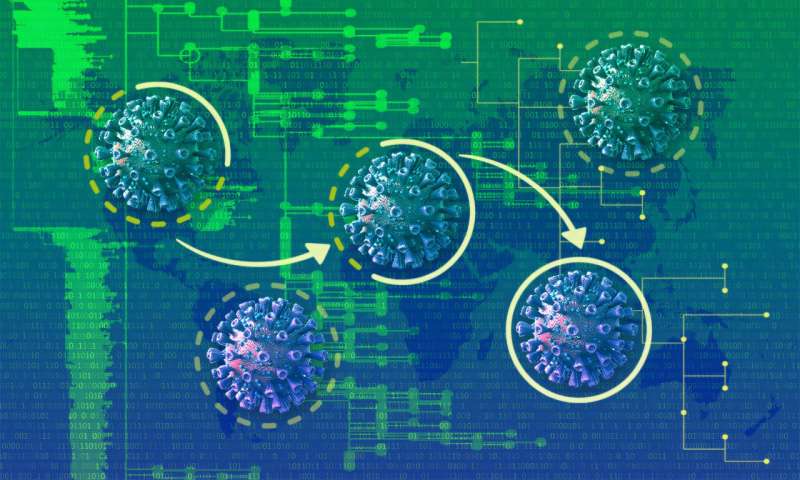
Researchers at the European Molecular Biology Laboratory’s European Bioinformatics Institute (EMBL-EBI) and the Australian National University have developed a groundbreaking tool called SPRTA (SPR-based Tree Assessment). This innovative system offers a faster and more efficient way to evaluate the reliability of phylogenetic trees, which are essential for understanding the evolution and relationships of viral strains, particularly during pandemics.
The emergence of COVID-19 highlighted the challenges in constructing evolutionary family trees, known as phylogenetic trees, for the virus. With millions of genomes to analyze, traditional methods fell short in assessing the reliability of these trees. SPRTA addresses this critical gap, providing a scalable solution that can manage the vast datasets generated in times of widespread outbreaks.
Transforming Phylogenetic Assessment
Since 1985, scientists have heavily relied on Felsenstein’s bootstrap method to measure confidence in phylogenetic trees. This process requires repeated analyses, often hundreds or thousands of times, making it impractical for the extensive genomic data encountered during a pandemic. The new paper, published in the journal Nature, introduces SPRTA as a modern alternative capable of efficiently managing the immense datasets characteristic of large-scale disease outbreaks.
Nick Goldman, Group Leader at EMBL-EBI, emphasized the significance of this advancement: “For nearly 40 years, scientists have relied on the same method to measure confidence in evolutionary trees, but when faced with the scale of data we saw during the COVID-19 pandemic, the old method simply couldn’t cope. SPRTA gives us a fast, reliable way to understand which parts of these massive trees we can trust and to find the most plausible alternatives in regions of low confidence.”
Enhancing Outbreak Analysis
Traditional phylogenetic assessment methods focus on whether groups of samples, or clades, are well-supported by the collected data. However, for effective outbreak analysis, this approach is often insufficient. SPRTA adopts a more nuanced methodology by evaluating the likelihood that a given virus strain derives from a specific ancestor while also exploring alternative evolutionary pathways.
By virtually rearranging branches of the phylogenetic tree, SPRTA tests numerous possible scenarios and compares the fit of each against the existing data. It ultimately assigns a probability score that reflects the confidence researchers can have in each connection. As Nicola De Maio, Senior Scientist at EMBL-EBI, noted, “With SPRTA, we’re not just making phylogenetic tree-building faster, we’re making it smarter. It helps researchers understand which relationships are solid and where they need to be cautious, even when working with millions of genomes.”
SPRTA has been tested using over two million SARS-CoV-2 genomes, demonstrating its ability to highlight reliable sections of phylogenetic trees, flag uncertain sample placements often caused by incomplete data, and reveal credible alternative origins for specific branches.
The integration of SPRTA into MAPLE, a tool designed at EMBL-EBI for efficiently constructing large phylogenetic trees, enhances its accessibility. Additionally, SPRTA is available within IQ-TREE, one of the leading phylogenetic software packages used globally. By embedding this tool in established platforms, researchers worldwide can readily apply it for outbreak tracking, genomic surveillance, and evolutionary studies.
As the world continues to grapple with the implications of pandemics, the development of SPRTA represents a significant advancement in the field of evolutionary biology, paving the way for more effective responses in future health crises. The research underscores the importance of adapting scientific methodologies to meet the challenges posed by emerging infectious diseases.
For further details, refer to the study by Nicola De Maio in Nature, published on November 5, 2025.

Urgent: Vehicle Fire Closes Two Lanes on I-215 in Salt Lake City

Knicks Dominate Raptors 116-94 at Home, Extend Winning Streak

Hallmark’s ‘Christmas at the Catnip Café’ Premieres Tonight!

Millville Woman Arrested for Threatening U-Haul Worker with Baton

Japan’s PM Takaichi Confirms Continued Fiscal Management Strategy

Bitcoin Plummets Below $88K Amid Tether Concerns and Warnings

Designers Unveil 5 Urgent Tricks to Transform Outdoor Eyesores

Shark Teeth Research Reveals Urgent Need to Protect Species

Church Members Unite in Resilience After Thanksgiving Fire

University of Hawaiʻi Joins $25.6M AI Initiative to Monitor Disasters

Toledo City League Announces Hall of Fame Inductees for 2024

DOJ Seizes $15 Billion in Bitcoin from Major Crypto Fraud Network

Sharp Launches Five New Aquos QLED 4K Ultra HD Smart TVs

Celtics Coach Joe Mazzulla Dominates Local Media in Scrimmage

Mutual Advisors LLC Increases Stake in SPDR Portfolio ETF

Community Unites for 7th Annual Walk to Raise Mental Health Awareness

Western Executives Confront Harsh Realities of China’s Manufacturing Edge

INK Entertainment Launches Exclusive Sofia Pop-Up at Virgin Hotels
-
Science4 weeks ago
University of Hawaiʻi Joins $25.6M AI Initiative to Monitor Disasters
-
 Lifestyle2 months ago
Toledo City League Announces Hall of Fame Inductees for 2024
-
 Business2 months ago
DOJ Seizes $15 Billion in Bitcoin from Major Crypto Fraud Network
-
 Top Stories2 months ago
Sharp Launches Five New Aquos QLED 4K Ultra HD Smart TVs
-
 Sports2 months ago
Celtics Coach Joe Mazzulla Dominates Local Media in Scrimmage
-
 Politics2 months ago
Mutual Advisors LLC Increases Stake in SPDR Portfolio ETF
-
 Health2 months ago
Community Unites for 7th Annual Walk to Raise Mental Health Awareness
-
 Science2 months ago
Western Executives Confront Harsh Realities of China’s Manufacturing Edge
-
 World2 months ago
INK Entertainment Launches Exclusive Sofia Pop-Up at Virgin Hotels
-

 Politics2 months ago
Major Networks Reject Pentagon’s New Reporting Guidelines
-

 Science1 month ago
Astronomers Discover Twin Cosmic Rings Dwarfing Galaxies
-

 Top Stories1 month ago
Randi Mahomes Launches Game Day Clothing Line with Chiefs