
Science
Potential Risks from Taurid Meteor Swarms Loom in 2032, 2036

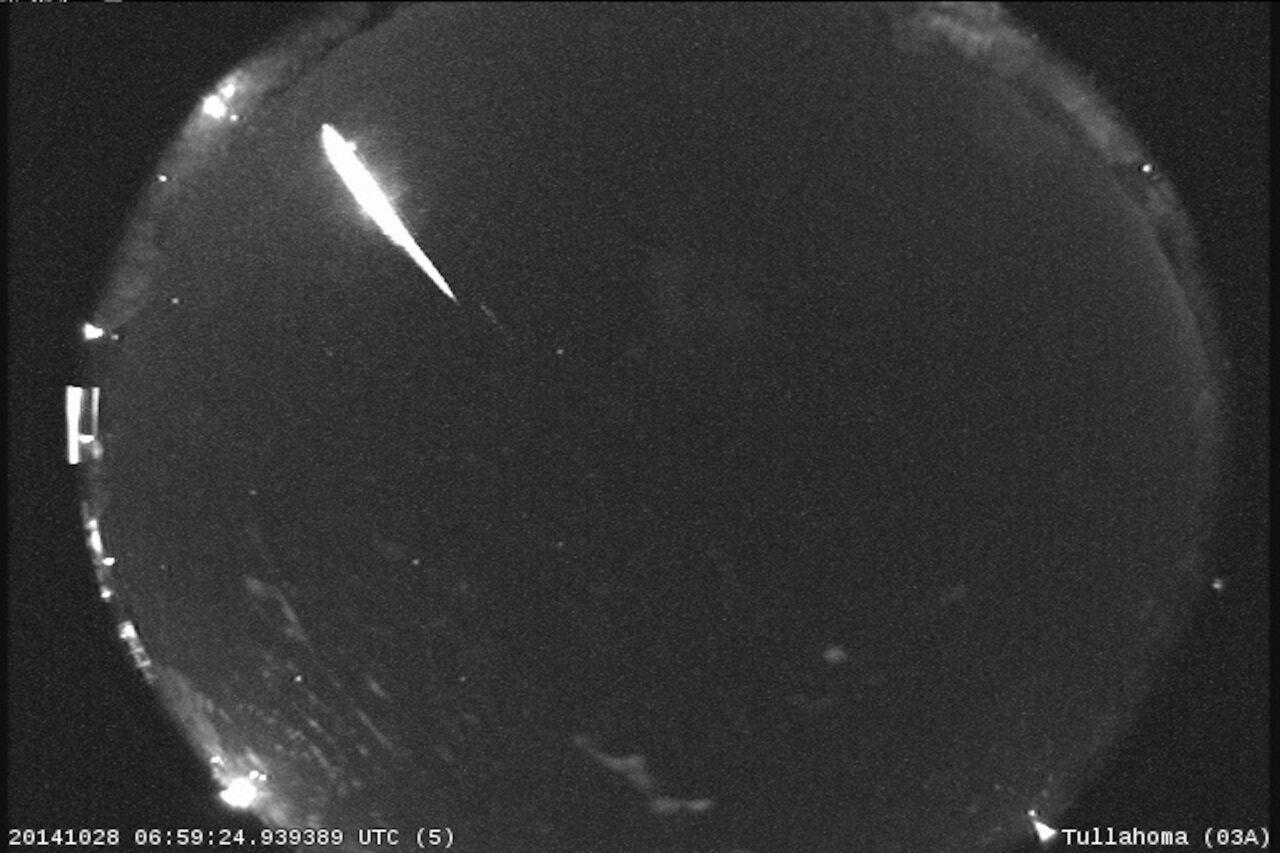
Every autumn, Earth encounters a stream of debris from Comet Encke, resulting in the annual Taurid meteor shower. This celestial event, characterized by bright fireballs streaking across the night sky, typically peaks between late October and early November. However, a recent study published in Acta Astronautica raises concerns that the Taurids may pose a significant risk in the years 2032 and 2036 due to the potential for larger meteors to impact the planet.
The meteors are remnants of Comet Encke, which orbits the Sun every three years, leaving behind a trail of dust and rock. During this time, Earth passes through Encke’s debris field twice each year, once in the fall and again in June, when the meteor shower is less visible. Researchers note that every three to seven years, Earth encounters denser clumps of debris, resulting in a more intense meteor display.
The study, led by Mark Boslough from the University of New Mexico, highlights a concerning trend. Using observational data and planetary defense modeling, the team found that the risk of encountering air-burst sized Near-Earth Objects (NEOs)—objects that can explode in the atmosphere and cause significant damage—may be higher than previously understood. This revelation emphasizes the need for vigilance as Earth approaches two critical years.
The researchers also explored the concept of a Taurid resonant swarm, a theoretical cluster of debris influenced by the gravity of Jupiter. The Taurid stream orbits the Sun seven times for every two orbits of Jupiter, leading to periodic encounters with the gas giant. Jupiter’s immense gravitational pull can gather fragments into dense clusters, increasing the likelihood of impacts.
Boslough stated, “The resonant swarm is theoretical, but evidence suggests that a sparse swarm of small objects exists.” He referenced observations of bright fireballs and seismic signatures of lunar impacts that coincide with predictions from the theory. If this hypothetical swarm does occur, it is expected to make a close approach to Earth in both 2032 and 2036, raising the potential for increased impact risk during those years.
Despite these concerns, Boslough reassured the public that there is ample time to study these dense clusters and develop potential mitigation strategies. “We have the technology to test the Taurid resonant swarm using existing telescopes for targeted sky surveys in 2032 and 2036,” he explained. “If we discover the objects with enough warning, we can take measures to reduce or eliminate the risk.”
While the probability of a significant impact remains low, researchers stress the importance of preparation. “The average probability is extremely low, so even an enhanced risk would still reflect that. The swarm in 2036 will approach from the direction of the Sun, making fireballs difficult to see unless they are exceptionally bright,” Boslough added.
As the years draw closer, scientists will continue to monitor the Taurid meteor shower, ensuring that the beauty of these fireballs does not mask the potential dangers lurking in the cosmos.

Urgent: Vehicle Fire Closes Two Lanes on I-215 in Salt Lake City

Knicks Dominate Raptors 116-94 at Home, Extend Winning Streak

Hallmark’s ‘Christmas at the Catnip Café’ Premieres Tonight!

Millville Woman Arrested for Threatening U-Haul Worker with Baton

Japan’s PM Takaichi Confirms Continued Fiscal Management Strategy

Bitcoin Plummets Below $88K Amid Tether Concerns and Warnings

Designers Unveil 5 Urgent Tricks to Transform Outdoor Eyesores

Shark Teeth Research Reveals Urgent Need to Protect Species

Church Members Unite in Resilience After Thanksgiving Fire

University of Hawaiʻi Joins $25.6M AI Initiative to Monitor Disasters

Toledo City League Announces Hall of Fame Inductees for 2024

DOJ Seizes $15 Billion in Bitcoin from Major Crypto Fraud Network

Sharp Launches Five New Aquos QLED 4K Ultra HD Smart TVs

Celtics Coach Joe Mazzulla Dominates Local Media in Scrimmage

Mutual Advisors LLC Increases Stake in SPDR Portfolio ETF

Community Unites for 7th Annual Walk to Raise Mental Health Awareness

Western Executives Confront Harsh Realities of China’s Manufacturing Edge

Major Networks Reject Pentagon’s New Reporting Guidelines
-
Science4 weeks ago
University of Hawaiʻi Joins $25.6M AI Initiative to Monitor Disasters
-
 Lifestyle2 months ago
Toledo City League Announces Hall of Fame Inductees for 2024
-
 Business2 months ago
DOJ Seizes $15 Billion in Bitcoin from Major Crypto Fraud Network
-
 Top Stories2 months ago
Sharp Launches Five New Aquos QLED 4K Ultra HD Smart TVs
-
 Sports2 months ago
Celtics Coach Joe Mazzulla Dominates Local Media in Scrimmage
-
 Politics2 months ago
Mutual Advisors LLC Increases Stake in SPDR Portfolio ETF
-
 Health2 months ago
Community Unites for 7th Annual Walk to Raise Mental Health Awareness
-
 Science2 months ago
Western Executives Confront Harsh Realities of China’s Manufacturing Edge
-
 Politics2 months ago
Major Networks Reject Pentagon’s New Reporting Guidelines
-

 World2 months ago
INK Entertainment Launches Exclusive Sofia Pop-Up at Virgin Hotels
-

 Science1 month ago
Astronomers Discover Twin Cosmic Rings Dwarfing Galaxies
-

 Top Stories1 month ago
Randi Mahomes Launches Game Day Clothing Line with Chiefs