
Science
Rare Footage Captures Remoras Surfing Humpback Whales Off Australia

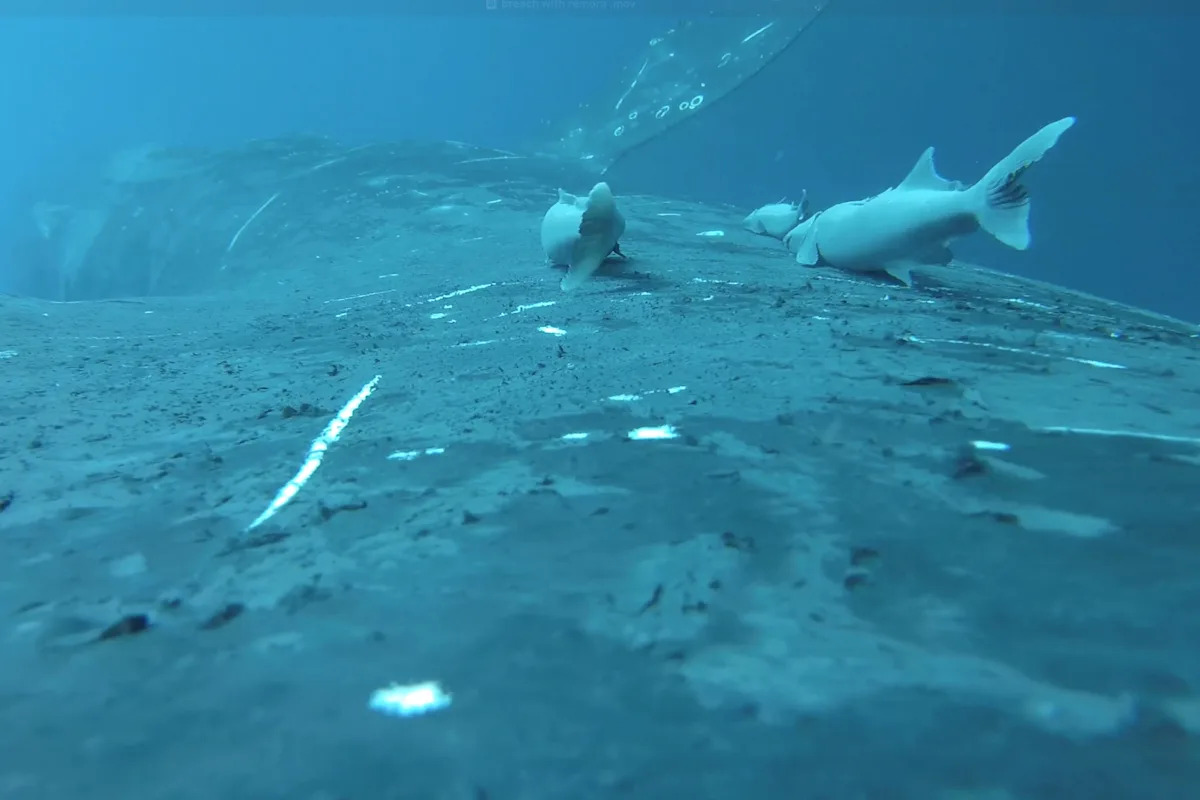
Rare footage has emerged showcasing *remora australis*, commonly known as sucker fish, engaging in an extraordinary behavior known as whale surfing. Scientists tracking humpback whales off the coast of Australia captured this unusual phenomenon, where schools of remoras detach from their whale hosts just before the mammals breach the surface, only to return moments later.
Whale-Surfing Behavior Documented
The footage was recorded by marine scientist Olaf Meynecke from the Whales and Climate Research Program at Griffith University. He had initially deployed suction-cup cameras on humpback whales during their annual migration from the icy waters of Antarctica to the warmer regions off Queensland. Instead of solely capturing whale behavior, Meynecke’s cameras frequently recorded groups of remoras, sometimes numbering up to 50, as they clung to the whales.
“Whenever the whale was breaching and making fast movements, it appeared that the sucker fish were responding quickly to those actions,” Meynecke explained. “They knew exactly when to let go of the whale’s body before it breached and would return to the same spot only seconds later.”
This remarkable footage illustrates not only the agility of the remoras but also their instinctive timing, akin to that of Olympic gymnasts performing a well-choreographed routine.
A Unique Relationship
The remora fish thrive in a symbiotic relationship with their much larger hosts, primarily feeding on dead skin and sea lice. This relationship is generally beneficial, though not without its complications. Meynecke noted that while the remoras do not harm the whales, they may be perceived as a nuisance.
Observing individual whales with numerous remoras, he remarked, “These whales were continually breaching and not communicating with other whales, suggesting they were attempting to rid themselves of some of these remoras, checking for fewer after each breach.”
The journey undertaken by these humpback whales is significant. Approximately 40,000 whales travel along what is known as Australia’s humpback highway, a migratory corridor spanning roughly 10,000 km (6,000 miles). This route brings the whales close to the eastern coast for several months each year, but the fate of the remoras during this extensive journey remains uncertain.
Meynecke speculated, “I suspect that most remoras leave their hosts at some point, likely in temperate waters. But then the question arises: what do they do next? Do they find other large marine creatures to latch onto while waiting for the humpback whales’ return?”
In the absence of whales, these sucker fish adapt by attaching themselves to other large animals, including manta rays and dolphins, or even unfortunate scuba divers, much to the annoyance of underwater explorers.
This extraordinary display of behavior highlights the intricate relationships within marine ecosystems and raises intriguing questions about the life cycles of both the whales and the remoras. The ongoing research aims to deepen the understanding of these interactions and the environmental factors influencing their migratory patterns.

Knicks Dominate Raptors 116-94 at Home, Extend Winning Streak

Hallmark’s ‘Christmas at the Catnip Café’ Premieres Tonight!

Millville Woman Arrested for Threatening U-Haul Worker with Baton

Japan’s PM Takaichi Confirms Continued Fiscal Management Strategy

Bitcoin Plummets Below $88K Amid Tether Concerns and Warnings

Designers Unveil 5 Urgent Tricks to Transform Outdoor Eyesores

Shark Teeth Research Reveals Urgent Need to Protect Species

Church Members Unite in Resilience After Thanksgiving Fire

Community Unites to Attempt World Record for Largest Cookie Exchange

University of Hawaiʻi Joins $25.6M AI Initiative to Monitor Disasters

Toledo City League Announces Hall of Fame Inductees for 2024

DOJ Seizes $15 Billion in Bitcoin from Major Crypto Fraud Network

Sharp Launches Five New Aquos QLED 4K Ultra HD Smart TVs

Celtics Coach Joe Mazzulla Dominates Local Media in Scrimmage

Mutual Advisors LLC Increases Stake in SPDR Portfolio ETF

Community Unites for 7th Annual Walk to Raise Mental Health Awareness

Western Executives Confront Harsh Realities of China’s Manufacturing Edge

INK Entertainment Launches Exclusive Sofia Pop-Up at Virgin Hotels
-
Science4 weeks ago
University of Hawaiʻi Joins $25.6M AI Initiative to Monitor Disasters
-
 Lifestyle2 months ago
Toledo City League Announces Hall of Fame Inductees for 2024
-
 Business2 months ago
DOJ Seizes $15 Billion in Bitcoin from Major Crypto Fraud Network
-
 Top Stories2 months ago
Sharp Launches Five New Aquos QLED 4K Ultra HD Smart TVs
-
 Sports2 months ago
Celtics Coach Joe Mazzulla Dominates Local Media in Scrimmage
-
 Politics2 months ago
Mutual Advisors LLC Increases Stake in SPDR Portfolio ETF
-
 Health2 months ago
Community Unites for 7th Annual Walk to Raise Mental Health Awareness
-
 Science2 months ago
Western Executives Confront Harsh Realities of China’s Manufacturing Edge
-
 World2 months ago
INK Entertainment Launches Exclusive Sofia Pop-Up at Virgin Hotels
-

 Politics2 months ago
Major Networks Reject Pentagon’s New Reporting Guidelines
-

 Science1 month ago
Astronomers Discover Twin Cosmic Rings Dwarfing Galaxies
-

 Top Stories1 month ago
Randi Mahomes Launches Game Day Clothing Line with Chiefs