
Science
Researchers Uncover Disturbing Rat Predation on Bats in Germany

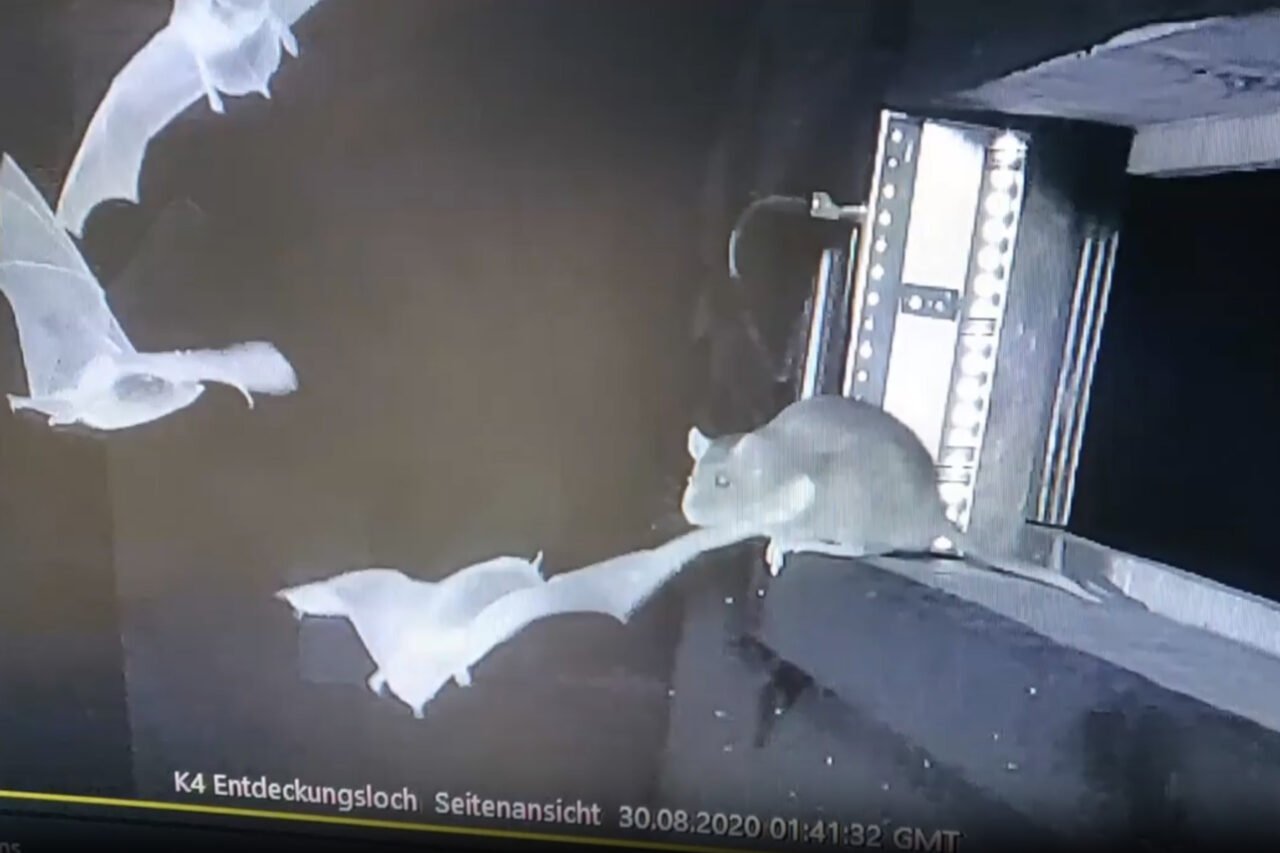
A recent study has revealed alarming behavior among brown rats in northern Germany, where they actively prey on local bat species. Researchers from a study published in *Global Ecology and Conservation* found that brown rats, specifically Rattus norvegicus, are not only stalking bats near their hibernation sites but are also systematically hunting them down. This raises serious concerns for the survival of important bat populations in the region.
Uncovering the Hunting Patterns
The investigation spanned several years, starting in 2020 when researchers deployed infrared surveillance cameras at the Segeberger Kalkberg, one of the key bat habitats in northern Germany. Over a five-week period, they documented a total of 30 predation attempts, with 13 confirmed kills. The findings revealed that the rats exhibited two distinct hunting strategies: intercepting bats midair and ambushing them upon landing.
The researchers noted, “remains of at least 52 bats were found in a cache, clearly indicating regular feeding behavior and possibly food hoarding, as not all carcasses were fully consumed.” This observation suggests a troubling regularity in the rats’ predation habits, indicating that this is not merely an isolated incident but part of a broader threat to local bat populations.
Between 2021 and 2024, follow-up investigations provided further evidence of rat predation. Researchers discovered a cache of bat carcasses in a rock near the Lüneburger Kalkberg, another significant bat residence. The arrangement of these carcasses resembled those found at the Segeberger Kalkberg, reinforcing the idea that brown rats are consistently targeting bats in these areas.
The Ecological Implications
Brown rats do not naturally prey on bats; rather, they are opportunistic feeders. Their diet can vary widely based on availability. For instance, brown rats near Japanese fish markets have been found to consume approximately 86% fish. This adaptability raises concerns about the potential impact of rat predation on bat populations, which play crucial roles in ecosystems globally, including insect suppression, seed dispersal, and pollination.
The consequences of this predation extend beyond ecological balance. Both bats and rats are known carriers of a variety of pathogens, including coronaviruses. While the study did not specifically explore pathogen transfers, it highlighted the risk of potential disease exchange between these two wildlife reservoirs. As the interactions between rats and bats become more pronounced, the ramifications for both wildlife and human health could be significant.
The findings from this research underscore the urgent need for conservation efforts to protect bat populations from these unexpected threats. As researchers continue to monitor the situation, the imperative remains clear: safeguarding these vital species is essential for maintaining ecological integrity and public health.

Hallmark’s ‘Christmas at the Catnip Café’ Premieres Tonight!

Millville Woman Arrested for Threatening U-Haul Worker with Baton

Japan’s PM Takaichi Confirms Continued Fiscal Management Strategy

Bitcoin Plummets Below $88K Amid Tether Concerns and Warnings

Designers Unveil 5 Urgent Tricks to Transform Outdoor Eyesores

Shark Teeth Research Reveals Urgent Need to Protect Species

Church Members Unite in Resilience After Thanksgiving Fire

Community Unites to Attempt World Record for Largest Cookie Exchange

Mayor Lurie Appoints Alan Wong to District 4 Seat Amid Controversy

University of Hawaiʻi Joins $25.6M AI Initiative to Monitor Disasters

Toledo City League Announces Hall of Fame Inductees for 2024

DOJ Seizes $15 Billion in Bitcoin from Major Crypto Fraud Network

Sharp Launches Five New Aquos QLED 4K Ultra HD Smart TVs

Celtics Coach Joe Mazzulla Dominates Local Media in Scrimmage

Community Unites for 7th Annual Walk to Raise Mental Health Awareness

Mutual Advisors LLC Increases Stake in SPDR Portfolio ETF

Western Executives Confront Harsh Realities of China’s Manufacturing Edge

INK Entertainment Launches Exclusive Sofia Pop-Up at Virgin Hotels
-
Science4 weeks ago
University of Hawaiʻi Joins $25.6M AI Initiative to Monitor Disasters
-
 Lifestyle2 months ago
Toledo City League Announces Hall of Fame Inductees for 2024
-
 Business2 months ago
DOJ Seizes $15 Billion in Bitcoin from Major Crypto Fraud Network
-
 Top Stories2 months ago
Sharp Launches Five New Aquos QLED 4K Ultra HD Smart TVs
-
 Sports2 months ago
Celtics Coach Joe Mazzulla Dominates Local Media in Scrimmage
-
 Health2 months ago
Community Unites for 7th Annual Walk to Raise Mental Health Awareness
-
 Politics2 months ago
Mutual Advisors LLC Increases Stake in SPDR Portfolio ETF
-
 Science2 months ago
Western Executives Confront Harsh Realities of China’s Manufacturing Edge
-
 World2 months ago
INK Entertainment Launches Exclusive Sofia Pop-Up at Virgin Hotels
-

 Politics2 months ago
Major Networks Reject Pentagon’s New Reporting Guidelines
-

 Science1 month ago
Astronomers Discover Twin Cosmic Rings Dwarfing Galaxies
-

 Top Stories1 month ago
Randi Mahomes Launches Game Day Clothing Line with Chiefs