
Science
Researchers Unlock Genetic Switch to Enhance Nitrogen Fixation in Plants

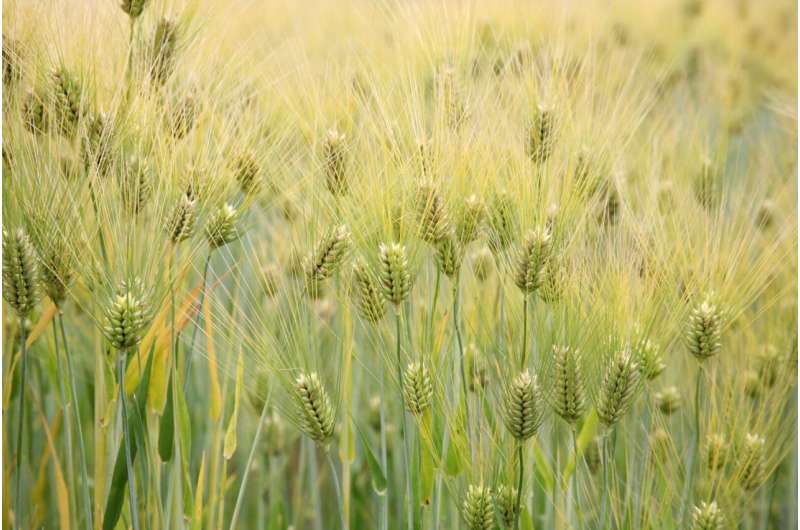
Researchers at Aarhus University have made a significant breakthrough in understanding how certain plants can thrive without nitrogen fertilizers. Their findings, published in the journal Nature on November 6, 2025, could pave the way for more sustainable agricultural practices, potentially reducing reliance on artificial fertilizers in key crops like wheat, maize, and rice.
Professors Kasper Røjkjær Andersen and Simona Radutoiu led the study, which identified critical genetic mechanisms that enable specific plants to form symbiotic relationships with nitrogen-fixing bacteria. These bacteria convert atmospheric nitrogen into a usable form for plants, allowing certain species, such as peas, clover, and beans, to grow without additional nitrogen inputs.
Understanding Plant-Bacteria Symbiosis
Currently, most crops depend on fertilizers for nitrogen, which contributes to approximately 2% of global energy consumption and substantial carbon dioxide emissions. The research team focused on the receptors in plant cells that communicate with soil microorganisms. These receptors can distinguish between harmful bacteria and beneficial ones, triggering either an immune response or a welcoming environment for symbiotic partners.
Through their research, the team discovered that two specific amino acids within a protein in the roots of plants play a crucial role in this process. They identified an area within the protein termed Symbiosis Determinant 1, which acts as a switch controlling the plant’s response to bacteria.
“This is a remarkable and important finding,” said Radutoiu. They demonstrated that by altering just two amino acids, they could convert a receptor that would typically signal an immune response into one that promotes symbiosis with nitrogen-fixing bacteria.
“We have shown that two small changes can cause plants to alter their behavior on a crucial point—from rejecting bacteria to cooperating with them,” said Radutoiu.
Implications for Major Crops
The researchers successfully modified the plant Lotus japonicus in the laboratory, and the same genetic principles were found to apply to barley. Røjkjær Andersen noted, “It is quite remarkable that we are now able to take a receptor from barley, make small changes in it, and then nitrogen fixation works again.”
The implications of this research are profound. If these modifications can be extended to other major crops, it could lead to the development of cereals like wheat, corn, or rice that can naturally fix nitrogen, similarly to legumes.
However, Radutoiu emphasizes that further research is necessary to identify additional essential genetic components. “Only very few crops can perform symbiosis today. If we can extend that to widely used crops, it can really make a big difference in how much nitrogen needs to be used,” she stated.
This innovative research not only contributes to the scientific understanding of plant biology but also holds the potential for a more sustainable agricultural future, reducing both environmental impact and production costs for farmers worldwide.
For more information, see the study by Radutoiu and Andersen, titled “Two residues reprogram immunity receptors for nitrogen-fixing symbiosis,” published in Nature.

Urgent: Vehicle Fire Closes Two Lanes on I-215 in Salt Lake City

Knicks Dominate Raptors 116-94 at Home, Extend Winning Streak

Hallmark’s ‘Christmas at the Catnip Café’ Premieres Tonight!

Millville Woman Arrested for Threatening U-Haul Worker with Baton

Japan’s PM Takaichi Confirms Continued Fiscal Management Strategy

Bitcoin Plummets Below $88K Amid Tether Concerns and Warnings

Designers Unveil 5 Urgent Tricks to Transform Outdoor Eyesores

Shark Teeth Research Reveals Urgent Need to Protect Species

Church Members Unite in Resilience After Thanksgiving Fire

University of Hawaiʻi Joins $25.6M AI Initiative to Monitor Disasters

Toledo City League Announces Hall of Fame Inductees for 2024

DOJ Seizes $15 Billion in Bitcoin from Major Crypto Fraud Network

Sharp Launches Five New Aquos QLED 4K Ultra HD Smart TVs

Celtics Coach Joe Mazzulla Dominates Local Media in Scrimmage

Mutual Advisors LLC Increases Stake in SPDR Portfolio ETF

Community Unites for 7th Annual Walk to Raise Mental Health Awareness

Western Executives Confront Harsh Realities of China’s Manufacturing Edge

INK Entertainment Launches Exclusive Sofia Pop-Up at Virgin Hotels
-
Science4 weeks ago
University of Hawaiʻi Joins $25.6M AI Initiative to Monitor Disasters
-
 Lifestyle2 months ago
Toledo City League Announces Hall of Fame Inductees for 2024
-
 Business2 months ago
DOJ Seizes $15 Billion in Bitcoin from Major Crypto Fraud Network
-
 Top Stories2 months ago
Sharp Launches Five New Aquos QLED 4K Ultra HD Smart TVs
-
 Sports2 months ago
Celtics Coach Joe Mazzulla Dominates Local Media in Scrimmage
-
 Politics2 months ago
Mutual Advisors LLC Increases Stake in SPDR Portfolio ETF
-
 Health2 months ago
Community Unites for 7th Annual Walk to Raise Mental Health Awareness
-
 Science2 months ago
Western Executives Confront Harsh Realities of China’s Manufacturing Edge
-
 World2 months ago
INK Entertainment Launches Exclusive Sofia Pop-Up at Virgin Hotels
-

 Politics2 months ago
Major Networks Reject Pentagon’s New Reporting Guidelines
-

 Science1 month ago
Astronomers Discover Twin Cosmic Rings Dwarfing Galaxies
-

 Top Stories1 month ago
Randi Mahomes Launches Game Day Clothing Line with Chiefs