
Science
Researchers Unveil Groundbreaking Milky Way Simulation Model

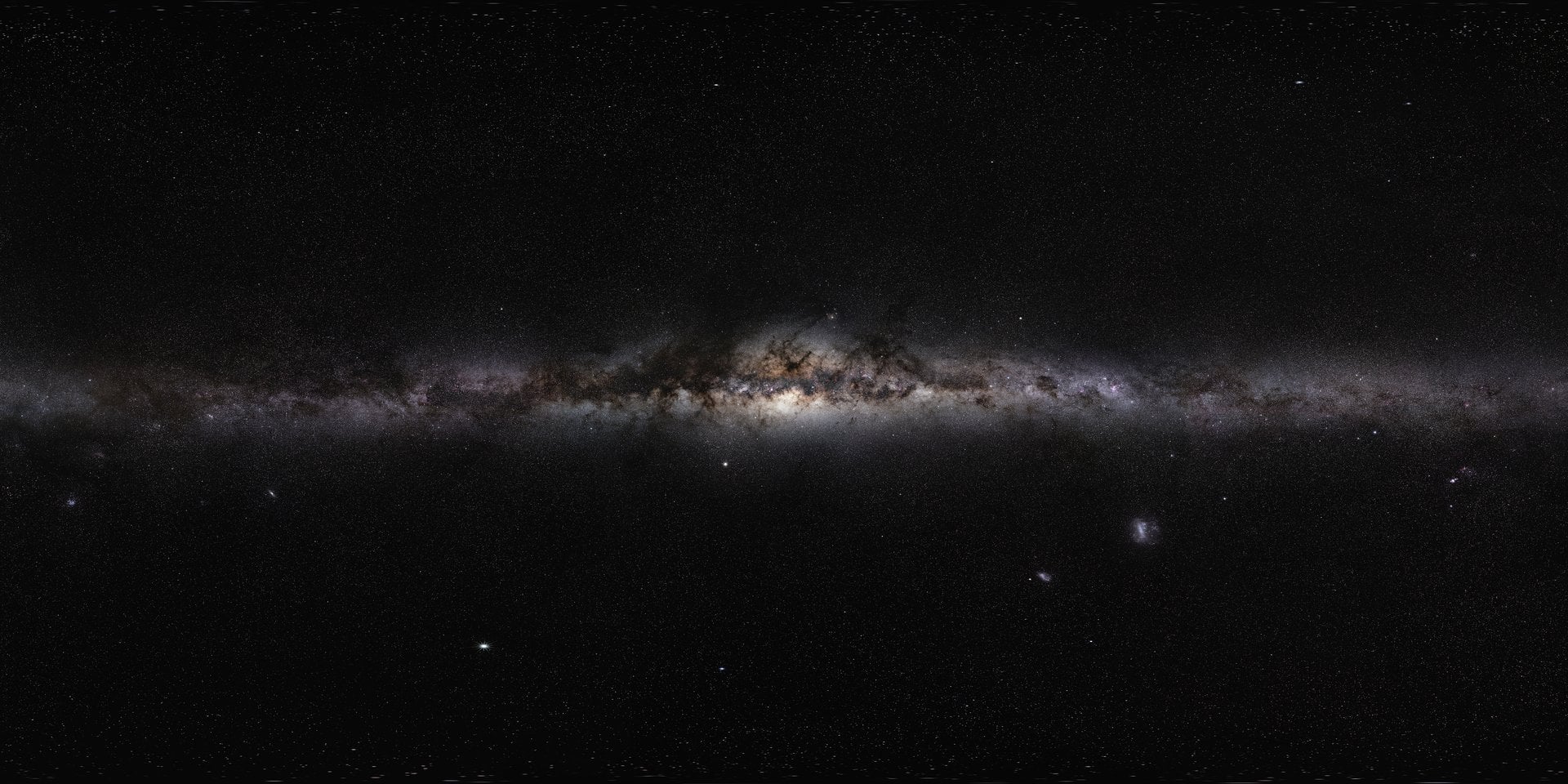
Researchers at the RIKEN Center for Interdisciplinary Theoretical and Mathematical Sciences (iTHEMS) in Japan have achieved a significant milestone in astrophysics. Collaborating with colleagues from the University of Tokyo and the Universitat de Barcelona, the team has created the first Milky Way simulations that accurately depict over 100 billion stars across a span of 10,000 years. This groundbreaking simulation is notable for incorporating 100 times more individual stars than previous models while being produced 100 times faster.
The innovative approach utilized by the research team combined the power of 7 million CPU cores, advanced machine learning algorithms, and sophisticated numerical simulations. This model not only represents a leap forward for astrophysics but also enhances the fields of supercomputing and artificial intelligence. The findings were detailed in a paper titled “The First Star-by-star N-body/Hydrodynamics Simulation of Our Galaxy Coupling with a Surrogate Model,” which will be presented at the *Proceedings of the International Conference for High Performance Computing, Networking, Storage and Analysis* (SC ’25).
Advancing Galactic Studies
The enhanced simulations allow astronomers to test theories of galactic formation and evolution through detailed comparisons with astronomical observations. Historically, creating simulations of such complexity has faced challenges due to the need to accurately model various forces, including gravity, fluid dynamics, supernovae, element synthesis, and the influence of supermassive black holes (SMBHs). Until now, the available computing power limited scientists to modeling galaxies up to one billion solar masses, representing less than 1% of the Milky Way’s total stellar population.
Current state-of-the-art supercomputing systems require approximately 315 hours (over 13 days) to simulate just 1 million years of galactic evolution, which is a mere 0.00007% of the Milky Way’s estimated age of 13.61 billion years. Moreover, simulating the desired 1 billion years would take more than 36 years. Consequently, only large-scale events could be accurately represented, making it challenging to gain insights into finer details of galactic dynamics.
Introducing AI Solutions
To overcome these limitations, lead researcher Hirashima and his team implemented an AI-driven surrogate model, which significantly optimized resource usage. This model was trained on high-resolution simulations of supernovae, allowing it to predict the effects of these explosions on surrounding gas and dust over a period of 100,000 years post-explosion. By integrating this AI component with traditional physical simulations, the team successfully modeled both the large-scale dynamics of a Milky Way-sized galaxy and small-scale stellar phenomena concurrently.
“Our new method can simulate the evolution of galaxies with over 100 billion stars, achieving a remarkable 1 million years of evolution in just 2.78 hours,”
said Hirashima in a press release from RIKEN.
This efficiency means that a full 1 billion years of galactic history could potentially be simulated in just 115 days. The implications of this research extend beyond astrophysics; the AI approach may also enhance simulations in other complex fields, including meteorology, ocean dynamics, and climate science.
The successful validation of this approach through extensive testing on the Fugaku and Miyabi Supercomputer Systems demonstrates its potential to revolutionize the way scientists study our galaxy and the universe at large. As computational demands increase, such innovative methods will be crucial for advancing our understanding of cosmic phenomena.

Shark Teeth Research Reveals Urgent Need to Protect Species

Church Members Unite in Resilience After Thanksgiving Fire

Community Unites to Attempt World Record for Largest Cookie Exchange

Mayor Lurie Appoints Alan Wong to District 4 Seat Amid Controversy

Mayor Appoints Alan Wong as New Supervisor for District 4

UK Report Reveals AI’s Role in Evaluating University Research Quality

Gabriela Jaquez Shines as No. 3 UCLA Dominates No. 14 Tennessee

Trump Promises to Release MRI Results Despite Uncertainty on Scan

Japan’s Q3 Capital Expenditure Slows Despite Surge in Profits

University of Hawaiʻi Joins $25.6M AI Initiative to Monitor Disasters

Toledo City League Announces Hall of Fame Inductees for 2024

DOJ Seizes $15 Billion in Bitcoin from Major Crypto Fraud Network

Sharp Launches Five New Aquos QLED 4K Ultra HD Smart TVs

Celtics Coach Joe Mazzulla Dominates Local Media in Scrimmage

Mutual Advisors LLC Increases Stake in SPDR Portfolio ETF

Community Unites for 7th Annual Walk to Raise Mental Health Awareness

Western Executives Confront Harsh Realities of China’s Manufacturing Edge

INK Entertainment Launches Exclusive Sofia Pop-Up at Virgin Hotels
-
Science4 weeks ago
University of Hawaiʻi Joins $25.6M AI Initiative to Monitor Disasters
-
 Lifestyle2 months ago
Toledo City League Announces Hall of Fame Inductees for 2024
-
 Business2 months ago
DOJ Seizes $15 Billion in Bitcoin from Major Crypto Fraud Network
-
 Top Stories2 months ago
Sharp Launches Five New Aquos QLED 4K Ultra HD Smart TVs
-
 Sports2 months ago
Celtics Coach Joe Mazzulla Dominates Local Media in Scrimmage
-
 Health2 months ago
Community Unites for 7th Annual Walk to Raise Mental Health Awareness
-
 Politics2 months ago
Mutual Advisors LLC Increases Stake in SPDR Portfolio ETF
-
 Science2 months ago
Western Executives Confront Harsh Realities of China’s Manufacturing Edge
-
 World2 months ago
INK Entertainment Launches Exclusive Sofia Pop-Up at Virgin Hotels
-

 Politics2 months ago
Major Networks Reject Pentagon’s New Reporting Guidelines
-

 Science1 month ago
Astronomers Discover Twin Cosmic Rings Dwarfing Galaxies
-

 Top Stories1 month ago
Randi Mahomes Launches Game Day Clothing Line with Chiefs