
Science
Retail Workers Confront Customer Abuse with Creative Badge Solution

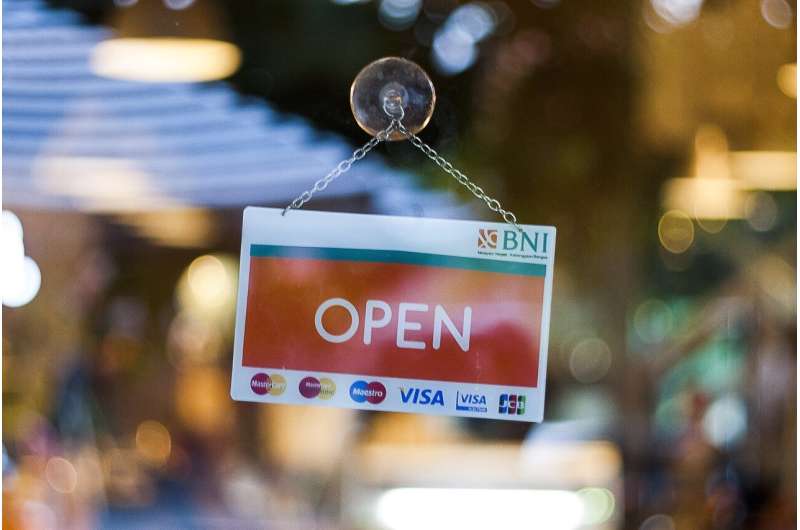
More than 1.4 million individuals work in retail and fast food sectors across Australia, yet many face significant challenges in the form of customer verbal abuse. A recent survey conducted by a union revealed that in 2023, 87% of retail workers experienced such abuse, continuing a troubling trend that has persisted since 2016. Alarmingly, the frequency of these incidents has increased, with 76% of those abused reporting such incidents on a daily, weekly, or monthly basis, up from 54% just two years prior.
In light of the approaching holiday season, which is notorious for heightened customer hostility, a coalition of retail groups has launched a national campaign titled “Be Kind in Retail.” This initiative aims to foster compassion and patience among shoppers. However, a low-cost solution, tested since 2020, has shown promise in reducing the likelihood of verbal abuse directed at retail staff.
A Simple Solution: The ‘Under Badge’ Concept
The Shop, Distributive and Allied Employees’ Association (SDA) initiated a campaign called “No One Deserves a Serve” in late 2017, aimed at addressing abuse faced by frontline workers. As part of this effort, the SDA distributed 500,000 small adhesive “under badges” to retail staff starting in early 2020. These badges, which can be affixed below conventional name tags, carry brief, personal messages such as “I’m a mother” or “I’m a son.”
Retailers including Woolworths, Target, Big W, and KFC participated in this initiative. Gary Mortimer, the lead author of a recent study on the badges, found inspiration for the project when his daughter wore one during her job at a supermarket. Despite the apparent benefits, research on the effectiveness of such low-cost solutions to customer abuse had been sparse, prompting Mortimer and his colleagues to investigate further.
Study Findings: Badges Foster Empathy
In their recently published study, the researchers spoke with 17 supermarket workers who had participated in the “No One Deserves a Serve” campaign. Many expressed initial discomfort with wearing the badges, but overall feedback indicated that the under badges helped to reduce instances of verbal abuse, facilitated conversations, and increased customer empathy. One worker noted, “I recall this old fellow coming in and carrying on […] and then he just calms down when he sees that I’m a mother.”
To quantify the impact of these badges, the researchers conducted experiments involving 940 customers. In one scenario, respondents were presented with artificial intelligence-generated images of fictional retail workers, some displaying only their name tags while others included personal identifiers from the under badges. When asked about the likelihood of a reasonable customer reacting aggressively, it became evident that having additional personal information on the badge led to a statistically significant reduction in intentions to engage in verbal abuse.
In a follow-up experiment, the wording of the badges was altered to say “I’m a local.” The results reiterated that any form of self-disclosure effectively reduced the potential for customer abuse, underscoring the importance of humanizing interactions in retail environments.
Theories Behind the Success
Two psychological theories shed light on why personal disclosures can foster respect and empathy. The first is known as social penetration theory, which posits that relationships deepen as individuals assess the rewards and costs of their interactions. The second, social exchange theory, suggests that when social rewards surpass the costs, positive exchanges will persist. For self-disclosure to be effective, the shared information must exceed what is typically expected, creating a sense of connection that can shift customer perceptions.
Overall, the study demonstrates that when retail workers share personal information, they are seen as humans rather than mere representatives of a brand, leading to more respectful interactions.
While the initial rollout of the under badges saw a decline in their visibility in stores over the past five years, the SDA continues to provide them to workers. Current estimates indicate that the cost of producing these badges can be as low as 17 cents each for larger orders, making them an affordable option for businesses aiming to improve the treatment of their employees.
As the holiday season approaches, fostering a culture of respect and understanding in retail environments is more crucial than ever. Simple initiatives like the under badge campaign can remind customers of the humanity behind the counter, encouraging a more positive shopping experience for everyone involved.

Knicks Dominate Raptors 116-94 at Home, Extend Winning Streak

Hallmark’s ‘Christmas at the Catnip Café’ Premieres Tonight!

Millville Woman Arrested for Threatening U-Haul Worker with Baton

Japan’s PM Takaichi Confirms Continued Fiscal Management Strategy

Bitcoin Plummets Below $88K Amid Tether Concerns and Warnings

Designers Unveil 5 Urgent Tricks to Transform Outdoor Eyesores

Shark Teeth Research Reveals Urgent Need to Protect Species

Church Members Unite in Resilience After Thanksgiving Fire

Community Unites to Attempt World Record for Largest Cookie Exchange

University of Hawaiʻi Joins $25.6M AI Initiative to Monitor Disasters

Toledo City League Announces Hall of Fame Inductees for 2024

DOJ Seizes $15 Billion in Bitcoin from Major Crypto Fraud Network

Sharp Launches Five New Aquos QLED 4K Ultra HD Smart TVs

Celtics Coach Joe Mazzulla Dominates Local Media in Scrimmage

Community Unites for 7th Annual Walk to Raise Mental Health Awareness

Mutual Advisors LLC Increases Stake in SPDR Portfolio ETF

Western Executives Confront Harsh Realities of China’s Manufacturing Edge

INK Entertainment Launches Exclusive Sofia Pop-Up at Virgin Hotels
-
Science4 weeks ago
University of Hawaiʻi Joins $25.6M AI Initiative to Monitor Disasters
-
 Lifestyle2 months ago
Toledo City League Announces Hall of Fame Inductees for 2024
-
 Business2 months ago
DOJ Seizes $15 Billion in Bitcoin from Major Crypto Fraud Network
-
 Top Stories2 months ago
Sharp Launches Five New Aquos QLED 4K Ultra HD Smart TVs
-
 Sports2 months ago
Celtics Coach Joe Mazzulla Dominates Local Media in Scrimmage
-
 Politics2 months ago
Mutual Advisors LLC Increases Stake in SPDR Portfolio ETF
-
 Health2 months ago
Community Unites for 7th Annual Walk to Raise Mental Health Awareness
-
 Science2 months ago
Western Executives Confront Harsh Realities of China’s Manufacturing Edge
-
 World2 months ago
INK Entertainment Launches Exclusive Sofia Pop-Up at Virgin Hotels
-

 Politics2 months ago
Major Networks Reject Pentagon’s New Reporting Guidelines
-

 Science1 month ago
Astronomers Discover Twin Cosmic Rings Dwarfing Galaxies
-

 Top Stories1 month ago
Randi Mahomes Launches Game Day Clothing Line with Chiefs