
Science
Scientists Excited by Rare Discovery of Interstellar Comet 3I/ATLAS

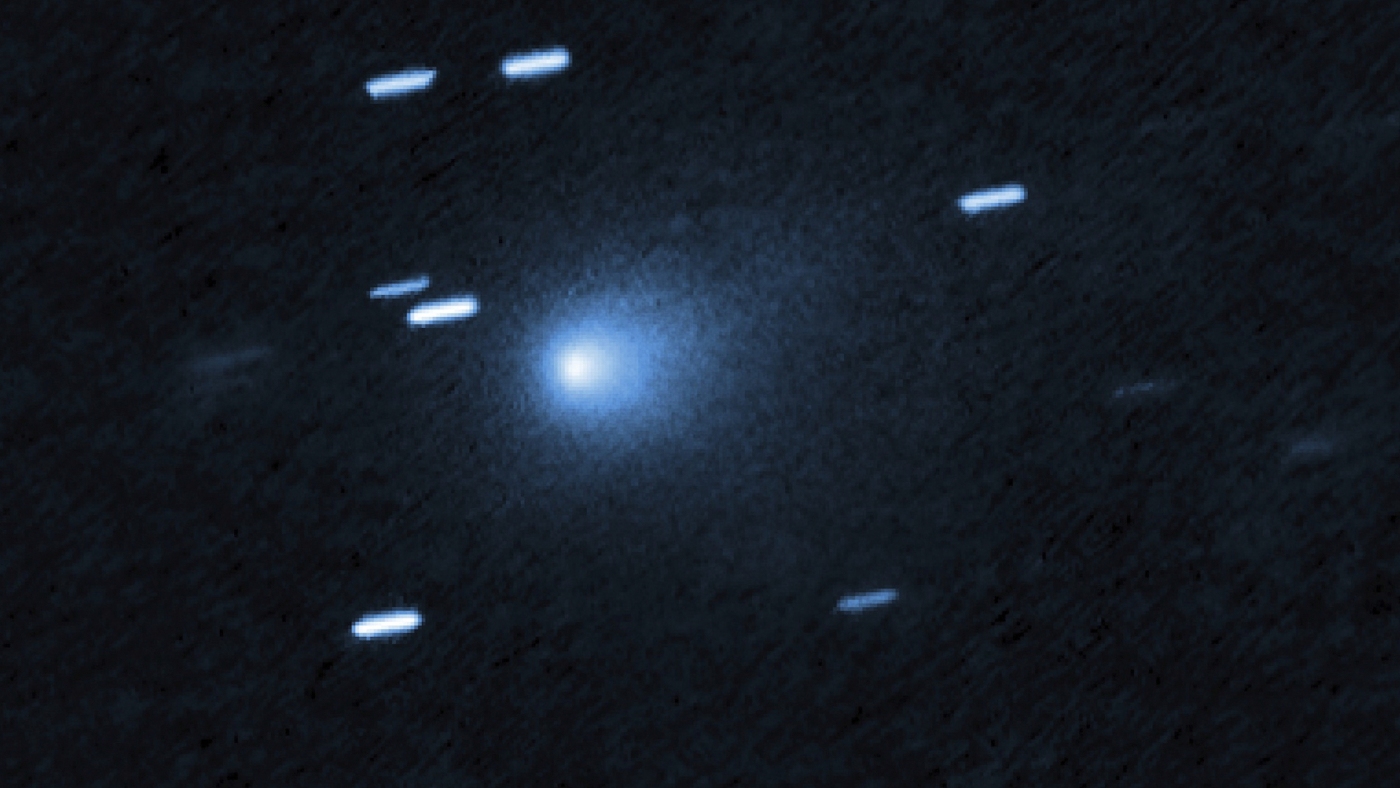
An ancient comet, designated 3I/ATLAS, has entered our solar system and is providing scientists with a unique opportunity to explore the mysteries of distant planetary systems. This rare interstellar object, confirmed on July 1, 2023, marks only the third such occurrence in recorded history. Researchers are particularly intrigued by the detection of nickel vapor in the gas surrounding the comet, which could yield significant insights into the chemical composition of materials found far beyond our solar system.
Darryl Z. Seligman, an assistant professor of physics and astronomy at Michigan State University, is leading international teams in observing 3I/ATLAS. He emphasized the value of this observation, stating it is “extremely valuable for us” as it allows for an analysis of the comet before it leaves the solar system.
The research team includes Rohan Rahatgaonkar, a Ph.D. student at the Instituto de Astrofísica-Pontificia Universidad Católica de Chile, and Thomas Puzia, who spearheaded the discovery of the nickel vapor. Their recent findings indicate that the nickel gas was detected at a remarkable distance from the sun—nearly four times that of Earth—where temperatures are typically too low for metals to vaporize. Rahatgaonkar noted in an interview with NPR, “It was pretty clear that it was nickel.”
Puzia expressed excitement about the discovery but also acknowledged the need for further research. He stated that while the findings are promising, more evidence is required to fully understand their implications. The study of 3I/ATLAS could unveil new insights into the chemistry of ancient celestial objects, possibly billions of years old, which originated in regions far beyond our solar system.
As Rahatgaonkar and fellow researcher Baltasar Luco prepared to observe the comet through the Southern Astrophysical Research (SOAR) Telescope in Chile, they were not initially searching for nickel vapors. Over several days of observation using the Very Large Telescope in Chile, they noted increasing levels of nickel vapor as 3I/ATLAS approached the sun. The research team utilized various instruments, including a spectrograph, to analyze the light characteristics emitted by the comet.
The analysis of 3I/ATLAS is ongoing. As the comet continues its trajectory toward the sun, it will undergo thermodynamic changes, leading to reactions that may provide additional clues about its origin and evolution. Puzia remarked that the comet could be “maybe older than our solar system,” adding that the chemical signatures emitted reflect its ancient origin and long journey through interstellar space.
Rahatgaonkar, Puzia, and Seligman all stressed the importance of interstellar objects like 3I/ATLAS in expanding our understanding of star systems beyond our own. These celestial bodies offer critical chemical and physical details about their formation, potentially dating back billions of years. As researchers continue to study this remarkable comet, they hope to unlock further secrets of the cosmos, enhancing our knowledge of the universe’s history and the materials that comprise it.

Knicks Dominate Raptors 116-94 at Home, Extend Winning Streak

Hallmark’s ‘Christmas at the Catnip Café’ Premieres Tonight!

Millville Woman Arrested for Threatening U-Haul Worker with Baton

Japan’s PM Takaichi Confirms Continued Fiscal Management Strategy

Bitcoin Plummets Below $88K Amid Tether Concerns and Warnings

Designers Unveil 5 Urgent Tricks to Transform Outdoor Eyesores

Shark Teeth Research Reveals Urgent Need to Protect Species

Church Members Unite in Resilience After Thanksgiving Fire

Community Unites to Attempt World Record for Largest Cookie Exchange

University of Hawaiʻi Joins $25.6M AI Initiative to Monitor Disasters

Toledo City League Announces Hall of Fame Inductees for 2024

DOJ Seizes $15 Billion in Bitcoin from Major Crypto Fraud Network

Sharp Launches Five New Aquos QLED 4K Ultra HD Smart TVs

Celtics Coach Joe Mazzulla Dominates Local Media in Scrimmage

Community Unites for 7th Annual Walk to Raise Mental Health Awareness

Mutual Advisors LLC Increases Stake in SPDR Portfolio ETF

Western Executives Confront Harsh Realities of China’s Manufacturing Edge

INK Entertainment Launches Exclusive Sofia Pop-Up at Virgin Hotels
-
Science4 weeks ago
University of Hawaiʻi Joins $25.6M AI Initiative to Monitor Disasters
-
 Lifestyle2 months ago
Toledo City League Announces Hall of Fame Inductees for 2024
-
 Business2 months ago
DOJ Seizes $15 Billion in Bitcoin from Major Crypto Fraud Network
-
 Top Stories2 months ago
Sharp Launches Five New Aquos QLED 4K Ultra HD Smart TVs
-
 Sports2 months ago
Celtics Coach Joe Mazzulla Dominates Local Media in Scrimmage
-
 Health2 months ago
Community Unites for 7th Annual Walk to Raise Mental Health Awareness
-
 Politics2 months ago
Mutual Advisors LLC Increases Stake in SPDR Portfolio ETF
-
 Science2 months ago
Western Executives Confront Harsh Realities of China’s Manufacturing Edge
-
 World2 months ago
INK Entertainment Launches Exclusive Sofia Pop-Up at Virgin Hotels
-

 Politics2 months ago
Major Networks Reject Pentagon’s New Reporting Guidelines
-

 Science1 month ago
Astronomers Discover Twin Cosmic Rings Dwarfing Galaxies
-

 Top Stories1 month ago
Randi Mahomes Launches Game Day Clothing Line with Chiefs