
Science
Single-Celled Organisms Exhibit Complex DNA Structures, Study Reveals

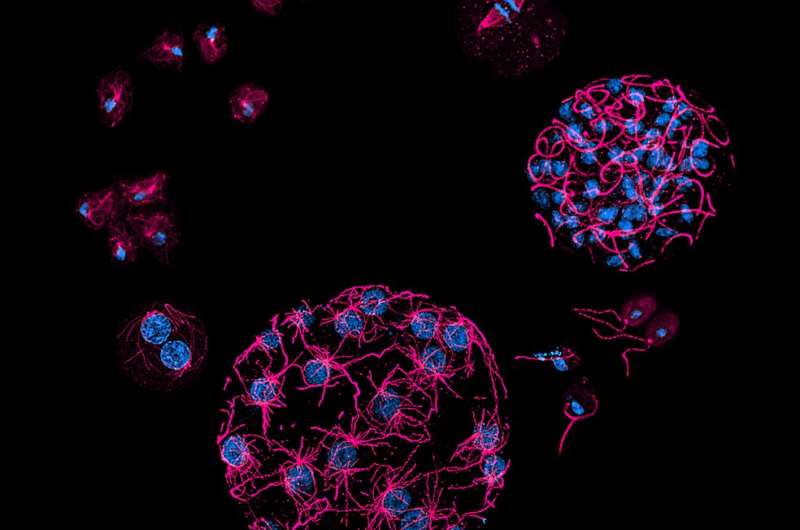
A groundbreaking study by researchers at Queen Mary University of London has revealed that unicellular organisms possess a more intricate DNA epigenetic code than previously thought. Published on November 18, 2025, in the journal Nature Genetics, the findings challenge existing beliefs about molecular complexity across different life forms.
Unicellular Complexity Surpasses Multicellular Life
Traditionally, multicellular organisms, including animals, plants, and humans, have been recognized for their ability to methylate cytosine bases in DNA. This epigenetic modification plays a crucial role in various biological processes, such as aging and the onset of diseases like cancer. The recent research indicates that certain “primitive” unicellular organisms also methylate both adenine and cytosine bases, suggesting a higher level of complexity.
The research team discovered that in many of these unicellular organisms, the methylation of adenine is essential for regulating gene expression, directly influencing their survival. This finding implies that these unicellular life forms may have evolved sophisticated mechanisms for gene regulation that rival those of multicellular organisms.
Implications for Disease Treatment
The implications of this discovery extend beyond basic biology. Unicellular organisms, including various parasites that pose threats to animals, plants, and humans, could be targeted for new treatments. By focusing on the methylation of adenine bases, researchers may find innovative ways to disrupt the life cycles of these parasites, potentially leading to new therapeutic options.
Dr. Alex de Mendoza, a Reader in Evolutionary Epigenomics at Queen Mary University of London and the study’s lead author, stated, “This discovery reveals that some unicellular eukaryotes have more intricate DNA methylation systems than multicellular organisms, overturning the assumption that molecular complexity increases with organismal complexity.” He emphasized the evolutionary significance of these findings and the potential for developing drugs targeting diseases caused by protists such as Trichomonas and Blastocystis.
While the application of these findings in drug development is still in the early stages, the research opens new avenues for tackling diseases associated with unicellular organisms, including those that can lead to serious health issues in humans.
As researchers continue to explore the complex world of unicellular life, the potential for groundbreaking advancements in medical science becomes increasingly tangible. This study not only enhances our understanding of genetic complexity but also holds promise for future innovations in disease management.

Designers Unveil 5 Urgent Tricks to Transform Outdoor Eyesores

Shark Teeth Research Reveals Urgent Need to Protect Species

Church Members Unite in Resilience After Thanksgiving Fire

Community Unites to Attempt World Record for Largest Cookie Exchange

Mayor Lurie Appoints Alan Wong to District 4 Seat Amid Controversy

Mayor Appoints Alan Wong as New Supervisor for District 4

UK Report Reveals AI’s Role in Evaluating University Research Quality

Gabriela Jaquez Shines as No. 3 UCLA Dominates No. 14 Tennessee

Trump Promises to Release MRI Results Despite Uncertainty on Scan

University of Hawaiʻi Joins $25.6M AI Initiative to Monitor Disasters

Toledo City League Announces Hall of Fame Inductees for 2024

DOJ Seizes $15 Billion in Bitcoin from Major Crypto Fraud Network

Sharp Launches Five New Aquos QLED 4K Ultra HD Smart TVs

Celtics Coach Joe Mazzulla Dominates Local Media in Scrimmage

Mutual Advisors LLC Increases Stake in SPDR Portfolio ETF

Community Unites for 7th Annual Walk to Raise Mental Health Awareness

Western Executives Confront Harsh Realities of China’s Manufacturing Edge

INK Entertainment Launches Exclusive Sofia Pop-Up at Virgin Hotels
-
Science4 weeks ago
University of Hawaiʻi Joins $25.6M AI Initiative to Monitor Disasters
-
 Lifestyle2 months ago
Toledo City League Announces Hall of Fame Inductees for 2024
-
 Business2 months ago
DOJ Seizes $15 Billion in Bitcoin from Major Crypto Fraud Network
-
 Top Stories2 months ago
Sharp Launches Five New Aquos QLED 4K Ultra HD Smart TVs
-
 Sports2 months ago
Celtics Coach Joe Mazzulla Dominates Local Media in Scrimmage
-
 Politics2 months ago
Mutual Advisors LLC Increases Stake in SPDR Portfolio ETF
-
 Health2 months ago
Community Unites for 7th Annual Walk to Raise Mental Health Awareness
-
 Science2 months ago
Western Executives Confront Harsh Realities of China’s Manufacturing Edge
-
 World2 months ago
INK Entertainment Launches Exclusive Sofia Pop-Up at Virgin Hotels
-

 Politics2 months ago
Major Networks Reject Pentagon’s New Reporting Guidelines
-

 Science1 month ago
Astronomers Discover Twin Cosmic Rings Dwarfing Galaxies
-

 Top Stories1 month ago
Randi Mahomes Launches Game Day Clothing Line with Chiefs