
Science
SoftBank and Yaskawa Collaborate to Develop Advanced AI Robots

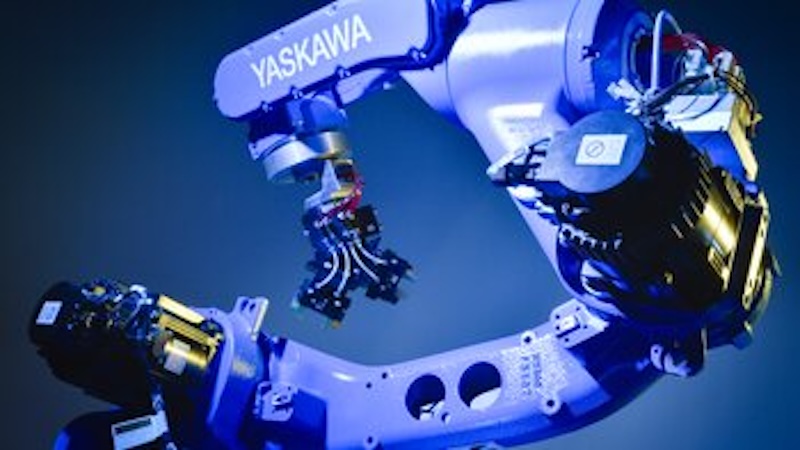
SoftBank and Yaskawa Electric have entered into a memorandum of understanding to jointly develop what they term “Physical AI” robots intended for office environments. This collaboration combines SoftBank’s AI-RAN initiative and Multi-access Edge Computing (MEC) platform with Yaskawa’s expertise in robotics and motion control. The companies aim to address Japan’s pressing labour shortages and demographic challenges by accelerating the deployment of advanced robotic solutions.
This partnership aims to enhance the “social implementation” of Physical AI technologies, which are designed to integrate seamlessly into various workspaces. As a first step, SoftBank and Yaskawa have created an application for an office-oriented robot that interfaces with building management systems and employs AI operating on the MEC platform. Unlike conventional robots, which typically perform limited tasks, this new system can integrate multiple data streams in real time, allowing robots to adapt and perform a broader range of functions.
Addressing Automation Needs in Japan
Japan faces significant challenges related to its workforce, particularly in environments where humans and machines must work together, such as offices, schools, hospitals, and retail spaces. According to the companies, these settings require complex decision-making abilities and flexible responses to dynamic situations, which traditional automation often struggles to provide. By merging SoftBank’s AI-RAN with Yaskawa’s robotics capabilities, the partnership aims to create a domestically developed AI infrastructure that can cater to the nation’s unique automation needs.
The goal is to enhance robots’ reasoning capabilities and expand the variety of tasks they can safely execute in environments populated by people. By achieving this, SoftBank and Yaskawa hope to set a new standard for robotic functionality in everyday workplaces.
Technological Innovations and System Design
Yaskawa Electric brings decades of experience in precision motion control and industrial robotics to this partnership. The company is currently developing an autonomous robot named Motoman Next, which aims to leverage AI for improved decision-making and operational flexibility. Meanwhile, SoftBank is contributing its MEC environment and AI-RAN capabilities, which facilitate low-latency processing of extensive sensor and camera data. This allows the robots to gain an “external perspective” to interpret their surroundings effectively.
Additionally, SoftBank has developed a Vision-Language Model (VLM) that operates within the MEC framework to generate task instructions. Yaskawa has designed a complementary Vision-Language Action (VLA) system, which serves as Robot AI, translating the VLM’s directives into specific robotic movements. The integrated system architecture includes a next-generation building management system, a MEC AI layer, and Robot AI, enabling real-time decision-making and interaction with unexpected events in a building.
The collaboration is set to showcase its advancements at the International Robot Exhibition (iREX 2025), scheduled for December 3 to 6, 2025, at Tokyo Big Sight. Here, the companies will demonstrate how one robot can assume multiple roles traditionally requiring several specialized machines, illustrating the potential for multi-skilled robots to operate effectively in workplace settings.
Going beyond standard automation frameworks, SoftBank and Yaskawa aim to merge robotics with cutting-edge communication technologies. Their vision is to create an environment where humans and robots can collaborate safely and efficiently, ultimately broadening the range of tasks that robots can perform alongside people.

Eurozone Manufacturing PMI Dips to 49.6, Signals Economic Slowdown

Im Si Wan’s New Photos Spark Intense Online Debate Today

Holiday Gift Guide: Essential Tips for Coworker Gifting NOW

Navigate Holiday Gift-Giving for Coworkers with Ease

Readers React to Epstein Scandal and Playwright’s Legacy

SoftBank and Yaskawa Collaborate to Develop Advanced AI Robots

Broncos Triumph in Overtime as Bonitto Seals Victory Against Commanders

Search for Victims of Hong Kong Fire Approaches Conclusion

Cyber Monday 2025: Unmissable Amazon Deals to Grab Now

University of Hawaiʻi Joins $25.6M AI Initiative to Monitor Disasters

Toledo City League Announces Hall of Fame Inductees for 2024

DOJ Seizes $15 Billion in Bitcoin from Major Crypto Fraud Network

Sharp Launches Five New Aquos QLED 4K Ultra HD Smart TVs

Celtics Coach Joe Mazzulla Dominates Local Media in Scrimmage

Mutual Advisors LLC Increases Stake in SPDR Portfolio ETF

Community Unites for 7th Annual Walk to Raise Mental Health Awareness

Western Executives Confront Harsh Realities of China’s Manufacturing Edge

INK Entertainment Launches Exclusive Sofia Pop-Up at Virgin Hotels
-
Science4 weeks ago
University of Hawaiʻi Joins $25.6M AI Initiative to Monitor Disasters
-
 Lifestyle2 months ago
Toledo City League Announces Hall of Fame Inductees for 2024
-
 Business2 months ago
DOJ Seizes $15 Billion in Bitcoin from Major Crypto Fraud Network
-
 Top Stories2 months ago
Sharp Launches Five New Aquos QLED 4K Ultra HD Smart TVs
-
 Sports2 months ago
Celtics Coach Joe Mazzulla Dominates Local Media in Scrimmage
-
 Politics2 months ago
Mutual Advisors LLC Increases Stake in SPDR Portfolio ETF
-
 Health2 months ago
Community Unites for 7th Annual Walk to Raise Mental Health Awareness
-
 Science2 months ago
Western Executives Confront Harsh Realities of China’s Manufacturing Edge
-
 World2 months ago
INK Entertainment Launches Exclusive Sofia Pop-Up at Virgin Hotels
-

 Politics2 months ago
Major Networks Reject Pentagon’s New Reporting Guidelines
-

 Science1 month ago
Astronomers Discover Twin Cosmic Rings Dwarfing Galaxies
-

 Top Stories1 month ago
Randi Mahomes Launches Game Day Clothing Line with Chiefs