
Science
Solar-Powered Biofilms Transform Pollution Cleanup Methods

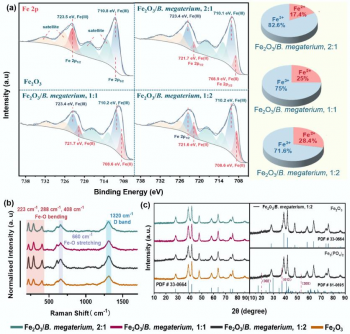
Recent research has introduced a groundbreaking approach to environmental cleanup by using solar energy to enhance the degradation of pollutants in soil and groundwater. A study published on September 15, 2025, in the journal Environmental and Biogeochemical Processes, reveals that the interaction between iron minerals and bacteria can significantly improve the breakdown of harmful antibiotics such as tetracycline hydrochloride (TCH) and chloramphenicol (CPL).
The collaborative research team, led by Bo Pan from Kunming University of Science and Technology and Baoshan Xing from the University of Massachusetts, explored the capabilities of non-phototrophic microorganisms in utilizing solar energy. While sunlight is commonly recognized for its role in photosynthesis, this study highlights its potential to drive microbial metabolic processes in environments where light penetration is limited, such as in saturated soils and sediments.
This emerging field of biophotoelectrochemistry offers a novel mechanism for energy storage and pollutant degradation. The researchers focused on the interaction between iron minerals, specifically Fe2O3 and FeOOH, and the bacterium Bacillus megaterium. They discovered that this combination allows for the accumulation and release of electrons in a system that operates effectively during both light and dark conditions.
The study demonstrated a continuous charge-discharge function within the co-culturing system. Notably, the electron storage capacity increased with higher bacterial densities, suggesting that denser biofilms are more efficient at capturing and storing energy. As observed, the net accumulated charge rose from 2.87 μC·cm−2 to 4.08 μC·cm−2 after several cycles, indicating a clear distinction between charge accumulation in light and release in the dark.
The findings also revealed that the biofilm’s unique “photovoltaic memory” feature significantly enhances the degradation efficiency of pollutants. Following just 60 minutes of light exposure, the degradation rates for TCH and CPL improved by 66.7% and 46.7% respectively. This remarkable increase is attributed to the synergistic interaction between the iron minerals and the bacteria, which facilitates efficient electron transfer and storage.
According to the study, the Fe2O3/B. megaterium biofilm system presents a promising and sustainable method for addressing soil and groundwater pollution. The development of this “biological capacitor” allows for pollutant degradation without the need for continuous illumination, making it particularly effective in dark environments where traditional methods falter.
The implications of this research are significant. By harnessing solar energy for bioremediation, this approach not only enhances the effectiveness of current cleanup methods but also offers a cost-effective and environmentally friendly solution for antibiotic-contaminated sites. The ability to store and release energy for pollutant degradation positions this technology as a potential revolution in bioremediation practices.
This study was supported by multiple funding sources, including the National Natural Science Foundation of China and various regional scientific projects. The insights gained from this research contribute to a broader understanding of the interactions between biological, geological, and chemical processes in the environment, paving the way for innovative strategies to combat pollution.

Hallmark’s ‘Christmas at the Catnip Café’ Premieres Tonight!

Millville Woman Arrested for Threatening U-Haul Worker with Baton

Japan’s PM Takaichi Confirms Continued Fiscal Management Strategy

Bitcoin Plummets Below $88K Amid Tether Concerns and Warnings

Designers Unveil 5 Urgent Tricks to Transform Outdoor Eyesores

Shark Teeth Research Reveals Urgent Need to Protect Species

Church Members Unite in Resilience After Thanksgiving Fire

Community Unites to Attempt World Record for Largest Cookie Exchange

Mayor Lurie Appoints Alan Wong to District 4 Seat Amid Controversy

University of Hawaiʻi Joins $25.6M AI Initiative to Monitor Disasters

Toledo City League Announces Hall of Fame Inductees for 2024

DOJ Seizes $15 Billion in Bitcoin from Major Crypto Fraud Network

Sharp Launches Five New Aquos QLED 4K Ultra HD Smart TVs

Celtics Coach Joe Mazzulla Dominates Local Media in Scrimmage

Mutual Advisors LLC Increases Stake in SPDR Portfolio ETF

Community Unites for 7th Annual Walk to Raise Mental Health Awareness

Western Executives Confront Harsh Realities of China’s Manufacturing Edge

INK Entertainment Launches Exclusive Sofia Pop-Up at Virgin Hotels
-
Science4 weeks ago
University of Hawaiʻi Joins $25.6M AI Initiative to Monitor Disasters
-
 Lifestyle2 months ago
Toledo City League Announces Hall of Fame Inductees for 2024
-
 Business2 months ago
DOJ Seizes $15 Billion in Bitcoin from Major Crypto Fraud Network
-
 Top Stories2 months ago
Sharp Launches Five New Aquos QLED 4K Ultra HD Smart TVs
-
 Sports2 months ago
Celtics Coach Joe Mazzulla Dominates Local Media in Scrimmage
-
 Politics2 months ago
Mutual Advisors LLC Increases Stake in SPDR Portfolio ETF
-
 Health2 months ago
Community Unites for 7th Annual Walk to Raise Mental Health Awareness
-
 Science2 months ago
Western Executives Confront Harsh Realities of China’s Manufacturing Edge
-
 World2 months ago
INK Entertainment Launches Exclusive Sofia Pop-Up at Virgin Hotels
-

 Politics2 months ago
Major Networks Reject Pentagon’s New Reporting Guidelines
-

 Science1 month ago
Astronomers Discover Twin Cosmic Rings Dwarfing Galaxies
-

 Top Stories1 month ago
Randi Mahomes Launches Game Day Clothing Line with Chiefs