
Science
Solar System Surprises Scientists with Unprecedented Speed

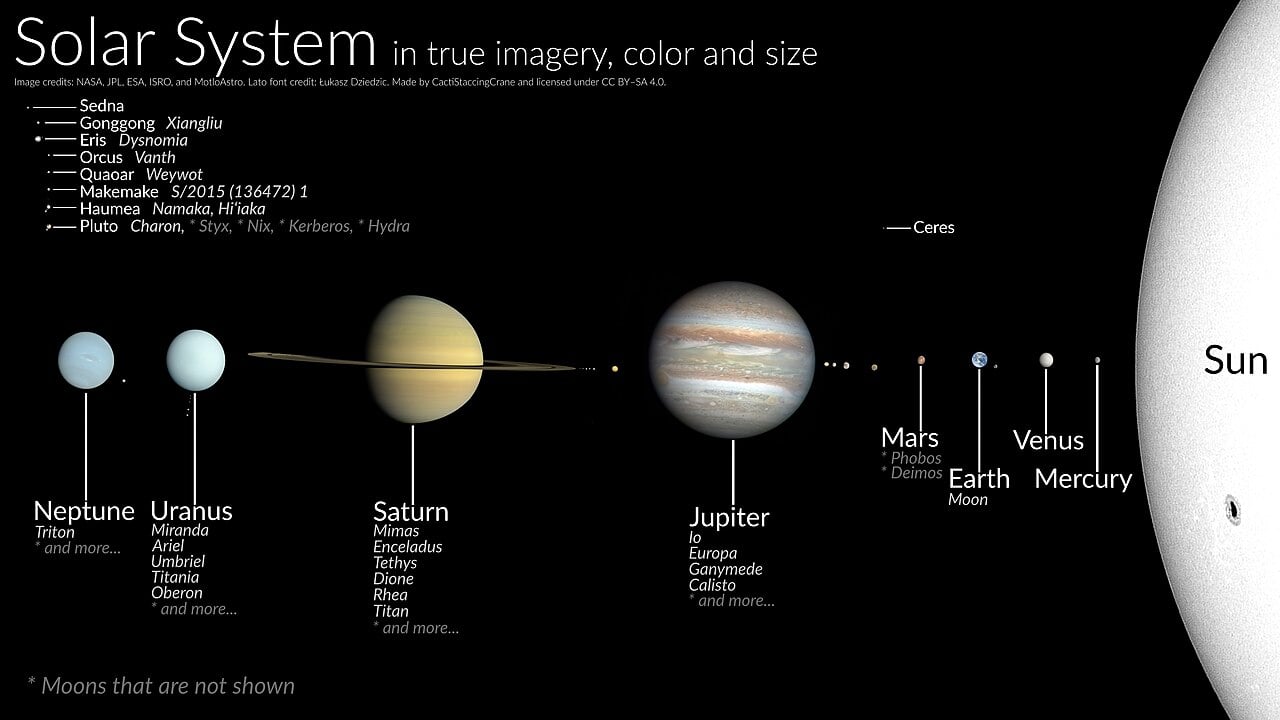
The Solar System is traversing space at a velocity significantly higher than previously anticipated, according to a study led by Lukas Böhme, an astrophysicist at Bielefeld University. This discovery challenges established models of the universe and highlights the complexities of measuring cosmic motion.
Understanding the Solar System’s speed through space is a complex task that tests our current cosmological frameworks. As the Solar System moves, it generates a subtle asymmetry, manifesting as a “headwind.” This phenomenon results in a greater number of distant galaxies appearing in our path than those positioned behind us. The effect is faint and requires precise measurements for detection.
To investigate this, Böhme and his team analyzed radio galaxies, which are distant celestial bodies emitting strong radio waves. Unlike optical telescopes, which can be obstructed by dust and gas, radio telescopes can detect these long-wavelength emissions. This capability enables astronomers to observe galaxies that remain hidden from conventional instruments.
The research team utilized data from three radio telescope networks, including the LOFAR (Low Frequency Array), a prominent facility located in Exloo, Netherlands, along with two additional observatories. This comprehensive dataset allowed the researchers to count radio galaxies across the sky with remarkable accuracy. They also developed a new statistical method to account for the multi-component nature of many radio galaxies, which improved measurement precision.
Despite conservative error estimates, the findings were unexpected. The analysis uncovered an anisotropy, characterized by a lopsided distribution of radio galaxies, that exceeded five sigma statistical significance. This level of significance indicates overwhelming evidence of a genuine effect rather than random measurement noise.
The detected asymmetry was 3.7 times stronger than predictions made by the standard cosmological model, which posits a relatively uniform distribution of matter in the universe since the Big Bang. This striking discrepancy raises two significant possibilities: either the Solar System is moving through space much faster than current models suggest, or the distribution of radio galaxies is less uniform than previously assumed. Both scenarios pose challenges to established cosmological theories.
The findings align with earlier observations from different methodologies. Previous studies examining quasars, the bright cores of distant galaxies powered by supermassive black holes, indicated similar anomalous effects in infrared data. This independent verification reinforces the notion that the phenomenon is not a mere measurement artifact, but rather a fundamental characteristic of the universe.
This research underscores how advancements in observational techniques can profoundly influence our understanding of cosmic dynamics. It also serves as a reminder of the vast unknowns that still exist regarding our place in the cosmos. As scientists continue to refine their methods and gather more data, the implications of these discoveries could reshape our comprehension of the universe itself.

Millville Woman Arrested for Threatening U-Haul Worker with Baton

Japan’s PM Takaichi Confirms Continued Fiscal Management Strategy

Bitcoin Plummets Below $88K Amid Tether Concerns and Warnings

Designers Unveil 5 Urgent Tricks to Transform Outdoor Eyesores

Shark Teeth Research Reveals Urgent Need to Protect Species

Church Members Unite in Resilience After Thanksgiving Fire

Community Unites to Attempt World Record for Largest Cookie Exchange

Mayor Lurie Appoints Alan Wong to District 4 Seat Amid Controversy

Mayor Appoints Alan Wong as New Supervisor for District 4

University of Hawaiʻi Joins $25.6M AI Initiative to Monitor Disasters

Toledo City League Announces Hall of Fame Inductees for 2024

DOJ Seizes $15 Billion in Bitcoin from Major Crypto Fraud Network

Sharp Launches Five New Aquos QLED 4K Ultra HD Smart TVs

Celtics Coach Joe Mazzulla Dominates Local Media in Scrimmage

Mutual Advisors LLC Increases Stake in SPDR Portfolio ETF

Community Unites for 7th Annual Walk to Raise Mental Health Awareness

Western Executives Confront Harsh Realities of China’s Manufacturing Edge

INK Entertainment Launches Exclusive Sofia Pop-Up at Virgin Hotels
-
Science4 weeks ago
University of Hawaiʻi Joins $25.6M AI Initiative to Monitor Disasters
-
 Lifestyle2 months ago
Toledo City League Announces Hall of Fame Inductees for 2024
-
 Business2 months ago
DOJ Seizes $15 Billion in Bitcoin from Major Crypto Fraud Network
-
 Top Stories2 months ago
Sharp Launches Five New Aquos QLED 4K Ultra HD Smart TVs
-
 Sports2 months ago
Celtics Coach Joe Mazzulla Dominates Local Media in Scrimmage
-
 Politics2 months ago
Mutual Advisors LLC Increases Stake in SPDR Portfolio ETF
-
 Health2 months ago
Community Unites for 7th Annual Walk to Raise Mental Health Awareness
-
 Science2 months ago
Western Executives Confront Harsh Realities of China’s Manufacturing Edge
-
 World2 months ago
INK Entertainment Launches Exclusive Sofia Pop-Up at Virgin Hotels
-

 Politics2 months ago
Major Networks Reject Pentagon’s New Reporting Guidelines
-

 Science1 month ago
Astronomers Discover Twin Cosmic Rings Dwarfing Galaxies
-

 Top Stories1 month ago
Randi Mahomes Launches Game Day Clothing Line with Chiefs