
Science
Ubicept Launches Toolkit to Enhance Imaging Across Vision Systems

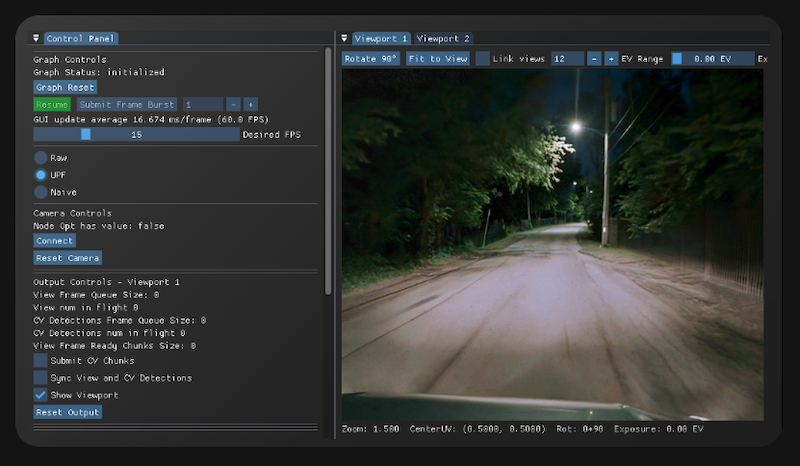
Ubicept, a computer vision startup that operates “at the limits of physics,” has introduced the **Ubicept Toolkit**, a groundbreaking solution designed to enhance imaging capabilities across various modern vision systems. This toolkit aims to improve the performance of both advanced single-photon avalanche diode (SPAD) sensors and existing hardware, enabling developers to utilize a unified, physics-based approach that delivers high-quality, reliable data.
The launch of the **Ubicept Toolkit** represents a significant advancement in machine vision technology. According to **Sebastian Bauer**, CEO of Ubicept, “Ubicept’s technology revolutionizes how machines see the world by unlocking the full potential of today’s and tomorrow’s image sensors.” He emphasizes that the company’s physics-based approach captures the full complexity of motion, even under challenging conditions such as low light or high dynamic range, providing more trustworthy data than traditional AI-based video enhancement methods.
Transforming Imaging Technology
The toolkit is particularly beneficial for developers working with **CMOS cameras**, which are widely available and commonly used in various applications. The introduction of the toolkit is expected to yield immediate quality improvements in image data, allowing perception developers to achieve significant advancements without needing to invest in new hardware immediately. **Tristan Swedish**, the CTO of Ubicept, states, “Autonomous systems need a better way to understand the world. Our mission is to turn raw photon data into outputs that are specifically designed for computer vision, not human consumption.”
SPAD sensors, which have traditionally been utilized in 3D imaging systems, are now gaining traction for their potential to reshape the landscape of image sensors and computer vision technology. The **CMOS sensor market** is projected to expand to **$30 billion** by **2029**, growing at a compound annual growth rate (CAGR) of **7.5 percent**. In contrast, the SPAD market is anticipated to grow nearly three times faster, reaching **$2.55 billion** by **2029** with a CAGR of **20.1 percent**.
One notable player in this field is **Pi Imaging Technology**, which offers the **SPAD Alpha**, a next-generation 1-megapixel single-photon camera. This camera is distinguished by its zero read noise, nanosecond-level exposure control, and frame rates reaching up to **73,000 fps**. The camera’s design caters to demanding scientific applications, offering researchers and developers extreme temporal precision and light sensitivity. The **Ubicept Toolkit** enhances these capabilities by transforming the SPAD Alpha’s raw photon data into clear, ready-to-use imagery for further perception and analysis.
Enhanced Features and Support
**Michel Antolović**, CEO of Pi Imaging Technology, remarks, “Ubicept shares our deep commitment to advancing perception technology. By combining our SPAD Alpha’s state-of-the-art hardware with Ubicept’s real-time processing, perception engineers can get the most from what single-photon imaging has to offer.”
The **Ubicept Toolkit** equips engineering teams with the necessary tools to visualize, capture, and efficiently process video data through the **Ubicept Photon Fusion (UPF)** algorithm. Additionally, it includes **FLARE** (Flexible Light Acquisition and Representation Engine) firmware, optimizing photon capture for enhanced imaging results. For early adopters, the toolkit also offers personalized support, ensuring a premium experience.
The **Ubicept Toolkit** is set to be available in **December 2025**. Engineers and developers interested in elevating their perception performance and integrating these advanced capabilities into their existing workflows can find more information by contacting Ubicept directly.
This launch marks a pivotal moment in the evolution of imaging technology, promising to unlock new possibilities for industries ranging from robotics to automotive and industrial sensing.

Designers Unveil 5 Urgent Tricks to Transform Outdoor Eyesores

Shark Teeth Research Reveals Urgent Need to Protect Species

Church Members Unite in Resilience After Thanksgiving Fire

Community Unites to Attempt World Record for Largest Cookie Exchange

Mayor Lurie Appoints Alan Wong to District 4 Seat Amid Controversy

Mayor Appoints Alan Wong as New Supervisor for District 4

UK Report Reveals AI’s Role in Evaluating University Research Quality

Gabriela Jaquez Shines as No. 3 UCLA Dominates No. 14 Tennessee

Trump Promises to Release MRI Results Despite Uncertainty on Scan

University of Hawaiʻi Joins $25.6M AI Initiative to Monitor Disasters

Toledo City League Announces Hall of Fame Inductees for 2024

DOJ Seizes $15 Billion in Bitcoin from Major Crypto Fraud Network

Sharp Launches Five New Aquos QLED 4K Ultra HD Smart TVs

Celtics Coach Joe Mazzulla Dominates Local Media in Scrimmage

Mutual Advisors LLC Increases Stake in SPDR Portfolio ETF

Community Unites for 7th Annual Walk to Raise Mental Health Awareness

Western Executives Confront Harsh Realities of China’s Manufacturing Edge

INK Entertainment Launches Exclusive Sofia Pop-Up at Virgin Hotels
-
Science4 weeks ago
University of Hawaiʻi Joins $25.6M AI Initiative to Monitor Disasters
-
 Lifestyle2 months ago
Toledo City League Announces Hall of Fame Inductees for 2024
-
 Business2 months ago
DOJ Seizes $15 Billion in Bitcoin from Major Crypto Fraud Network
-
 Top Stories2 months ago
Sharp Launches Five New Aquos QLED 4K Ultra HD Smart TVs
-
 Sports2 months ago
Celtics Coach Joe Mazzulla Dominates Local Media in Scrimmage
-
 Politics2 months ago
Mutual Advisors LLC Increases Stake in SPDR Portfolio ETF
-
 Health2 months ago
Community Unites for 7th Annual Walk to Raise Mental Health Awareness
-
 Science2 months ago
Western Executives Confront Harsh Realities of China’s Manufacturing Edge
-
 World2 months ago
INK Entertainment Launches Exclusive Sofia Pop-Up at Virgin Hotels
-

 Politics2 months ago
Major Networks Reject Pentagon’s New Reporting Guidelines
-

 Science1 month ago
Astronomers Discover Twin Cosmic Rings Dwarfing Galaxies
-

 Top Stories1 month ago
Randi Mahomes Launches Game Day Clothing Line with Chiefs