
Science
Ultrasound-Powered Artificial Muscles Revolutionize Robotics

A recent study published in the journal Nature reveals a groundbreaking development in artificial muscle technology. Researchers at ETH Zürich have created a soft gel that mimics natural muscle movement, powered solely by ultrasound waves. This innovative approach allows the material to contract, grip, and lift with surprising strength, presenting new opportunities for robotics and medical applications.
The key innovation lies in the use of thousands of microscopic bubbles embedded in a biocompatible gel. These bubbles respond to different ultrasound frequencies, enabling precise control over the gel’s movements. By adjusting the frequency and bubble size, the researchers can program the material to perform various motions, such as flexing or rotating. According to Daniel Ahmed, the lead researcher, “By activating different sets of frequencies, you can actually get programmable muscle.”
Applications in Robotics and Medicine
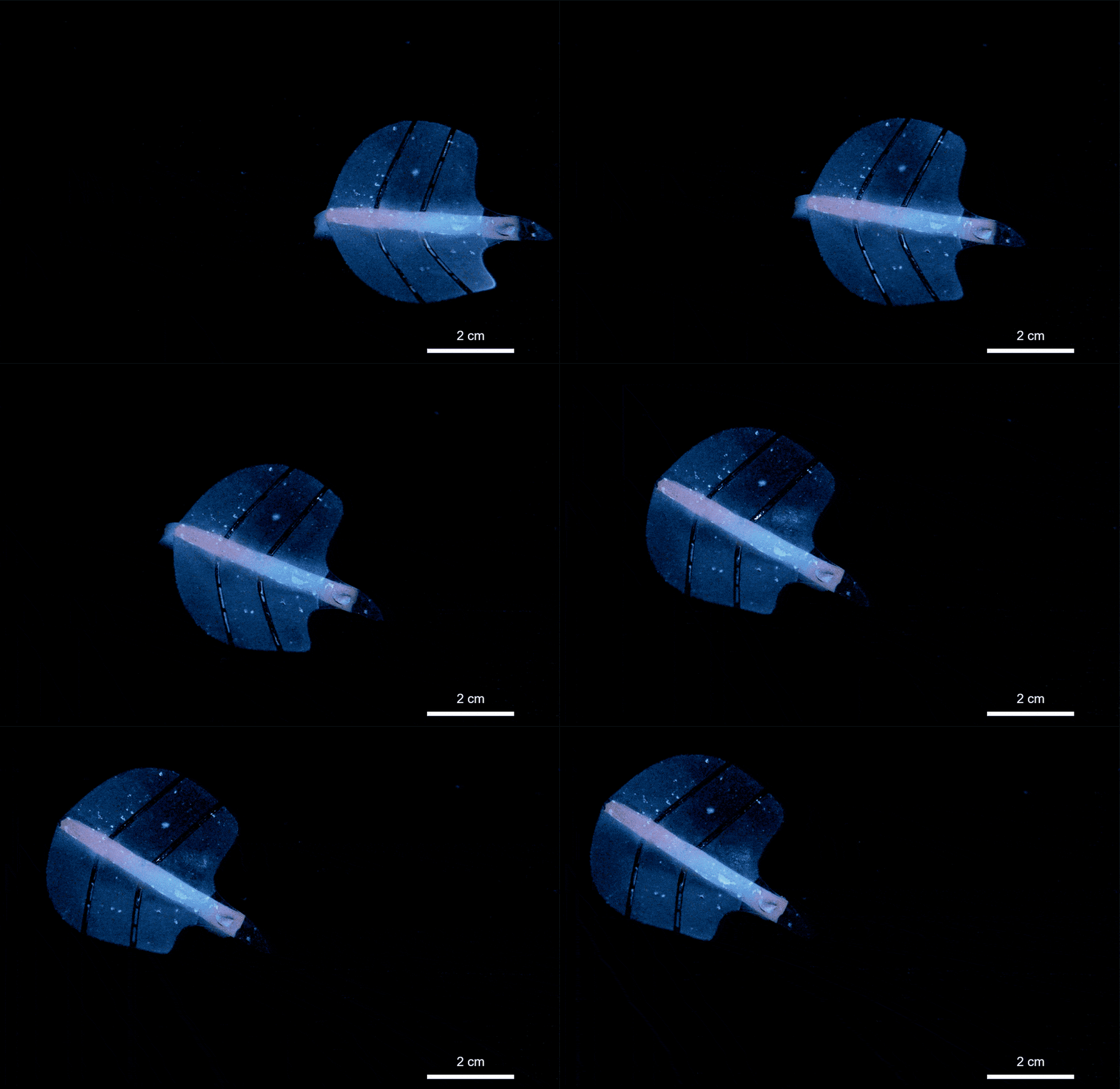
Prototypes of this new artificial muscle technology demonstrate its versatility. One notable device is a claw-like gripper that successfully closed around live zebrafish larvae without causing harm. Another prototype, a stingray-shaped robot, uses ultrasound to propel itself through water, showcasing the material’s potential for agile movement in tight spaces. In demonstrations involving pig tissue, the gel adhered to a pig heart and remained in place for over an hour, responding to ultrasound signals.
This technology could enhance surgical tools, allowing them to bend and flex as needed within the human body. It may also lead to the development of soft robots capable of navigating complex environments and performing delicate tasks, such as manipulating fragile objects without damage.
Zhan Shi, a co-author of the study, emphasized the medical applications of this technology. “We can actually use our system as patches for delivering drugs,” he stated, indicating its potential for focused treatments within the body. The ability to track the microbubbles using standard ultrasound imaging without interference from clinical imaging frequencies further enhances its utility in biomedical contexts.
Challenges and Future Research
Despite these promising developments, several challenges remain. The current prototypes have only been tested on non-living tissues, raising questions about their effectiveness in living organisms. Bioengineer W. Hong Yeo noted that the system’s performance in a living environment, particularly within the complexities of the human body, is yet to be established. Factors such as bone interference and fluid dynamics could complicate the ultrasound’s efficacy.
Additionally, sustained activation of the bubbles can lead to their expansion, limiting functionality to approximately thirty minutes. Nevertheless, the compact size and rapid responsiveness of these bubble muscles position them as strong candidates for future biomedical implants. Yeo pointed out, “It’s very unique and it makes sense,” highlighting the significance of this research.
As the field of soft robotics evolves, the integration of ultrasound-driven artificial muscles could lead to significant advancements in both technology and medicine. The ongoing exploration of these materials holds the promise of creating more efficient, flexible, and responsive systems that could transform how we approach both robotic design and medical interventions.

Japan’s PM Takaichi Confirms Continued Fiscal Management Strategy

Bitcoin Plummets Below $88K Amid Tether Concerns and Warnings

Designers Unveil 5 Urgent Tricks to Transform Outdoor Eyesores

Shark Teeth Research Reveals Urgent Need to Protect Species

Church Members Unite in Resilience After Thanksgiving Fire

Community Unites to Attempt World Record for Largest Cookie Exchange

Mayor Lurie Appoints Alan Wong to District 4 Seat Amid Controversy

Mayor Appoints Alan Wong as New Supervisor for District 4

UK Report Reveals AI’s Role in Evaluating University Research Quality

University of Hawaiʻi Joins $25.6M AI Initiative to Monitor Disasters

Toledo City League Announces Hall of Fame Inductees for 2024

DOJ Seizes $15 Billion in Bitcoin from Major Crypto Fraud Network

Sharp Launches Five New Aquos QLED 4K Ultra HD Smart TVs

Celtics Coach Joe Mazzulla Dominates Local Media in Scrimmage

Mutual Advisors LLC Increases Stake in SPDR Portfolio ETF

Community Unites for 7th Annual Walk to Raise Mental Health Awareness

Western Executives Confront Harsh Realities of China’s Manufacturing Edge

INK Entertainment Launches Exclusive Sofia Pop-Up at Virgin Hotels
-
Science4 weeks ago
University of Hawaiʻi Joins $25.6M AI Initiative to Monitor Disasters
-
 Lifestyle2 months ago
Toledo City League Announces Hall of Fame Inductees for 2024
-
 Business2 months ago
DOJ Seizes $15 Billion in Bitcoin from Major Crypto Fraud Network
-
 Top Stories2 months ago
Sharp Launches Five New Aquos QLED 4K Ultra HD Smart TVs
-
 Sports2 months ago
Celtics Coach Joe Mazzulla Dominates Local Media in Scrimmage
-
 Politics2 months ago
Mutual Advisors LLC Increases Stake in SPDR Portfolio ETF
-
 Health2 months ago
Community Unites for 7th Annual Walk to Raise Mental Health Awareness
-
 Science2 months ago
Western Executives Confront Harsh Realities of China’s Manufacturing Edge
-
 World2 months ago
INK Entertainment Launches Exclusive Sofia Pop-Up at Virgin Hotels
-

 Politics2 months ago
Major Networks Reject Pentagon’s New Reporting Guidelines
-

 Science1 month ago
Astronomers Discover Twin Cosmic Rings Dwarfing Galaxies
-

 Top Stories1 month ago
Randi Mahomes Launches Game Day Clothing Line with Chiefs