
Science
Upholding Freedom and Equal Opportunity in American Society

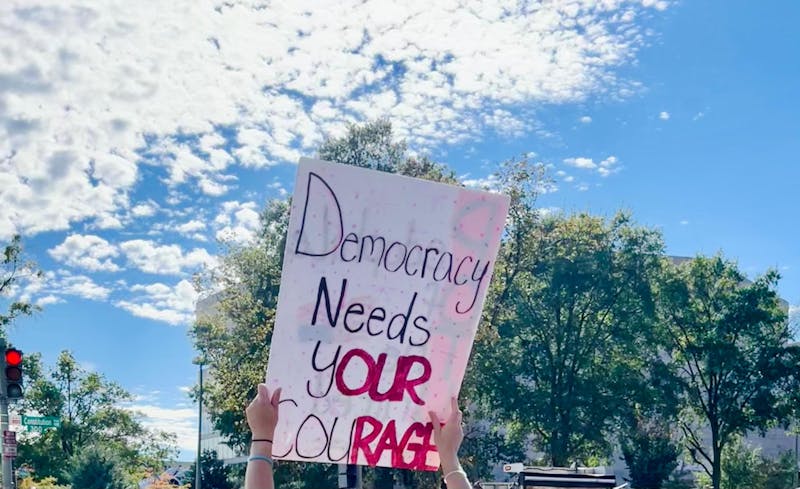
In a recent statement, Deviana Dewi, a PhD candidate at Johns Hopkins University, expressed deep concerns about the current state of freedom, values, and equal opportunity in the United States. In her reflections, she highlighted the critical role of American universities as beacons of knowledge and innovation, tracing their roots to significant government support for research initiated after World War II. Dewi underscored the necessity of maintaining these foundational principles as the country navigates contemporary challenges.
Historical Foundations of American Education and Innovation
Dewi’s journey to pursue a doctorate was inspired by the prestigious legacy of American universities as leaders in various fields, including technology and medicine. This legacy, she argues, stems from a commitment to merit-based support for research, beginning with influential figures such as Vannevar Bush, who advocated for federal backing of basic research in his 1945 report, “Science, The Endless Frontier.” Bush’s work laid the groundwork for viewing education as a critical element of national security and economic growth.
The influx of diverse talent, particularly during and after World War II, significantly enhanced the U.S. scientific landscape. Dewi also emphasized how America’s identity as the “land of the free” and the “home of the brave” is rooted in the ability of its citizens to advocate for core values. At the heart of this identity lies the principle of equal opportunity, enshrined in the U.S. Constitution, which asserts the inherent dignity and rights of every individual.
Current Challenges to Freedom and Values
Despite her pride in American academia, Dewi warns of a troubling crisis affecting these freedoms and values today. She draws on the words of Pope John Paul II, stating that “freedom consists not in doing what we like, but in having the right to do what we ought.” This perspective highlights the importance of discerning right from wrong, a task that requires a robust legal framework to guide ethical behavior.
Dewi cites historical figures like Theodore Roosevelt, who emphasized that “no man is above the law.” She argues that the law serves not only to protect individual freedoms but also to ensure the common good. This interdependence of freedom and legal structure is vital for a just society, where the rule of law upholds values and fosters constructive dialogue.
The political landscape, however, has seen a troubling trend where leaders from various parties have attempted to position themselves above the law. Dewi expressed concern over the increasing partisanship in political discussions, which often devolve into “whataboutism”—a tactic that distracts from addressing real issues by focusing on unrelated examples. This behavior, she argues, undermines the pursuit of truth and justice.
Dewi’s observations extend to recent policy proposals, such as a White House plan to impose a $100,000 fee for skilled foreign worker visas (H-1B) and the proposed American Tech Workforce Act, which would end the Optional Practical Training (OPT) program for international students. She believes these moves threaten to erode the very principles of equal opportunity and meritocracy that have defined the U.S. job market.
The proposed visa fee, intended to prioritize American workers, may inadvertently hinder the nation’s ability to attract global talent. Dewi argues that the U.S. has historically benefited from the contributions of skilled foreign workers, citing figures like Elon Musk, who came to the U.S. on an H-1B visa and later founded companies like SpaceX and Tesla, bolstering the economy.
With countries such as the United Kingdom and Canada actively easing visa restrictions to welcome foreign talent, Dewi warns that the U.S. risks losing its competitive edge. If policies like the proposed visa fee and the changes to the OPT program move forward, the implications for America’s reputation as a land of opportunity could be profound.
As a voice for international students, Dewi urges her peers to engage with their elected representatives. She highlights the importance of citizen input in shaping policy, recalling her experience with a Capitol Hill roommate who relayed constituents’ concerns to their representatives.
The ability to ignore political issues often reflects privilege, as many individuals are shielded from the consequences of policies that may adversely affect others. Dewi, an Indonesian Christian, sees herself as a “witness of hope” during this pivotal time, emphasizing that hope drives action and change.
In conclusion, as the U.S. grapples with its identity and values, it is imperative to reaffirm the principles of freedom and equal opportunity for all. Dewi’s reflections serve as a reminder of the importance of fostering a society where meritocracy thrives and diverse voices are heard. Only through collective action can the nation live up to its foundational ideals.

Arlene Hartman, Beloved Community Member, Passes at 87

Urgent: Vehicle Fire Closes Two Lanes on I-215 in Salt Lake City

Knicks Dominate Raptors 116-94 at Home, Extend Winning Streak

Hallmark’s ‘Christmas at the Catnip Café’ Premieres Tonight!

Millville Woman Arrested for Threatening U-Haul Worker with Baton

Japan’s PM Takaichi Confirms Continued Fiscal Management Strategy

Bitcoin Plummets Below $88K Amid Tether Concerns and Warnings

Designers Unveil 5 Urgent Tricks to Transform Outdoor Eyesores

Shark Teeth Research Reveals Urgent Need to Protect Species

University of Hawaiʻi Joins $25.6M AI Initiative to Monitor Disasters

Toledo City League Announces Hall of Fame Inductees for 2024

DOJ Seizes $15 Billion in Bitcoin from Major Crypto Fraud Network

Sharp Launches Five New Aquos QLED 4K Ultra HD Smart TVs

Celtics Coach Joe Mazzulla Dominates Local Media in Scrimmage

Mutual Advisors LLC Increases Stake in SPDR Portfolio ETF

Community Unites for 7th Annual Walk to Raise Mental Health Awareness

Western Executives Confront Harsh Realities of China’s Manufacturing Edge

Major Networks Reject Pentagon’s New Reporting Guidelines
-
Science4 weeks ago
University of Hawaiʻi Joins $25.6M AI Initiative to Monitor Disasters
-
 Lifestyle2 months ago
Toledo City League Announces Hall of Fame Inductees for 2024
-
 Business2 months ago
DOJ Seizes $15 Billion in Bitcoin from Major Crypto Fraud Network
-
 Top Stories2 months ago
Sharp Launches Five New Aquos QLED 4K Ultra HD Smart TVs
-
 Sports2 months ago
Celtics Coach Joe Mazzulla Dominates Local Media in Scrimmage
-
 Politics2 months ago
Mutual Advisors LLC Increases Stake in SPDR Portfolio ETF
-
 Health2 months ago
Community Unites for 7th Annual Walk to Raise Mental Health Awareness
-
 Science2 months ago
Western Executives Confront Harsh Realities of China’s Manufacturing Edge
-
 Politics2 months ago
Major Networks Reject Pentagon’s New Reporting Guidelines
-

 World2 months ago
INK Entertainment Launches Exclusive Sofia Pop-Up at Virgin Hotels
-

 Science1 month ago
Astronomers Discover Twin Cosmic Rings Dwarfing Galaxies
-

 Top Stories1 month ago
Randi Mahomes Launches Game Day Clothing Line with Chiefs