
Top Stories
COP30 Summit in Brazil Faces Crisis Amid Protests and Disputes

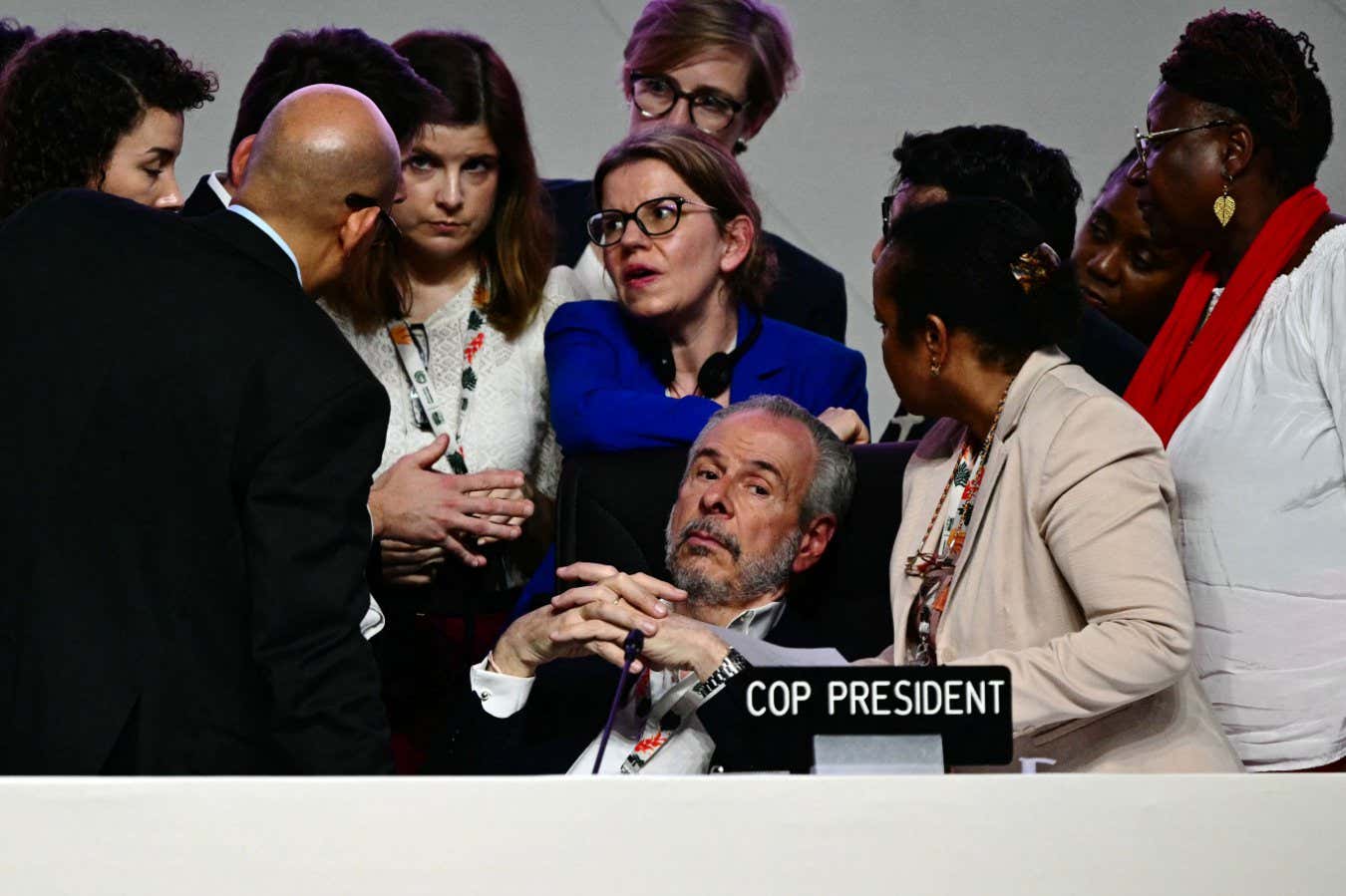
URGENT UPDATE: The COP30 climate summit in Belém, Brazil, is in turmoil following torrential rains, protests, and a significant electrical fire that partially damaged the venue. Just hours ago, the final session faced a delay as numerous countries objected to the agreed texts, deeming them inadequate for meaningful climate action.
Despite these challenges, the conference showcased that global climate cooperation persists, with representatives from 193 nations (excluding the United States) spending 12 days in the Amazon negotiating critical agreements. However, the final decision conspicuously omitted a roadmap for transitioning away from fossil fuels, which account for nearly three-quarters of greenhouse gas emissions.
More than 80 countries advocated for this vital transition, but oil-producing nations successfully pressured the conference to exclude it from discussions. Colombian delegate Diana Mejia criticized the outcome, stating, “A consensus imposed under climate denialism is a failed agreement.” Countries like Panama and Uruguay echoed similar sentiments, expressing frustration over Brazil’s handling of the negotiations.
Simon Stiell, the UN climate secretary, acknowledged the difficulties faced this year but emphasized that the COP30 process remains crucial. In his closing remarks, he stated that the final decision, termed the “global mutirão,” reflects collective efforts, despite the setbacks.
The backdrop of this summit was alarming as former President Donald Trump withdrew the US from the COP process, intensifying fears of a fractured climate negotiation framework. Meanwhile, nations have raised concerns that major emitters are neglecting their responsibilities to assist lower-income countries in adapting to climate impacts.
COP30 did commit to developing a “just transition mechanism” to support vulnerable nations, while pledging to triple adaptation finance. However, the specifics of these commitments remain vague, and the initial deadline for achieving these goals has been extended from 2030 to 2035.
Harjeet Singh from the Satat Sampada Climate Foundation expressed disappointment, stating, “Apart from the just transition mechanism, I don’t have anything to celebrate. We should have done much better.”
Additionally, while COP30 failed to establish a roadmap to halt deforestation—a goal advocated by over 90 countries—Brazil did launch the Tropical Forests Forever Facility. This investment fund aims to incentivize countries financially for preserving their forests, although the $6.6 billion pledged falls significantly short of the $25 billion target.
Experts like Kate Dooley from the University of Melbourne assert that tightening the operational rules of this fund is essential for effective climate protection. Consultant Marco Duso noted, “Brazil taking a bit of leadership on deforestation is one of the best outcomes we could hope for at COP30.”
As the dust settles on this tumultuous summit, the stakes for global climate action remain high. The international community is watching closely to see whether COP30’s decisions will lead to meaningful change or further delay in the fight against climate change.

Im Si Wan’s New Photos Spark Intense Online Debate Today

Holiday Gift Guide: Essential Tips for Coworker Gifting NOW

Navigate Holiday Gift-Giving for Coworkers with Ease

Readers React to Epstein Scandal and Playwright’s Legacy

SoftBank and Yaskawa Collaborate to Develop Advanced AI Robots

Broncos Triumph in Overtime as Bonitto Seals Victory Against Commanders

Search for Victims of Hong Kong Fire Approaches Conclusion

Cyber Monday 2025: Unmissable Amazon Deals to Grab Now

Urgent: Dallas Pension Board Rejects City’s ‘Final’ Proposal

University of Hawaiʻi Joins $25.6M AI Initiative to Monitor Disasters

Toledo City League Announces Hall of Fame Inductees for 2024

DOJ Seizes $15 Billion in Bitcoin from Major Crypto Fraud Network

Sharp Launches Five New Aquos QLED 4K Ultra HD Smart TVs

Celtics Coach Joe Mazzulla Dominates Local Media in Scrimmage

Mutual Advisors LLC Increases Stake in SPDR Portfolio ETF

Community Unites for 7th Annual Walk to Raise Mental Health Awareness

Western Executives Confront Harsh Realities of China’s Manufacturing Edge

INK Entertainment Launches Exclusive Sofia Pop-Up at Virgin Hotels
-
Science4 weeks ago
University of Hawaiʻi Joins $25.6M AI Initiative to Monitor Disasters
-
 Lifestyle2 months ago
Toledo City League Announces Hall of Fame Inductees for 2024
-
 Business2 months ago
DOJ Seizes $15 Billion in Bitcoin from Major Crypto Fraud Network
-
 Top Stories2 months ago
Sharp Launches Five New Aquos QLED 4K Ultra HD Smart TVs
-
 Sports2 months ago
Celtics Coach Joe Mazzulla Dominates Local Media in Scrimmage
-
 Politics2 months ago
Mutual Advisors LLC Increases Stake in SPDR Portfolio ETF
-
 Health2 months ago
Community Unites for 7th Annual Walk to Raise Mental Health Awareness
-
 Science2 months ago
Western Executives Confront Harsh Realities of China’s Manufacturing Edge
-
 World2 months ago
INK Entertainment Launches Exclusive Sofia Pop-Up at Virgin Hotels
-

 Politics2 months ago
Major Networks Reject Pentagon’s New Reporting Guidelines
-

 Science1 month ago
Astronomers Discover Twin Cosmic Rings Dwarfing Galaxies
-

 Top Stories1 month ago
Randi Mahomes Launches Game Day Clothing Line with Chiefs