
Top Stories
Tesla’s New Affordable Models Won’t Compete with China EVs

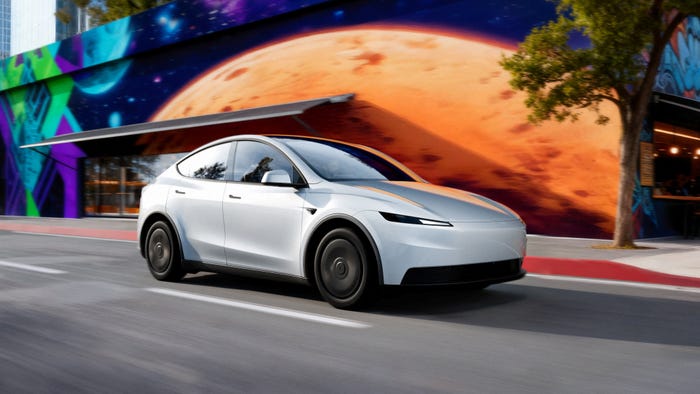
UPDATE: Tesla’s newly launched “affordable” models, the Model Y and Model 3, priced at $40,000 and $37,000 respectively, face critical scrutiny from industry experts. Former Nissan COO, Andy Palmer, known as the “godfather of EVs,” warns that these models will struggle to compete against formidable Chinese electric vehicle (EV) manufacturers.
Palmer, who pioneered the world’s first mass-market electric car, the Nissan Leaf, expressed his concerns to Business Insider just after Tesla unveiled these models last week. He stated, “If you take out the features — and Tesla has taken out an awful lot of features — then that creates a new price point, but that new price point doesn’t make it competitive with the Chinese competition, which are stacked with features.”
The new Model Y and Model 3 Standard variants have been stripped of key features, including Autosteer and rear screens, leading to disappointment among investors and fans. This has resulted in a notable decline in Tesla’s share price following the announcement.
Palmer emphasized the urgent need for truly affordable electric vehicles in the U.S., stating, “The U.S. needs electric cars that are well-specified for less than $30,000.” As Tesla faces increased pressure from emerging Chinese brands like BYD and Geely, the demand for competitively priced EVs continues to grow.
Chinese automakers are gaining traction in global markets, including Europe and Latin America, even as they are not currently selling in the U.S. due to high tariffs. BYD’s lineup, featuring affordable electric and hybrid vehicles, has seen remarkable success in Europe, contrasting with Tesla’s declining sales.
Palmer warned, “It isn’t such a big problem in the U.S., but elsewhere you have Chinese models that are coming in with lots of features at a very good price point.” He criticized Tesla’s strategy of reducing vehicle features instead of enhancing them to attract buyers.
Chinese manufacturers are prioritizing high-tech features and competitive pricing, with advancements in autonomous driving technology and AI integration. For instance, BYD announced in February 2023 that it would incorporate advanced self-driving tech into all of its models, including the budget-friendly $8,000 Seagull. Additionally, Xiaomi’s $30,000 SU7 sedan allows voice control of home appliances from within the vehicle.
Palmer’s comments underscore a significant reality check for Western brands. He noted that simply relying on tariffs will not address the rising competition from China. “You have to address the issue rather than standing behind regulatory or tariff rules. They’ll insulate you for a while, but don’t make the problem go away,” he concluded.
As Tesla’s new models hit the market, the industry watches closely to see how they will navigate this increasingly competitive landscape. Will they adapt to the changing demands of consumers, or will they continue to lose ground to rivals that offer more for less? Expect updates on this developing story as it unfolds.

Community Unites to Attempt World Record for Largest Cookie Exchange

Mayor Lurie Appoints Alan Wong to District 4 Seat Amid Controversy

Mayor Appoints Alan Wong as New Supervisor for District 4

UK Report Reveals AI’s Role in Evaluating University Research Quality

Gabriela Jaquez Shines as No. 3 UCLA Dominates No. 14 Tennessee

Trump Promises to Release MRI Results Despite Uncertainty on Scan

Japan’s Q3 Capital Expenditure Slows Despite Surge in Profits

South Korea Announces Urgent FX Oversight Measures to Stabilize Won

Tampa’s Annual Tree Lighting Ignites Holiday Spirit Tonight

University of Hawaiʻi Joins $25.6M AI Initiative to Monitor Disasters

Toledo City League Announces Hall of Fame Inductees for 2024

DOJ Seizes $15 Billion in Bitcoin from Major Crypto Fraud Network

Sharp Launches Five New Aquos QLED 4K Ultra HD Smart TVs

Celtics Coach Joe Mazzulla Dominates Local Media in Scrimmage

Community Unites for 7th Annual Walk to Raise Mental Health Awareness

Mutual Advisors LLC Increases Stake in SPDR Portfolio ETF

Western Executives Confront Harsh Realities of China’s Manufacturing Edge

INK Entertainment Launches Exclusive Sofia Pop-Up at Virgin Hotels
-
Science4 weeks ago
University of Hawaiʻi Joins $25.6M AI Initiative to Monitor Disasters
-
 Lifestyle2 months ago
Toledo City League Announces Hall of Fame Inductees for 2024
-
 Business2 months ago
DOJ Seizes $15 Billion in Bitcoin from Major Crypto Fraud Network
-
 Top Stories2 months ago
Sharp Launches Five New Aquos QLED 4K Ultra HD Smart TVs
-
 Sports2 months ago
Celtics Coach Joe Mazzulla Dominates Local Media in Scrimmage
-
 Health2 months ago
Community Unites for 7th Annual Walk to Raise Mental Health Awareness
-
 Politics2 months ago
Mutual Advisors LLC Increases Stake in SPDR Portfolio ETF
-
 Science2 months ago
Western Executives Confront Harsh Realities of China’s Manufacturing Edge
-
 World2 months ago
INK Entertainment Launches Exclusive Sofia Pop-Up at Virgin Hotels
-

 Politics2 months ago
Major Networks Reject Pentagon’s New Reporting Guidelines
-

 Science1 month ago
Astronomers Discover Twin Cosmic Rings Dwarfing Galaxies
-

 Top Stories1 month ago
Randi Mahomes Launches Game Day Clothing Line with Chiefs