
World
Australian Man Sues Prison for Right to Vegemite During Incarceration

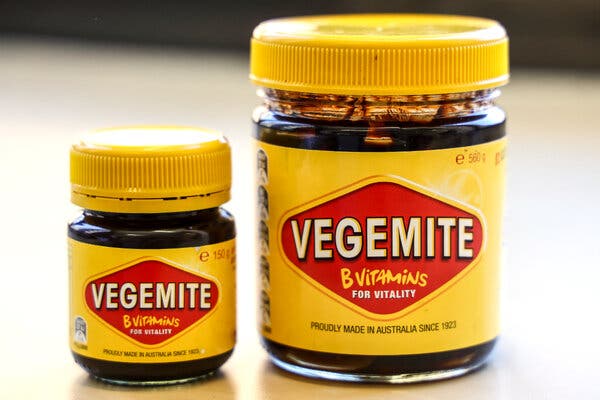
An Australian man serving a life sentence for murder has initiated legal action challenging a longstanding ban on Vegemite in Victorian prisons. Andre McKechnie filed the lawsuit in the Supreme Court of Victoria, arguing that the prohibition infringes on his cultural rights as an Australian. Vegemite, a yeast extract spread cherished by many in Australia, has been banned in state prisons since 2006 due to concerns it could distract drug-sniffing dogs and potentially be used to produce alcohol.
In his court filings, McKechnie has detailed multiple requests to consume Vegemite while incarcerated, all of which were denied. He claims that this ban not only violates his rights under the state’s human rights charter but also represents a dismissal of Australian culture. The case has drawn significant media attention, highlighting both the cultural significance of Vegemite and the peculiarities of its prohibition in prisons.
David Southwick, a member of the Victorian Parliament and the opposition’s minister for police and corrections, criticized the lawsuit as a waste of public resources. “Victorians are fed up with frivolous court cases that waste time and taxpayer money,” he stated. Southwick emphasized that violent offenders should not expect the prison system to cater to their preferences, likening McKechnie’s requests to a desire for luxury accommodations.
The controversy surrounding Vegemite extends beyond the prison walls. While it is a staple in approximately 80 percent of Australian households, the spread has a polarizing reputation internationally. Notable figures have voiced their distaste; for instance, former U.S. President Barack Obama referred to it as “horrible,” and singer Selena Gomez famously rejected it during a tasting, exclaiming, “We love you Australia, but this has nothing to do with you.”
Vegemite was officially recognized for its cultural significance in 2022 when the city of Melbourne included it in its list of “intangible cultural heritage.” Earlier this year, Australian Prime Minister Anthony Albanese defended the product in a dispute with Canada, underscoring its importance to national identity and pride.
McKechnie’s legal history includes previous complaints regarding inadequate food options that align with his religious beliefs. In 2021, he filed a claim against the State of Victoria, alleging that he was forced to consume non-Kosher meals, which he claimed made up 90 percent of the offerings in prison.
The Victoria Department of Justice and Community Safety has not provided comments on McKechnie’s current lawsuit, nor have representatives from the Supreme Court responded to inquiries. As the case progresses, it may further illuminate the intersection of individual rights and institutional regulations within the prison system.

Shark Teeth Research Reveals Urgent Need to Protect Species

Church Members Unite in Resilience After Thanksgiving Fire

Community Unites to Attempt World Record for Largest Cookie Exchange

Mayor Lurie Appoints Alan Wong to District 4 Seat Amid Controversy

Mayor Appoints Alan Wong as New Supervisor for District 4

UK Report Reveals AI’s Role in Evaluating University Research Quality

Gabriela Jaquez Shines as No. 3 UCLA Dominates No. 14 Tennessee

Trump Promises to Release MRI Results Despite Uncertainty on Scan

Japan’s Q3 Capital Expenditure Slows Despite Surge in Profits

University of Hawaiʻi Joins $25.6M AI Initiative to Monitor Disasters

Toledo City League Announces Hall of Fame Inductees for 2024

DOJ Seizes $15 Billion in Bitcoin from Major Crypto Fraud Network

Sharp Launches Five New Aquos QLED 4K Ultra HD Smart TVs

Celtics Coach Joe Mazzulla Dominates Local Media in Scrimmage

Mutual Advisors LLC Increases Stake in SPDR Portfolio ETF

Community Unites for 7th Annual Walk to Raise Mental Health Awareness

Western Executives Confront Harsh Realities of China’s Manufacturing Edge

INK Entertainment Launches Exclusive Sofia Pop-Up at Virgin Hotels
-
Science4 weeks ago
University of Hawaiʻi Joins $25.6M AI Initiative to Monitor Disasters
-
 Lifestyle2 months ago
Toledo City League Announces Hall of Fame Inductees for 2024
-
 Business2 months ago
DOJ Seizes $15 Billion in Bitcoin from Major Crypto Fraud Network
-
 Top Stories2 months ago
Sharp Launches Five New Aquos QLED 4K Ultra HD Smart TVs
-
 Sports2 months ago
Celtics Coach Joe Mazzulla Dominates Local Media in Scrimmage
-
 Politics2 months ago
Mutual Advisors LLC Increases Stake in SPDR Portfolio ETF
-
 Health2 months ago
Community Unites for 7th Annual Walk to Raise Mental Health Awareness
-
 Science2 months ago
Western Executives Confront Harsh Realities of China’s Manufacturing Edge
-
 World2 months ago
INK Entertainment Launches Exclusive Sofia Pop-Up at Virgin Hotels
-

 Politics2 months ago
Major Networks Reject Pentagon’s New Reporting Guidelines
-

 Science1 month ago
Astronomers Discover Twin Cosmic Rings Dwarfing Galaxies
-

 Top Stories1 month ago
Randi Mahomes Launches Game Day Clothing Line with Chiefs