
World
Chinese Authorities Detain Underground Church Members in Crackdown

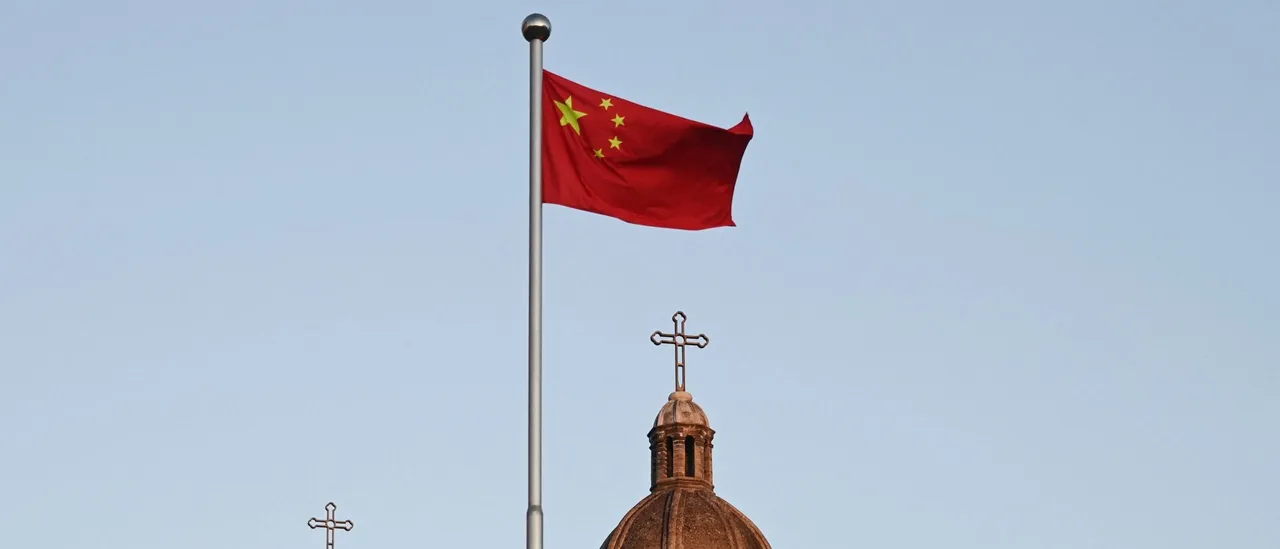
Authorities in China have detained multiple members of the **Early Rain Covenant Church** as part of an intensified crackdown on unregistered religious groups. According to **Human Rights Watch (HRW)**, six members of this underground Protestant congregation in **Sichuan province** were arrested this week. The organization highlighted a statement from the church on social media that confirmed these arrests, which come shortly after approximately **100 members** of another unofficial congregation were detained.
In a statement, **Yalkun Uluyol**, a China researcher at HRW, criticized the Chinese government’s actions, stating, “The Chinese government has ushered in the new year with new arrests of underground Protestant church members.” He called for the immediate release of those detained and urged for the freedom to practice religion without fear of retribution.
Details of the Arrests
The recent round of arrests included the church’s leader, **Li Yingqiang**, who was taken into custody during a police raid at his home. Other significant members of the church were also detained, while two additional congregants were summoned by authorities, HRW reported. The **Early Rain Covenant Church**, founded in **2008**, has frequently faced governmental scrutiny. Notably, in **December 2018**, police detained over **100 congregants** in a coordinated raid, and the church’s founding pastor, **Wang Yi**, remains imprisoned for charges related to “inciting subversion of state power” and operating “illegal business operations.”
This latest crackdown follows previous detentions, including a brief arrest of Li Yingqiang and three others in **September 2024**. The ongoing repression against Christians and other religious groups is part of a broader campaign by the **Chinese Communist Party (CCP)**, which officially promotes atheism and discourages its members from engaging in religious activities.
Wider Context of Religious Repression
The recent arrests are emblematic of a larger trend of increasing repression against religious freedoms in China. In **October**, nearly **30 pastors and staff members** of the **Zion Church**, another underground congregation, were detained in a nationwide operation. Pastor **Mingri “Ezra” Jin**, the church’s founder, is currently in custody.
Following these events, **U.S. Secretary of State Marco Rubio** has called for the release of leaders from the Zion Church and urged the Chinese government to allow all individuals, including members of house churches, to practice their faith freely. Under the leadership of **President Xi Jinping**, policies aimed at “sinicizing” religion have intensified restrictions on Christians, Tibetan Buddhists, and Muslims, resulting in the demolition of unregistered churches, bans on online religious content, and confiscation of unauthorized Bibles.
The Chinese government officially recognizes Protestant churches that are affiliated with the **Three-Self Patriotic Movement** or the **China Christian Council**, both of which operate under the supervision of the CCP’s **United Front Work Department**. Even churches that comply with these regulations face significant restrictions, including the removal of crosses and the replacement of the Ten Commandments with quotations from Xi Jinping, according to the **Family Research Council**.
Uluyol emphasized the need for international pressure, stating, “Xi Jinping’s government has tightened ideological control and intensified its intolerance of loyalties beyond the Chinese Communist Party.” He urged concerned governments and religious leaders worldwide to advocate for the release of detained individuals and to uphold religious freedom in China.

Navigating Family Dynamics: Finding Your Voice Amid Exclusion

Tensions Rise as Denmark and U.S. Discuss Greenland’s Future

New Study Redefines Dark Matter: From Cold to Hot Origins

Penguins Secure Victory, Reclaim First Place in Atlantic Division

Investigators Identify Faulty Part in UPS MD-11 Crash

Elon Musk Denies Grok AI Generated Explicit Images of Minors

Willow Smith Stuns in Daring Swimwear Look, Fans React Now!

South Korea Unveils Ramen Experiences for Tourists at Airports

Journalist Reveals ‘Sloppy’ ICE Hiring Experience in Urgent Interview

University of Hawaiʻi Joins $25.6M AI Initiative to Monitor Disasters

Interstellar Object 3I/ATLAS Emits Unprecedented Metal Alloy

Toledo City League Announces Hall of Fame Inductees for 2024

DOJ Seizes $15 Billion in Bitcoin from Major Crypto Fraud Network

Western Executives Confront Harsh Realities of China’s Manufacturing Edge

Sharp Launches Five New Aquos QLED 4K Ultra HD Smart TVs

Mutual Advisors LLC Increases Stake in SPDR Portfolio ETF

Celtics Coach Joe Mazzulla Dominates Local Media in Scrimmage

Community Unites for 7th Annual Walk to Raise Mental Health Awareness
-
Science2 months ago
University of Hawaiʻi Joins $25.6M AI Initiative to Monitor Disasters
-
 Science3 months ago
Interstellar Object 3I/ATLAS Emits Unprecedented Metal Alloy
-
 Lifestyle3 months ago
Toledo City League Announces Hall of Fame Inductees for 2024
-
 Business3 months ago
DOJ Seizes $15 Billion in Bitcoin from Major Crypto Fraud Network
-
 Science3 months ago
Western Executives Confront Harsh Realities of China’s Manufacturing Edge
-
 Top Stories3 months ago
Sharp Launches Five New Aquos QLED 4K Ultra HD Smart TVs
-
 Politics3 months ago
Mutual Advisors LLC Increases Stake in SPDR Portfolio ETF
-
 Sports3 months ago
Celtics Coach Joe Mazzulla Dominates Local Media in Scrimmage
-
 Health3 months ago
Community Unites for 7th Annual Walk to Raise Mental Health Awareness
-

 Politics3 months ago
Major Networks Reject Pentagon’s New Reporting Guidelines
-

 World3 months ago
INK Entertainment Launches Exclusive Sofia Pop-Up at Virgin Hotels
-

 Top Stories3 months ago
Microsoft Releases Urgent Windows 11 25H2 Update for All Users