
World
Marine Ace Jefferson DeBlanc: Hero of the Pacific Theater

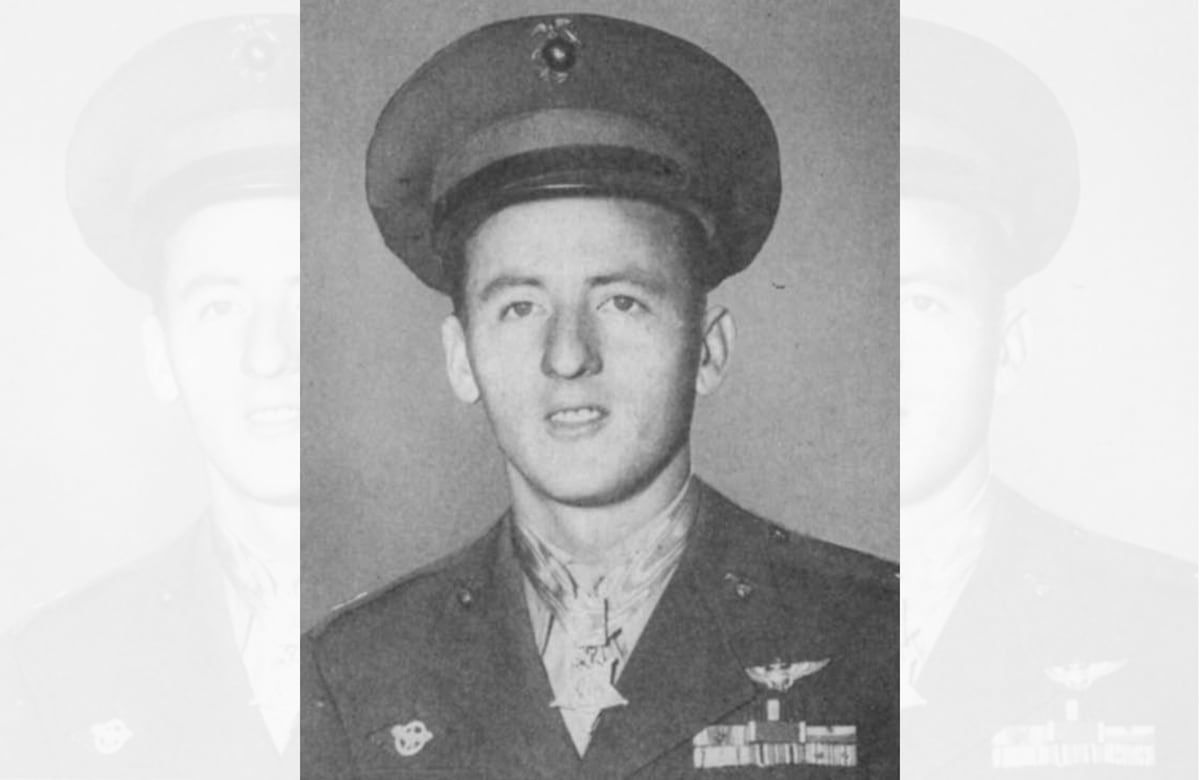
Jefferson Joseph DeBlanc, a distinguished U.S. Marine pilot, achieved ace status during World War II, marking an extraordinary chapter in military aviation. Born on February 15, 1921, in Lockport, Louisiana, DeBlanc’s journey began with a high school graduation in 1938, after which he opted for military aviation instead of college. Rejecting service in the Army, he enlisted in the U.S. Marines, entering flight training in July 1941.
Commissioned as a second lieutenant on April 3, 1942, and rated a naval aviator by May 4, DeBlanc joined the Marine fighter squadron VMF-112 shortly before it was deployed overseas. His first combat experience came during a dramatic encounter over Guadalcanal on November 12, 1942. He and his squadron faced a barrage of Mitsubishi G4M1 bombers targeting American shipping. DeBlanc later described it as “a fighter pilot’s dream,” despite the immediate dangers posed by enemy anti-aircraft fire.
A pivotal moment in his career unfolded on December 18, 1942, when he engaged a Douglas SBD-3 Dauntless dive bomber pursued by a Mitsubishi F1M2. In a decisive maneuver, DeBlanc successfully shot down the floatplane, showcasing his combat prowess.
His most significant day came on January 31, 1943, when he led a flight of Wildcats against enemy fighters and bombers. During this mission, DeBlanc downed several enemy aircraft but faced dire consequences. After successfully shooting down multiple opponents, he was wounded and forced to bail out of his damaged plane. Fortunately, he was rescued by local coastwatchers who facilitated his return to safety.
Unbeknownst to him, during the engagement, DeBlanc and his fellow pilot Staff Sgt. James A. Feliton had fought against Nakajima Ki.43 fighters, not the expected Zeroes. Their actions that day led to significant recognition, with DeBlanc being recommended for a Navy Cross and an Air Medal, the former later upgraded to the Medal of Honor, awarded by President Harry Truman on December 6, 1946.
DeBlanc continued to serve with distinction, earning a promotion to captain on May 31, 1943. He returned to the United States in June of the same year to work as a tactics instructor. His later service included participation in combat operations in the Marshall Islands in 1944 and the Okinawa campaign in 1945, where he achieved his ninth and final aerial victory.
Education was a lifelong pursuit for DeBlanc, who earned four degrees, including a Doctorate of Education from McNeese State University. He dedicated much of his post-military career to teaching mathematics and physics in schools across the United States and Europe while maintaining his reserve commission until his retirement as a colonel from the New Orleans Marine Air Group in 1972.
DeBlanc passed away in Saint Martinville, Louisiana, on November 7, 2007. His legacy extends beyond his military accomplishments; he authored “Once They Lived by the Sword,” published in 1988, and “The Guadalcanal Air War,” released in 2008, chronicling his experiences. DeBlanc’s life story reflects not only his valor in combat but also his commitment to education and service.

Wyomissing Police Report Busy November with Hundreds of Calls

Versant Capital Management Boosts Citigroup Stake by 58.2%

David Harbour Discusses Intense Psychotherapy Journey for Mental Health

US Health Officials Restore $1.9 Billion for Mental Health Programs

Friends Association Opens New Shelter to Aid Families in Need

Greenland and Denmark Conclude Talks with US on Territory Dispute

Chelsea Handler Slams Timothee Chalamet’s Praise for Kylie Jenner

Over 387,000 Users Download Vulnerable Apache Struts Versions

Hawks Seek Redemption Against Trail Blazers After Lakers Loss

University of Hawaiʻi Joins $25.6M AI Initiative to Monitor Disasters

Interstellar Object 3I/ATLAS Emits Unprecedented Metal Alloy

Toledo City League Announces Hall of Fame Inductees for 2024

DOJ Seizes $15 Billion in Bitcoin from Major Crypto Fraud Network

Western Executives Confront Harsh Realities of China’s Manufacturing Edge

Sharp Launches Five New Aquos QLED 4K Ultra HD Smart TVs

Mutual Advisors LLC Increases Stake in SPDR Portfolio ETF

Community Unites for 7th Annual Walk to Raise Mental Health Awareness

Celtics Coach Joe Mazzulla Dominates Local Media in Scrimmage
-
Science2 months ago
University of Hawaiʻi Joins $25.6M AI Initiative to Monitor Disasters
-
 Science3 months ago
Interstellar Object 3I/ATLAS Emits Unprecedented Metal Alloy
-
 Lifestyle3 months ago
Toledo City League Announces Hall of Fame Inductees for 2024
-
 Business3 months ago
DOJ Seizes $15 Billion in Bitcoin from Major Crypto Fraud Network
-
 Science3 months ago
Western Executives Confront Harsh Realities of China’s Manufacturing Edge
-
 Top Stories3 months ago
Sharp Launches Five New Aquos QLED 4K Ultra HD Smart TVs
-
 Politics3 months ago
Mutual Advisors LLC Increases Stake in SPDR Portfolio ETF
-
 Health3 months ago
Community Unites for 7th Annual Walk to Raise Mental Health Awareness
-
 Sports3 months ago
Celtics Coach Joe Mazzulla Dominates Local Media in Scrimmage
-

 Politics3 months ago
Major Networks Reject Pentagon’s New Reporting Guidelines
-

 World3 months ago
INK Entertainment Launches Exclusive Sofia Pop-Up at Virgin Hotels
-

 Top Stories3 months ago
Microsoft Releases Urgent Windows 11 25H2 Update for All Users