
World
Multiphysics Modeling Key to Advancing Electrification Efforts

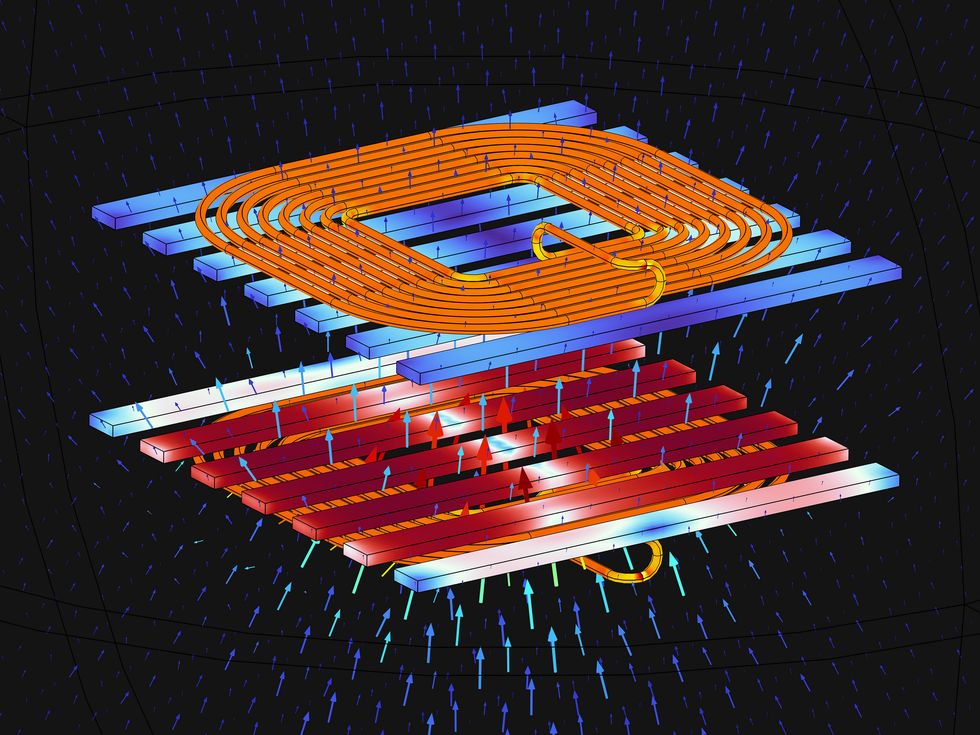
Efforts to electrify various sectors face significant challenges, particularly in accurately modeling the complex interactions of energy systems. Innovations in multiphysics modeling are emerging as essential tools for engineers developing technologies for grid-scale energy storage and electrified transportation. This was a key focus at the recent COMSOL annual conference held in Burlington, Massachusetts, from October 8-10, 2023, where experts discussed the necessity of integrating multiple physical phenomena in engineering simulations.
According to Bjorn Sjodin, senior vice president of product management at COMSOL, “At its core, you have this combination of electromagnetic effects, heat transfer, and structural mechanics in a complicated interplay.” Current simplified models often fail to predict real-world performance, leading to discrepancies between laboratory tests and practical applications. As a result, engineers are increasingly turning to multiphysics modeling to provide a more comprehensive understanding of these systems.
During the conference, Niloofar Kamyab, a chemical engineer and applications manager at COMSOL, emphasized that multiphysics modeling is more than just an advanced research tool. “Some people still see simulation as a fancy R&D thing,” she stated, adding that while experiments remain crucial, simulations can optimize them for better results. This approach is especially important in battery technology, where the behavior of cells can vary dramatically at different scales.
Batteries present unique challenges due to their complex behaviors at both the cell and battery pack levels. Kamyab explained that understanding thermal management is critical, as engineers can simulate thermal runaway scenarios to prevent potential hazards. “You recreate a cell that is malfunctioning,” she noted, highlighting the importance of these simulations in ensuring safety and reliability.
The field of wireless charging also faces similar thermal challenges. Lead engineer at Veryst Engineering, Nirmal Paudel, pointed out that at higher power levels, localized heating can alter the conductivity of components, impacting the overall circuit and performance. Such intricacies underline the need for robust simulations to enhance design and functionality.
Electric motors and power converters are not exempt from these advanced modeling needs. Vignesh Gurusamy, a senior application engineer at COMSOL, noted that traditional development methods are becoming less effective. The surge in electrification demands a more holistic approach that accommodates diverse applications, enabling the creation of optimized designs.
Freight transportation is examining various power sources, with discussions around the potential use of batteries versus fuel cells. Sjodin remarked that fuel cells are particularly compatible with multiphysics approaches, as they involve complex interactions between fluid flow, heat transfer, and chemical reactions.
The electric grid itself is undergoing transformation as it adapts to intermittent power sources like wind and solar energy. “The grid is designed for a continuous supply of power,” Sjodin explained. The integration of renewable resources presents new challenges that multiphysics modeling can help address.
The conference also highlighted innovative solutions being developed in the automotive industry. IAV, a Berlin-based engineering company, is creating powertrain systems that combine multiple battery chemistries into a single pack. Kamyab noted, “Sodium-ion cannot give you the energy that lithium-ion can give,” which led to the development of a hybrid chemistry system to leverage the strengths of each type.
Jakob Hilgert, a technical consultant at IAV, recently contributed to a COMSOL case study on a dual-chemistry battery pack. By using multiphysics simulation, the team was able to design a cooling system that optimally managed the heat produced by cells operating at different temperatures. “If we have some cells that can operate at high temperatures and some that can operate at low temperatures, it is beneficial to take the exhaust heat of the higher-running cells to heat up the lower-running cells,” Hilgert explained.
According to Sjodin, the trends observed at the conference reflect a broader shift across industries influenced by the electrification movement. “Algorithmic improvements and hardware improvements multiply together,” he stated, suggesting a future where multiphysics simulations can tackle larger and more realistic systems.
Gurusamy emphasized that advancements in computational power, such as GPU accelerators, enable significant progress in electric motor capabilities and efficiencies. Even basic components like copper wire windings in motors benefit from multiphysics optimization, pushing the boundaries of power density and efficiency.
As the industry strives for higher power densities and lower costs in battery technology, new possibilities are emerging. Kamyab pointed out that advancements in battery capacity are driving innovations beyond existing applications, including electric vertical take-off and landing aircraft (eVTOLs). “The reason that many ideas that we had 30 years ago are becoming a reality is now we have the batteries to power them,” she said.
The intersection of multiphysics modeling and electrification is proving to be a dynamic field, offering tools that not only enhance design but also drive innovation across multiple sectors. As this discipline evolves, it promises to unlock new technologies that could reshape industries and everyday life.

Harden Declares Clippers Ready to Surge Back into Playoffs

Salesforce CEO Calls AI-Related Suicides ‘Darkest Aspect’ of Tech

Navigating Family Dynamics: Finding Your Voice Amid Exclusion

Tensions Rise as Denmark and U.S. Discuss Greenland’s Future

New Study Redefines Dark Matter: From Cold to Hot Origins

Penguins Secure Victory, Reclaim First Place in Atlantic Division

Investigators Identify Faulty Part in UPS MD-11 Crash

Elon Musk Denies Grok AI Generated Explicit Images of Minors

Willow Smith Stuns in Daring Swimwear Look, Fans React Now!

University of Hawaiʻi Joins $25.6M AI Initiative to Monitor Disasters

Interstellar Object 3I/ATLAS Emits Unprecedented Metal Alloy

Toledo City League Announces Hall of Fame Inductees for 2024

DOJ Seizes $15 Billion in Bitcoin from Major Crypto Fraud Network

Western Executives Confront Harsh Realities of China’s Manufacturing Edge

Sharp Launches Five New Aquos QLED 4K Ultra HD Smart TVs

Mutual Advisors LLC Increases Stake in SPDR Portfolio ETF

Community Unites for 7th Annual Walk to Raise Mental Health Awareness

Celtics Coach Joe Mazzulla Dominates Local Media in Scrimmage
-
Science2 months ago
University of Hawaiʻi Joins $25.6M AI Initiative to Monitor Disasters
-
 Science3 months ago
Interstellar Object 3I/ATLAS Emits Unprecedented Metal Alloy
-
 Lifestyle3 months ago
Toledo City League Announces Hall of Fame Inductees for 2024
-
 Business3 months ago
DOJ Seizes $15 Billion in Bitcoin from Major Crypto Fraud Network
-
 Science3 months ago
Western Executives Confront Harsh Realities of China’s Manufacturing Edge
-
 Top Stories3 months ago
Sharp Launches Five New Aquos QLED 4K Ultra HD Smart TVs
-
 Politics3 months ago
Mutual Advisors LLC Increases Stake in SPDR Portfolio ETF
-
 Health3 months ago
Community Unites for 7th Annual Walk to Raise Mental Health Awareness
-
 Sports3 months ago
Celtics Coach Joe Mazzulla Dominates Local Media in Scrimmage
-

 Politics3 months ago
Major Networks Reject Pentagon’s New Reporting Guidelines
-

 World3 months ago
INK Entertainment Launches Exclusive Sofia Pop-Up at Virgin Hotels
-

 Top Stories3 months ago
Microsoft Releases Urgent Windows 11 25H2 Update for All Users