
World
Nordic Military Leaders Demand Proven Weapons for Future Acquisitions

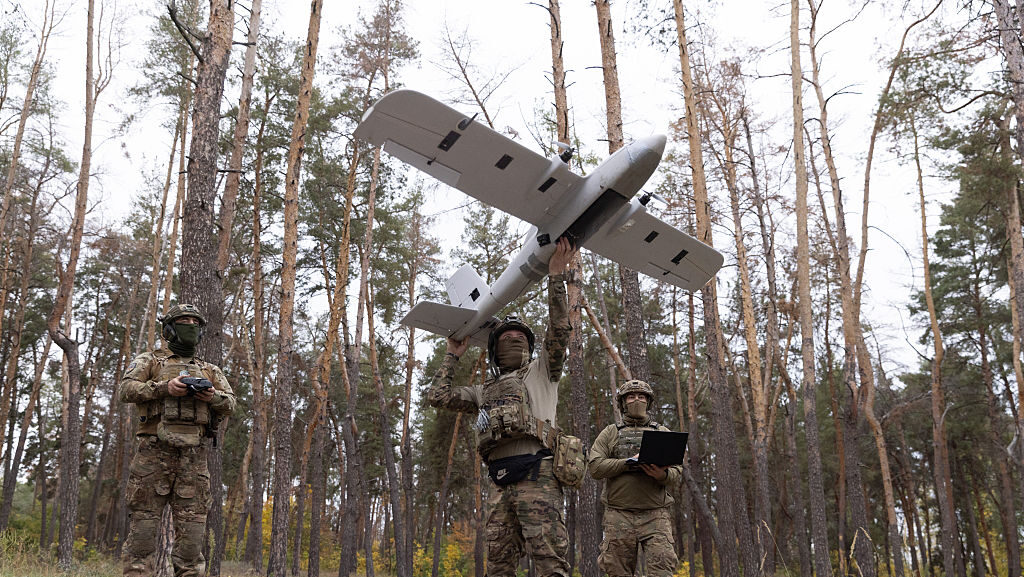
In a decisive shift in military procurement strategy, Nordic army leaders declared that future weapon system acquisitions will hinge on proven performance in the ongoing conflict in Ukraine. This stance was articulated during a panel discussion at the AUSA (Association of the United States Army) event held last week in Belfast.
Proven Performance a Must
Maj. Gen. Peter Harling Boysen, chief of the Royal Danish Army, emphasized the importance of real-world validation. “For new supply chains and new technologies, I’m never going to buy anything that hasn’t worked in Ukraine,” he stated, highlighting a growing trend among military leaders to prioritize equipment that has demonstrated effectiveness in combat conditions.
His sentiments were echoed by Lt. Gen. Pasi Välimäki, Commander of the Finnish Army, who noted that showcasing products at expos like AUSA is insufficient without evidence of operational success in Ukraine. “The products that we have seen here… a demonstrator, that’s nice,” Välimäki remarked, “but systems operating in Ukraine are much easier for industry to demonstrate their actual product works.”
Välimäki underscored the necessity for mature platforms, stating he has a two-year “window of opportunity” for signing new equipment contracts. “You’re either in or you’re out,” he said, reiterating the urgency of this procurement plan.
Testing Technologies Under Real Conditions
Aivars Puriņš, Latvia’s state secretary, further stressed the need for manufacturers to test their technologies in conditions that closely mimic deployment scenarios. “We have had too many stories… where the best technology solutions were deployed, and suddenly they didn’t work as they were kind of supposed to be,” he explained, highlighting the critical lessons learned from the Ukrainian conflict.
Latvia is actively developing a drone test range and has established a drone competency center in Riga. This initiative aims to foster a continuous presence of Ukrainian officers for equipment testing under realistic conditions. “What we want to have is Ukrainian officers coming through, being kind of a continuous presence,” Puriņš added.
The Latvian Ministry of Defense described the competency center as a national platform for developing and integrating drone technologies within the Latvian National Armed Forces. Its mission includes ensuring the continuity of drone system supplies during crises and supporting local companies in creating drones tailored to military needs.
Drone Programs and Innovations
The Norwegian army is also enhancing its capabilities through drone innovations. Maj. Gen. Lars Lervik, chief of the Norwegian army, announced a dedicated drone program aimed at coordinating various drone initiatives alongside support for Ukraine. Norway plans to invest 1.5 billion Norwegian Krone (approximately $1.49 million) over a ten-year period to improve its drone capabilities.
Noteworthy developments include a pilot program featuring a drone swarm of six autonomous Valkyrie drones, designed for intelligence, surveillance, and reconnaissance missions. “My ambition is to be able to integrate them into swarms eventually,” Lervik said, acknowledging the need for flexibility in military solutions.
He also discussed Norway’s long-range precision fires acquisition, for which a preferred contractor was expected to be selected last summer. However, this process has faced delays due to various procurement challenges, including the need for information from potential vendors, such as the U.S. government. Lervik expressed hope that a recommendation could be made by Christmas 2023, with a contract award tentatively scheduled for early 2026.
Leading contenders for this contract include Lockheed Martin’s M142 High Mobility Artillery Rocket System (HIMARS) and South Korea’s Hanwha Aerospace K239 Chunmoo Multiple Launch Rocket System (MLRS).
Additionally, plans are in motion for Norway to acquire up to 80 BAE Systems CV90 infantry fighting vehicles, with decisions expected early next year involving a joint procurement initiative with Estonia, Finland, Lithuania, the Netherlands, and Sweden.
Heightened Security Concerns
The focus on uncrewed systems comes amid increasing Russian drone incursions in Europe, which have prompted NATO to bolster its presence along the Eastern Flank. Furthermore, numerous drone sightings over European airports have led the European Union to consider developing a comprehensive air defense network to counter these threats.
Harling Boysen asserted the need for a robust response to Russian drone activity, advocating for the downing of these aircraft to send a clear message to Moscow: “We know what you do, and it is unacceptable.” As the landscape of military procurement evolves, the emphasis on proven effectiveness in conflict zones is reshaping how nations approach their defense strategies.

Shark Teeth Research Reveals Urgent Need to Protect Species

Church Members Unite in Resilience After Thanksgiving Fire

Community Unites to Attempt World Record for Largest Cookie Exchange

Mayor Lurie Appoints Alan Wong to District 4 Seat Amid Controversy

Mayor Appoints Alan Wong as New Supervisor for District 4

UK Report Reveals AI’s Role in Evaluating University Research Quality

Gabriela Jaquez Shines as No. 3 UCLA Dominates No. 14 Tennessee

Trump Promises to Release MRI Results Despite Uncertainty on Scan

Japan’s Q3 Capital Expenditure Slows Despite Surge in Profits

University of Hawaiʻi Joins $25.6M AI Initiative to Monitor Disasters

Toledo City League Announces Hall of Fame Inductees for 2024

DOJ Seizes $15 Billion in Bitcoin from Major Crypto Fraud Network

Sharp Launches Five New Aquos QLED 4K Ultra HD Smart TVs

Celtics Coach Joe Mazzulla Dominates Local Media in Scrimmage

Mutual Advisors LLC Increases Stake in SPDR Portfolio ETF

Community Unites for 7th Annual Walk to Raise Mental Health Awareness

Western Executives Confront Harsh Realities of China’s Manufacturing Edge

INK Entertainment Launches Exclusive Sofia Pop-Up at Virgin Hotels
-
Science4 weeks ago
University of Hawaiʻi Joins $25.6M AI Initiative to Monitor Disasters
-
 Lifestyle2 months ago
Toledo City League Announces Hall of Fame Inductees for 2024
-
 Business2 months ago
DOJ Seizes $15 Billion in Bitcoin from Major Crypto Fraud Network
-
 Top Stories2 months ago
Sharp Launches Five New Aquos QLED 4K Ultra HD Smart TVs
-
 Sports2 months ago
Celtics Coach Joe Mazzulla Dominates Local Media in Scrimmage
-
 Politics2 months ago
Mutual Advisors LLC Increases Stake in SPDR Portfolio ETF
-
 Health2 months ago
Community Unites for 7th Annual Walk to Raise Mental Health Awareness
-
 Science2 months ago
Western Executives Confront Harsh Realities of China’s Manufacturing Edge
-
 World2 months ago
INK Entertainment Launches Exclusive Sofia Pop-Up at Virgin Hotels
-

 Politics2 months ago
Major Networks Reject Pentagon’s New Reporting Guidelines
-

 Science1 month ago
Astronomers Discover Twin Cosmic Rings Dwarfing Galaxies
-

 Top Stories1 month ago
Randi Mahomes Launches Game Day Clothing Line with Chiefs