
World
Putin Launches Initiatives to Reverse Russia’s Declining Birth Rate

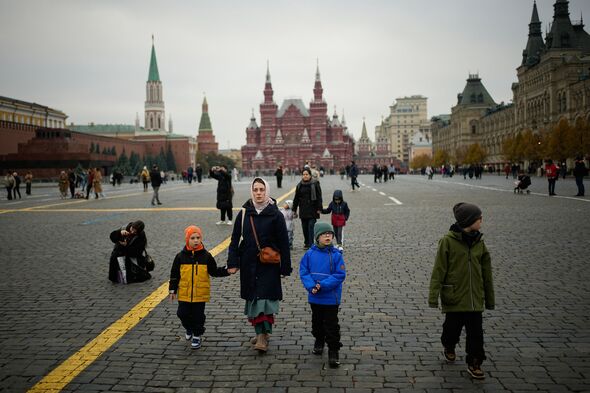
Russian President Vladimir Putin is intensifying efforts to tackle the nation’s declining birth rate, deeming increased births as “crucial” for Russia’s future. This demographic crisis has plagued the country for over two decades, with significant implications for its economic and social stability.
At a recent demographic conference in the Kremlin, Putin highlighted the need for a renewed focus on family growth, stating that “many of our grandmothers and great-grandmothers had seven, eight, and even more children.” He emphasized the importance of reviving such traditions, suggesting that large families should become the norm in modern Russia.
The roots of this demographic challenge date back to 1999, when the number of births plummeted to its lowest recorded level. By 2015, births had risen to 1.94 million, correlating with a period of economic prosperity. However, since then, the birth rate has steadily declined, and last year saw only 1.22 million live births, a figure only marginally above the historical low recorded in 1999.
Demographic Shift and Economic Impact
According to the Federal Statistics Service, Russia’s population has decreased from 147.6 million in 1990 to 146.1 million in 2024. This decline is coupled with an aging population; the percentage of individuals aged 55 and older increased from 21.1% in 1990 to 30% in 2024. The situation has worsened since the peak in births in 2015, with deaths now outpacing births annually.
Demographer Alexei Raksha reported that the number of babies born in Russia hit its lowest monthly figure in over two centuries in February 2025. Last year’s fertility rate was recorded at 1.4, falling significantly below the replacement rate of 2.1 needed to maintain population levels. For context, the fertility rate in the United States was 1.6 according to data from the Centers for Disease Control and Prevention.
In response to these demographic challenges, the Russian government has implemented various initiatives aimed at encouraging childbirth. These measures include providing free school meals for large families and awarding “hero-mother” medals to women who have ten or more children.
Legislative Measures and Cultural Shifts
To further promote what it terms “traditional family values,” Russia has introduced new restrictions, including laws that ban the promotion of abortion and any advocacy for “child-free ideology.” Additionally, all LGBTQ+ activism has been outlawed, reflecting a broader cultural shift in the country.
In recent years, the government has created state holidays to celebrate family and motherhood, such as Family, Love and Fidelity Day in July and Pregnant Women’s Day, observed on April 7 and October 7. These initiatives are part of a broader strategy to foster a family-friendly environment.
As Russia grapples with these demographic issues, the focus remains on revitalizing the nation’s birth rate amid ongoing economic challenges, geopolitical tensions, and a declining population. The outcome of these initiatives will be crucial for Russia’s demographic future and overall stability.

Bitcoin Plummets Below $88K Amid Tether Concerns and Warnings

Designers Unveil 5 Urgent Tricks to Transform Outdoor Eyesores

Shark Teeth Research Reveals Urgent Need to Protect Species

Church Members Unite in Resilience After Thanksgiving Fire

Community Unites to Attempt World Record for Largest Cookie Exchange

Mayor Lurie Appoints Alan Wong to District 4 Seat Amid Controversy

Mayor Appoints Alan Wong as New Supervisor for District 4

UK Report Reveals AI’s Role in Evaluating University Research Quality

Gabriela Jaquez Shines as No. 3 UCLA Dominates No. 14 Tennessee

University of Hawaiʻi Joins $25.6M AI Initiative to Monitor Disasters

Toledo City League Announces Hall of Fame Inductees for 2024

DOJ Seizes $15 Billion in Bitcoin from Major Crypto Fraud Network

Sharp Launches Five New Aquos QLED 4K Ultra HD Smart TVs

Celtics Coach Joe Mazzulla Dominates Local Media in Scrimmage

Mutual Advisors LLC Increases Stake in SPDR Portfolio ETF

Community Unites for 7th Annual Walk to Raise Mental Health Awareness

Western Executives Confront Harsh Realities of China’s Manufacturing Edge

INK Entertainment Launches Exclusive Sofia Pop-Up at Virgin Hotels
-
Science4 weeks ago
University of Hawaiʻi Joins $25.6M AI Initiative to Monitor Disasters
-
 Lifestyle2 months ago
Toledo City League Announces Hall of Fame Inductees for 2024
-
 Business2 months ago
DOJ Seizes $15 Billion in Bitcoin from Major Crypto Fraud Network
-
 Top Stories2 months ago
Sharp Launches Five New Aquos QLED 4K Ultra HD Smart TVs
-
 Sports2 months ago
Celtics Coach Joe Mazzulla Dominates Local Media in Scrimmage
-
 Politics2 months ago
Mutual Advisors LLC Increases Stake in SPDR Portfolio ETF
-
 Health2 months ago
Community Unites for 7th Annual Walk to Raise Mental Health Awareness
-
 Science2 months ago
Western Executives Confront Harsh Realities of China’s Manufacturing Edge
-
 World2 months ago
INK Entertainment Launches Exclusive Sofia Pop-Up at Virgin Hotels
-

 Politics2 months ago
Major Networks Reject Pentagon’s New Reporting Guidelines
-

 Science1 month ago
Astronomers Discover Twin Cosmic Rings Dwarfing Galaxies
-

 Top Stories1 month ago
Randi Mahomes Launches Game Day Clothing Line with Chiefs