
World
Ritz-Carlton Safari Lodge Sparks Conservation Controversy in Kenya

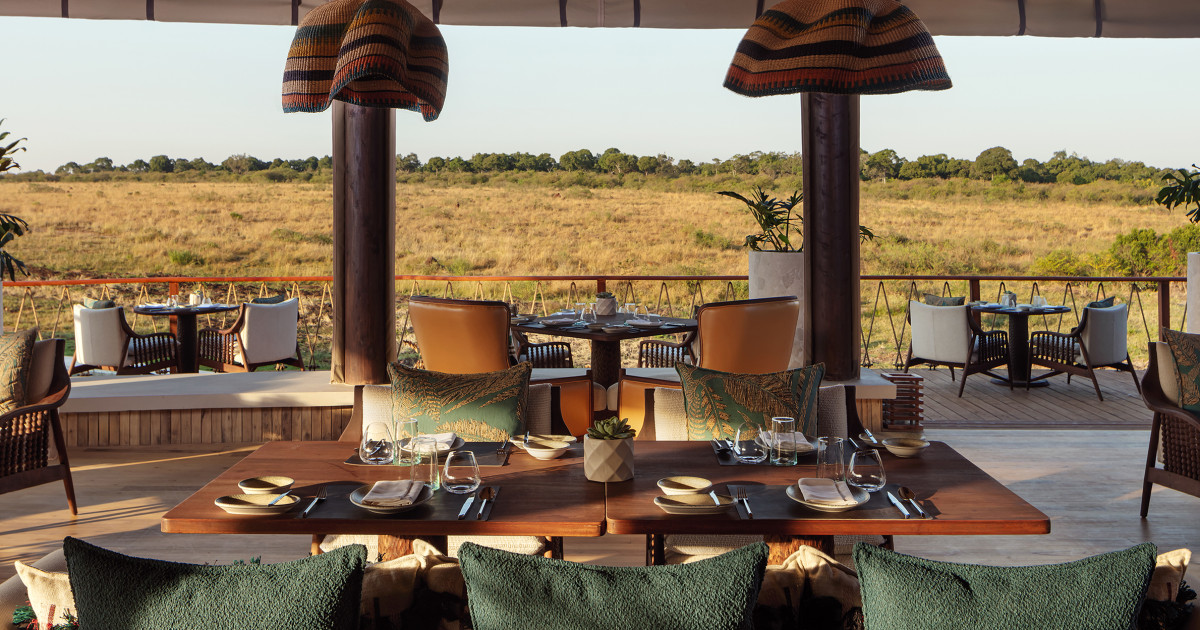
The opening of a luxury safari lodge by the Ritz-Carlton in Kenya’s Maasai Mara has ignited significant controversy among conservationists and Indigenous leaders. The lodge, which charges upwards of $5,000 per night, occupies a critical area for wildlife migration, prompting concerns over its impact on the local ecosystem. A group of Maasai leaders, alongside environmental advocates, has filed a lawsuit seeking to halt operations at the facility, arguing that it threatens a vital migration corridor for numerous species.
Located on a bend of the Sand River, the new safari camp opened its doors on August 15, 2023, coinciding with the annual Great Migration. This phenomenon witnesses millions of wildebeest, zebras, and other grazing animals traversing between the Serengeti in Tanzania and the Maasai Mara National Reserve (MMNR) in Kenya. The Maasai community, traditionally nomadic herders with deep cultural ties to the land, fears that the lodge disrupts this natural process essential for animal survival and genetic diversity within herds.
Maasai elder and conservation advocate Meitamei Olol Dapash, who leads the legal challenge, described the lodge as an obstruction to wildlife movement. “Any guide will tell you, that is the crossing they use,” he stated. Dapash’s lawsuit names Ritz-Carlton’s parent company, Marriott International, and local partner Lazizi Mara Limited, alongside Kenyan authorities, and seeks to restore the land to its original state. He cited instances of wildebeest altering their migratory routes and claimed that elephants were struggling to navigate their traditional paths due to the lodge’s presence.
The Kenya Wildlife Service has countered these claims, asserting through monitoring data that the lodge does not interfere with any established migration corridors. They reported that migrating wildebeest utilize the entire breadth of the Kenya-Tanzania border and stated that all ecological and regulatory requirements were fulfilled prior to the lodge’s establishment.
Marriott International emphasized its commitment to responsible tourism and noted that the lodge underwent a comprehensive environmental impact assessment (EIA). The company declined to comment on specific allegations regarding the lodge’s impact on wildlife migration, deferring to Narok County, the local authority managing the reserve. However, Narok County did not respond to requests for comment.
Dapash, who holds a PhD in Sustainability Education, expressed concerns that the influx of tourism is straining the ecosystem. “We feel like we are losing the land, we are losing the wildlife,” he remarked. The Maasai Mara National Reserve has seen a surge in visitors, with over 300,000 tourists reported in 2023, nearly tripling numbers from 1980, when only 114,000 visitors entered the reserve. This boom has generated an estimated $20 million annually from tourism activities, contributing roughly 7% to Kenya’s gross domestic product, according to the World Travel and Tourism Council.
The rapid development of luxury accommodations has raised concerns among conservationists about its effects on wildlife. Dr. Chloe Buiting, a veterinarian and wildlife researcher in the Maasai Mara, noted that each new hotel brings infrastructure changes that can disrupt wildlife habitats. “A hotel is never just a hotel,” she explained, emphasizing the environmental impact of such developments.
Researcher Joseph Ogutu from the University of Hohenheim in Germany echoed these sentiments, stating that lodges positioned near critical water sources could hinder animal migration patterns. He highlighted how seasonal variations in food availability force animals to move, and developments like the Ritz-Carlton can negatively affect these natural behaviors.
Support for Dapash’s cause has emerged from various experts and tourism organizations. Professor Grant Hopcraft from the University of Glasgow presented data in court, illustrating the regular cross-border movement of wildebeest at the lodge’s location. Additionally, RIDE International, a U.S.-based nonprofit focused on cultural exchanges in East Africa, has voiced its support for the lawsuit, criticizing the trend of large hotel chains catering primarily to luxury tourists at the expense of local wildlife.
As the legal proceedings unfold, the Ritz-Carlton camp has drawn mixed reviews online, with a 2.2-star rating on Google Reviews reflecting both praise for its offerings and criticism of its environmental implications. A court hearing is scheduled for December 2023, where the outcome could set a significant precedent for future developments in the reserve. Dr. Buiting remarked that a favorable ruling for Dapash could represent a turning point in the ongoing tension between tourism and conservation efforts in the Maasai Mara.

Community Unites to Attempt World Record for Largest Cookie Exchange

Mayor Lurie Appoints Alan Wong to District 4 Seat Amid Controversy

Mayor Appoints Alan Wong as New Supervisor for District 4

UK Report Reveals AI’s Role in Evaluating University Research Quality

Gabriela Jaquez Shines as No. 3 UCLA Dominates No. 14 Tennessee

Trump Promises to Release MRI Results Despite Uncertainty on Scan

Japan’s Q3 Capital Expenditure Slows Despite Surge in Profits

South Korea Announces Urgent FX Oversight Measures to Stabilize Won

Tampa’s Annual Tree Lighting Ignites Holiday Spirit Tonight

University of Hawaiʻi Joins $25.6M AI Initiative to Monitor Disasters

Toledo City League Announces Hall of Fame Inductees for 2024

DOJ Seizes $15 Billion in Bitcoin from Major Crypto Fraud Network

Sharp Launches Five New Aquos QLED 4K Ultra HD Smart TVs

Celtics Coach Joe Mazzulla Dominates Local Media in Scrimmage

Community Unites for 7th Annual Walk to Raise Mental Health Awareness

Mutual Advisors LLC Increases Stake in SPDR Portfolio ETF

Western Executives Confront Harsh Realities of China’s Manufacturing Edge

INK Entertainment Launches Exclusive Sofia Pop-Up at Virgin Hotels
-
Science4 weeks ago
University of Hawaiʻi Joins $25.6M AI Initiative to Monitor Disasters
-
 Lifestyle2 months ago
Toledo City League Announces Hall of Fame Inductees for 2024
-
 Business2 months ago
DOJ Seizes $15 Billion in Bitcoin from Major Crypto Fraud Network
-
 Top Stories2 months ago
Sharp Launches Five New Aquos QLED 4K Ultra HD Smart TVs
-
 Sports2 months ago
Celtics Coach Joe Mazzulla Dominates Local Media in Scrimmage
-
 Health2 months ago
Community Unites for 7th Annual Walk to Raise Mental Health Awareness
-
 Politics2 months ago
Mutual Advisors LLC Increases Stake in SPDR Portfolio ETF
-
 Science2 months ago
Western Executives Confront Harsh Realities of China’s Manufacturing Edge
-
 World2 months ago
INK Entertainment Launches Exclusive Sofia Pop-Up at Virgin Hotels
-

 Politics2 months ago
Major Networks Reject Pentagon’s New Reporting Guidelines
-

 Science1 month ago
Astronomers Discover Twin Cosmic Rings Dwarfing Galaxies
-

 Top Stories1 month ago
Randi Mahomes Launches Game Day Clothing Line with Chiefs