
World
Trump Celebrates Ceasefire Agreement at ASEAN Summit in Kuala Lumpur

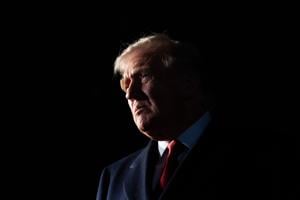
U.S. President Donald Trump attended a ceremony in Kuala Lumpur, Malaysia, on March 3, 2024, marking the signing of an expanded ceasefire agreement between Thailand and Cambodia. This agreement comes after a series of border skirmishes earlier this year, prompted in part by Trump’s threats of economic pressure on the two nations.
As part of the initial phase of the agreement, Thailand plans to release Cambodian prisoners, while Cambodia will begin withdrawing its heavy artillery from the border area. Regional observers will monitor the ceasefire to prevent any resurgence of hostilities. Trump described the agreement as a significant achievement, stating, “We did something that a lot of people said couldn’t be done.”
Cambodian Prime Minister Hun Manet hailed the day as “historic,” while Thai Prime Minister Anutin Charnvirakul emphasized that the agreement lays the groundwork for lasting peace. The ceremony marked Trump’s first official engagement after arriving at the annual summit of the Association of Southeast Asian Nations (ASEAN).
Trump’s Diplomatic Efforts in Southeast Asia
Trump’s trip to Southeast Asia includes upcoming visits to Japan and South Korea, as well as a potential meeting with Chinese leader Xi Jinping. This visit is an opportunity for the U.S. President to enhance his reputation as an international dealmaker, particularly at a time when his trade policies have drawn criticism and sparked disputes domestically.
Upon landing in Kuala Lumpur just before 0200 GMT, Trump engaged with local performers, showcasing his characteristic exuberance by dancing and waving both the American and Malaysian flags. He is also expected to sign agreements with Malaysia focusing on trade and critical minerals, reflecting the U.S. strategy to diversify supply chains away from China due to recent export restrictions on key technological components.
The recent clashes between Thailand and Cambodia were among the most severe in recent history, lasting five days in July 2023, resulting in dozens of deaths and displacing hundreds of thousands of people. The two nations have long-standing territorial disputes, and violence often escalates along their shared border. Trump’s diplomatic intervention, which included threats to withhold trade agreements unless the fighting ceased, has been credited with catalyzing the negotiations that led to the ceasefire.
Economic Implications and Future Deals
Following the signing of the ceasefire agreement, Trump finalized separate economic deals with both Cambodia and Thailand. Ou Virak, president of Phnom Penh’s Future Forum, remarked on the significance of Trump’s economic leverage, stating, “The fact that Trump was holding the tariff card was actually very, very significant. That’s probably the main reason why the two sides agreed immediately to the ceasefire.”
The summit provided a platform for regional leaders to discuss reconciliation, with Malaysian Prime Minister Anwar Ibrahim noting that the agreement serves as a reminder that reconciliation is an act of courage rather than concession. The Thai Ministry of Foreign Affairs described the deal as a “joint declaration,” underscoring a commitment to renewing bilateral relations between the two countries.
While Trump is expected to meet with Brazilian President Luiz Inácio Lula da Silva during his stay, he will not engage with Canadian Prime Minister Mark Carney, following recent tensions over tariffs and a television advertisement protesting U.S. trade policies. Trump announced via social media that he would increase tariffs on Canadian goods in response to this ad.
The President’s upcoming discussions with Xi Jinping in South Korea are anticipated to focus on multiple issues, including fentanyl trafficking and soybean sales. Trump expressed optimism about reaching a comprehensive trade deal, stating, “I think we have a really good chance of making a very comprehensive deal.”
As the summit continues, the effectiveness of Trump’s diplomatic efforts remains to be seen. Observers are keen to determine whether these agreements will address ongoing tensions or merely postpone them. Notably absent from the summit is Indian Prime Minister Narendra Modi, whose relationship with Trump has become strained in recent months, particularly following Trump’s comments regarding a conflict between India and Pakistan and increased tariffs on Indian oil purchases from Russia.
The developments in Kuala Lumpur reflect a pivotal moment for regional diplomacy and U.S. foreign policy, as Trump seeks to consolidate his position as a peacemaker while navigating complex international trade dynamics.

Arlene Hartman, Beloved Community Member, Passes at 87

Urgent: Vehicle Fire Closes Two Lanes on I-215 in Salt Lake City

Knicks Dominate Raptors 116-94 at Home, Extend Winning Streak

Hallmark’s ‘Christmas at the Catnip Café’ Premieres Tonight!

Millville Woman Arrested for Threatening U-Haul Worker with Baton

Japan’s PM Takaichi Confirms Continued Fiscal Management Strategy

Bitcoin Plummets Below $88K Amid Tether Concerns and Warnings

Designers Unveil 5 Urgent Tricks to Transform Outdoor Eyesores

Shark Teeth Research Reveals Urgent Need to Protect Species

University of Hawaiʻi Joins $25.6M AI Initiative to Monitor Disasters

Toledo City League Announces Hall of Fame Inductees for 2024

DOJ Seizes $15 Billion in Bitcoin from Major Crypto Fraud Network

Sharp Launches Five New Aquos QLED 4K Ultra HD Smart TVs

Celtics Coach Joe Mazzulla Dominates Local Media in Scrimmage

Mutual Advisors LLC Increases Stake in SPDR Portfolio ETF

Community Unites for 7th Annual Walk to Raise Mental Health Awareness

Western Executives Confront Harsh Realities of China’s Manufacturing Edge

INK Entertainment Launches Exclusive Sofia Pop-Up at Virgin Hotels
-
Science4 weeks ago
University of Hawaiʻi Joins $25.6M AI Initiative to Monitor Disasters
-
 Lifestyle2 months ago
Toledo City League Announces Hall of Fame Inductees for 2024
-
 Business2 months ago
DOJ Seizes $15 Billion in Bitcoin from Major Crypto Fraud Network
-
 Top Stories2 months ago
Sharp Launches Five New Aquos QLED 4K Ultra HD Smart TVs
-
 Sports2 months ago
Celtics Coach Joe Mazzulla Dominates Local Media in Scrimmage
-
 Politics2 months ago
Mutual Advisors LLC Increases Stake in SPDR Portfolio ETF
-
 Health2 months ago
Community Unites for 7th Annual Walk to Raise Mental Health Awareness
-
 Science2 months ago
Western Executives Confront Harsh Realities of China’s Manufacturing Edge
-
 World2 months ago
INK Entertainment Launches Exclusive Sofia Pop-Up at Virgin Hotels
-

 Politics2 months ago
Major Networks Reject Pentagon’s New Reporting Guidelines
-

 Science1 month ago
Astronomers Discover Twin Cosmic Rings Dwarfing Galaxies
-

 Top Stories1 month ago
Randi Mahomes Launches Game Day Clothing Line with Chiefs