
World
Trump Cuts Tariffs on Over 200 Food Products to Tackle Prices

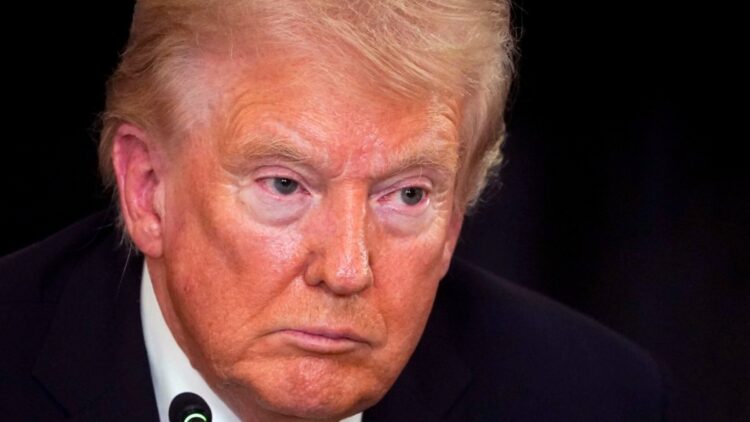
President Donald Trump has announced the elimination of tariffs on more than 200 food products as part of an effort to address rising prices in U.S. supermarkets. This decision, made public on September 29, 2023, is aimed at making essential items such as coffee, beef, and bananas more accessible to consumers facing high costs.
The move comes amid growing public concern about food prices, which have surged significantly over the past year. Despite Trump’s previous assertions that tariffs do not contribute to inflation, his administration is now retroactively activating exemptions on products from countries including Argentina, Ecuador, Guatemala, and El Salvador. This decision reflects a shift in the administration’s stance as it grapples with mounting pressure from voters, particularly as Democrats have gained traction in state and local elections focused on economic issues.
Impact on Food Prices and Exemptions
The tariff removal encompasses a wide range of items, including acai berries, oranges, paprika, cocoa, and chemicals. However, many consumers are still feeling the pinch from rising prices on other essential foods. For instance, ground beef prices rose by nearly 13% in September alone, and beef overall has seen a staggering 17% increase compared to last year. According to the Consumer Price Index, these trends have contributed to a 2.7% rise in overall household food costs.
Despite the announcement, industry leaders have expressed frustration over the exclusion of several products that have also been impacted by tariffs. Leslie Sarasin, president of the FMI-Food Industry Association, noted that while the changes may offer some relief, they do not address the broader issue of rising costs faced by consumers. Similarly, Chris Swonger, president of the Distilled Spirits Council, voiced disappointment over the lack of exemptions for alcoholic beverages from the United Kingdom and the European Union, which have become increasingly expensive.
Political Reactions and Future Expectations
The political implications of Trump’s tariff reduction decision are significant, especially as voter sentiment shifts in favor of the Democrats. Richard Neal, the top Democrat on the House Ways and Means Committee, criticized the administration for what he described as an attempt to “put out a fire they started.” He asserted that rising costs are a direct result of Trump’s trade policies, stating, “The Trump administration is finally publicly admitting what we all knew from the beginning: Trump’s trade war is about raising costs for people.”
Despite the removal of certain tariffs, financial analysts warn that food prices may continue to rise next year. Many believe that the administration is not addressing the root causes of inflation, instead opting for temporary measures that fail to provide long-term solutions. Trump, speaking aboard Air Force One during the announcement, suggested that the government could provide a $2,000 payment to low- and middle-income Americans by 2026, funded by tariff revenues, further complicating the narrative around tariff impacts.
As the economic landscape evolves, it remains to be seen how these changes will affect the everyday lives of consumers. While some may welcome the temporary relief from increasing food costs, many are left wondering if these actions will be sufficient to combat the broader challenges posed by inflation and supply chain disruptions.

Shark Teeth Research Reveals Urgent Need to Protect Species

Church Members Unite in Resilience After Thanksgiving Fire

Community Unites to Attempt World Record for Largest Cookie Exchange

Mayor Lurie Appoints Alan Wong to District 4 Seat Amid Controversy

Mayor Appoints Alan Wong as New Supervisor for District 4

UK Report Reveals AI’s Role in Evaluating University Research Quality

Gabriela Jaquez Shines as No. 3 UCLA Dominates No. 14 Tennessee

Trump Promises to Release MRI Results Despite Uncertainty on Scan

Japan’s Q3 Capital Expenditure Slows Despite Surge in Profits

University of Hawaiʻi Joins $25.6M AI Initiative to Monitor Disasters

Toledo City League Announces Hall of Fame Inductees for 2024

DOJ Seizes $15 Billion in Bitcoin from Major Crypto Fraud Network

Sharp Launches Five New Aquos QLED 4K Ultra HD Smart TVs

Celtics Coach Joe Mazzulla Dominates Local Media in Scrimmage

Mutual Advisors LLC Increases Stake in SPDR Portfolio ETF

Community Unites for 7th Annual Walk to Raise Mental Health Awareness

Western Executives Confront Harsh Realities of China’s Manufacturing Edge

INK Entertainment Launches Exclusive Sofia Pop-Up at Virgin Hotels
-
Science4 weeks ago
University of Hawaiʻi Joins $25.6M AI Initiative to Monitor Disasters
-
 Lifestyle2 months ago
Toledo City League Announces Hall of Fame Inductees for 2024
-
 Business2 months ago
DOJ Seizes $15 Billion in Bitcoin from Major Crypto Fraud Network
-
 Top Stories2 months ago
Sharp Launches Five New Aquos QLED 4K Ultra HD Smart TVs
-
 Sports2 months ago
Celtics Coach Joe Mazzulla Dominates Local Media in Scrimmage
-
 Politics2 months ago
Mutual Advisors LLC Increases Stake in SPDR Portfolio ETF
-
 Health2 months ago
Community Unites for 7th Annual Walk to Raise Mental Health Awareness
-
 Science2 months ago
Western Executives Confront Harsh Realities of China’s Manufacturing Edge
-
 World2 months ago
INK Entertainment Launches Exclusive Sofia Pop-Up at Virgin Hotels
-

 Politics2 months ago
Major Networks Reject Pentagon’s New Reporting Guidelines
-

 Science1 month ago
Astronomers Discover Twin Cosmic Rings Dwarfing Galaxies
-

 Top Stories1 month ago
Randi Mahomes Launches Game Day Clothing Line with Chiefs